Choosing between a Blowout Fade and a Taper Fade depends on how much emphasis you place on style impact, maintenance effort, and overall appearance. Although both haircuts fall under the umbrella of fade hairstyles, they differ significantly in how bold they look, how often they require upkeep, and how they fit into everyday life.
What Is a Blowout Fade?
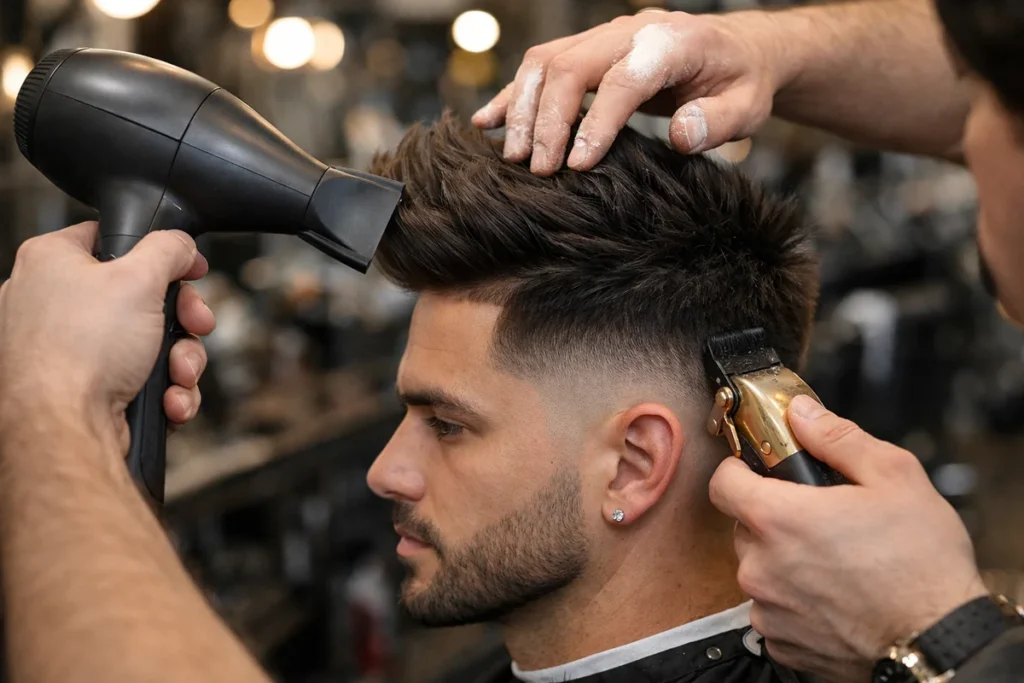
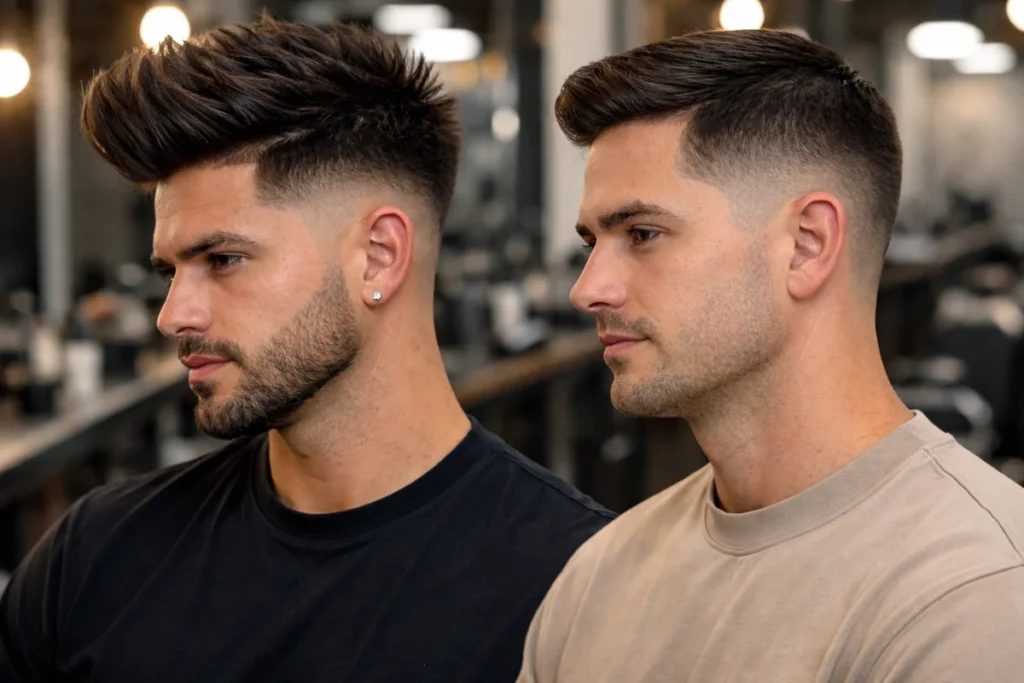
A Blowout Fade is a modern men’s haircut style that combines a high-contrast fade transition on the sides and back with a voluminous, structured top. The defining feature is the blown-out shape, where the hair expands outward rather than lying flat, creating a strong visual frame around the head.
This style is commonly associated with sharp hairlines, squared outlines, and noticeable height at the crown, making it a statement haircut rather than a subtle one.
Blowout Fade Definition
A Blowout Fade is a haircut where the sides and back gradually fade down while the top is shaped to appear full, lifted, and outwardly rounded, often paired with a precise line-up.
Core Characteristics of a Blowout Fade
- High-contrast fade between short sides and long top
- Pronounced top volume and outward shape
- Sharp line-up around the hairline and temples
- Defined silhouette structure that stands out visually
These characteristics make the Blowout Fade especially popular in street style grooming and trend-forward barbering.
Who a Blowout Fade Is Best For
The Blowout Fade works best for individuals with thick hair, curly hair, or Afro-textured hair, as these textures naturally support volume. It suits people who prefer a bold appearance and are comfortable with frequent maintenance. This style is ideal for those prioritizing fashion-forward looks over conservative grooming norms.
What Is a Taper Fade?
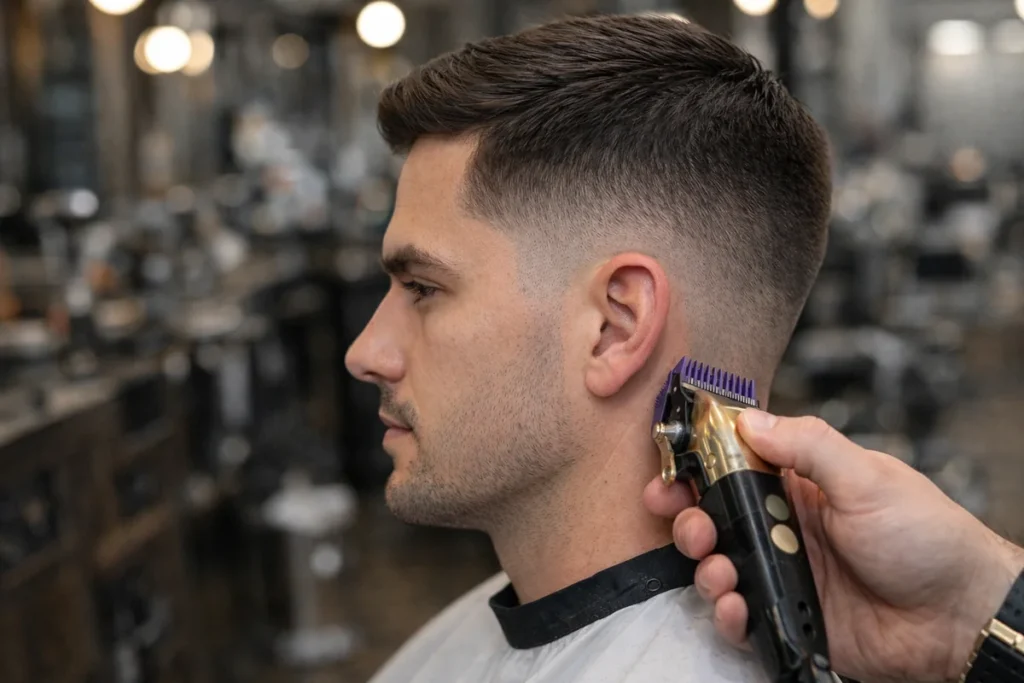
A Taper Fade is a classic fade haircut technique where the hair gradually shortens around the neckline, sideburns, and temples while maintaining longer length on top. Unlike a blowout, the transition is intentionally subtle, creating a clean and understated finish.
This haircut emphasizes natural blending rather than dramatic contrast, making it one of the most versatile and widely accepted fade styles.
Taper Fade Definition
A Taper Fade is a haircut where the hair length slowly decreases toward the edges of the head, resulting in a smooth, natural-looking transition with minimal visual disruption.
Core Characteristics of a Taper Fade
- Gradual blend with no harsh transitions
- Natural hairline finish around the neck and ears
- Longer top that remains understated
- Clean appearance without exaggerated volume
Because of these traits, the Taper Fade is often described as a low-profile haircut that enhances grooming without drawing attention.
Who a Taper Fade Is Best For
The Taper Fade is ideal for individuals seeking a professional appearance, low-maintenance style, or conservative grooming option. It works well across straight hair, wavy hair, and fine hair, and is especially suitable for workplaces with formal dress codes or grooming standards.
Blowout Fade vs Taper Fade: Key Differences
The primary difference between a Blowout Fade and a Taper Fade lies in contrast intensity and styling intention. While both haircuts use fading techniques, they produce distinctly different outcomes in terms of visual presence, structure, and upkeep.
A Blowout Fade is designed to be noticeable and expressive, whereas a Taper Fade prioritizes balance and subtle refinement.
Visual Appearance Differences
The Blowout Fade creates a strong, eye-catching look through exaggerated top volume and sharply defined edges. The outward expansion of the hair forms a bold silhouette, making the haircut instantly recognizable.
In comparison, the Taper Fade maintains a clean and natural profile. The hair gradually shortens near the neckline and sideburns, preserving the original head shape without dramatic contrast.
Fade Transition and Blend
A Blowout Fade typically features a high-contrast fade, where the difference between the sides and the top is intentionally striking. This sharp transition enhances the overall structure of the haircut.
The Taper Fade, on the other hand, uses a gradual blend. The transition is smooth and often barely noticeable, which contributes to its polished and professional appearance.
Maintenance and Upkeep
Maintenance is a major deciding factor between these two styles. A Blowout Fade requires frequent line-up touch-ups and regular trimming to maintain its sharp edges and volume.
A Taper Fade is considered a low-maintenance haircut. As it grows out evenly, the style remains presentable for longer periods without obvious regrowth lines.
Style Impact
In terms of style impact, a Blowout Fade delivers a bold and trend-driven statement. It is commonly associated with urban grooming styles and modern barber culture.
A Taper Fade offers a timeless and versatile look. Its understated nature makes it adaptable to both casual and formal environments.
Blowout Fade vs Taper Fade Comparison
| Comparison Factor | Blowout Fade | Taper Fade |
| Overall Appearance | Bold and structured | Clean and natural |
| Fade Type | High-contrast fade | Gradual taper |
| Top Volume | High and blown-out | Moderate to low |
| Hairline Shape | Sharp line-up | Soft, natural edges |
| Best Hair Types | Thick, curly, Afro-textured | Straight, wavy, fine |
| Maintenance Level | High | Low |
| Professional Suitability | Limited | High |
This table format allows search engines to extract side-by-side comparisons, making it ideal for featured snippet tables.
Which Fade Is Better for Your Hair Type?
Choosing between a Blowout Fade and a Taper Fade often depends on your natural hair texture and styling goals.
Blowout Fade for Curly or Afro-Textured Hair
A Blowout Fade pairs exceptionally well with curly hair and Afro-textured hair because these textures naturally hold volume. The haircut enhances shape and definition while allowing the top to stand out prominently.
Taper Fade for Straight or Fine Hair
A Taper Fade is better suited for straight hair or fine hair, as it avoids exposing thin areas or creating uneven contrast. The gradual blend keeps the haircut balanced and flattering.
Thick vs Thin Hair Considerations
Those with thick hair can comfortably wear either style, depending on their desired look. Individuals with thin hair typically benefit more from a Taper Fade, which minimizes visual gaps and maintains density.
Looking for Professional Fade Haircut Service and Custom Styling
Choosing between a Blowout Fade and a Taper Fade requires more than style preference. It also depends on maintenance level, hair texture, and daily grooming habits. A professional fade haircut service ensures the blend is balanced and the transition fits your head shape and lifestyle. If you are looking for tailored blending, precision edges, and long-lasting structure, explore our fade haircut solutions designed for both bold and subtle styles. This service focuses on controlled gradients, clean finishes, and consistent shaping. As a result, your fade keeps its definition and grows out in a polished way.
Maintenance Comparison: Blowout Fade vs Taper Fade
Choosing between a Blowout Fade and a Taper Fade also depends heavily on maintenance demands and how the haircut behaves over time. Differences in fade contrast, hairline sharpness, and styling dependency directly affect how often trims, touch-ups, and daily grooming are required.
The table below outlines how each fade performs in terms of upkeep effort, regrowth visibility, and long-term wearability.
| Maintenance Factor | Blowout Fade | Taper Fade |
| Trim Frequency | Requires frequent barber visits | Fewer trims needed |
| Styling Effort | Consistent styling required to maintain volume | Minimal daily styling |
| Line-Up Maintenance | Regular line-up touch-ups essential | Line-up often optional |
| Regrowth Appearance | Regrowth becomes noticeable quickly | Grows out evenly and naturally |
| Long-Term Wearability | Best for short-term, high-impact looks | Ideal for extended wear |
This comparison highlights why a Blowout Fade is considered a high-maintenance haircut, while a Taper Fade is favored for low-maintenance grooming routines and consistent appearance over time.
Blowout Fade vs Taper Fade for Professional vs Casual Styles
The difference between a Blowout Fade and a Taper Fade becomes especially clear when considering environmental suitability and social context. Each haircut sends a distinct signal about personal style, formality level, and grooming intent, which can influence how it is perceived in professional and casual settings.
The table below breaks down how each fade aligns with workplace expectations, social environments, and overall styling tone.
| Style Context | Blowout Fade | Taper Fade |
| Professional Environments | Less suitable due to bold structure | Highly suitable and widely accepted |
| Casual Settings | Ideal for relaxed and expressive looks | Works well but appears more reserved |
| Creative Industries | Strong visual impact and trend alignment | Subtle and understated presence |
| Formal Dress Codes | May conflict with conservative standards | Easily aligns with formal grooming rules |
| Personal Expression Level | High visual expression | Low to moderate expression |
| Overall Styling Tone | Fashion-forward and bold | Clean, classic, and neutral |
This comparison shows that a Taper Fade is the safer choice for professional appearance and long-term versatility, while a Blowout Fade excels in casual, creative, and trend-driven environments where visual impact is encouraged.
Common Barber Questions to Ask Before Choosing a Fade
Asking the right questions during a barber consultation ensures the haircut aligns with your expectations and lifestyle.
- Will this fade haircut work with my hairline shape?
- How often will I need line-up touch-ups?
- Can the fade transition be adjusted for subtlety or contrast?
- How will hair regrowth affect the overall look?
- Can this style be customized to my face shape?
These questions help clarify whether a Blowout Fade or Taper Fade is the more practical choice.
Final Verdict: Blowout Fade vs Taper Fade
The decision between a Blowout Fade and a Taper Fade comes down to personal style, hair texture, and maintenance commitment. A Blowout Fade is ideal for individuals seeking a bold, high-impact haircut that emphasizes volume and sharp structure.
A Taper Fade is better suited for those who prefer a clean, versatile look that adapts easily to both professional and casual settings. By understanding the key differences and use cases, you can confidently choose the fade haircut that best complements your lifestyle.
Frequently Asked Questions (FAQ)
A Taper Fade generally works better with a receding hairline because its soft edge blending avoids drawing attention to thinning areas. A Blowout Fade can emphasize the hairline due to its sharp structure and defined outlines.
Both styles can work for older men, but a Taper Fade is more commonly chosen due to its age-neutral appearance and conservative finish. A Blowout Fade is better suited for those comfortable with a more expressive, trend-driven look.
Without styling products, a Taper Fade maintains its shape more naturally because it relies on blending rather than volume. A Blowout Fade may lose structure without product support, especially in the top section.
Yes, experienced barbers can customize both styles to suit different head shapes. A Blowout Fade can add balance to round heads through vertical volume, while a Taper Fade can soften sharp angles with gradual transitions.
A Blowout Fade tends to photograph better for social media content due to its strong contrast and defined silhouette. A Taper Fade performs better in professional photography, where subtle grooming is preferred.
A Blowout Fade may require more frequent hair washing because styling products are often used to maintain volume. A Taper Fade typically allows for a simpler grooming routine with less product buildup.