Choosing between a Blowout Taper and a Taper Fade depends on how much volume, contrast, and maintenance you want from your haircut. While both styles fall under professional taper haircut techniques, they differ significantly in neckline design, blending approach, and overall visual impact. Knowing these differences helps you select a haircut that complements your hair type, lifestyle, and personal style, rather than relying on trends alone.
What Is a Blowout Taper?
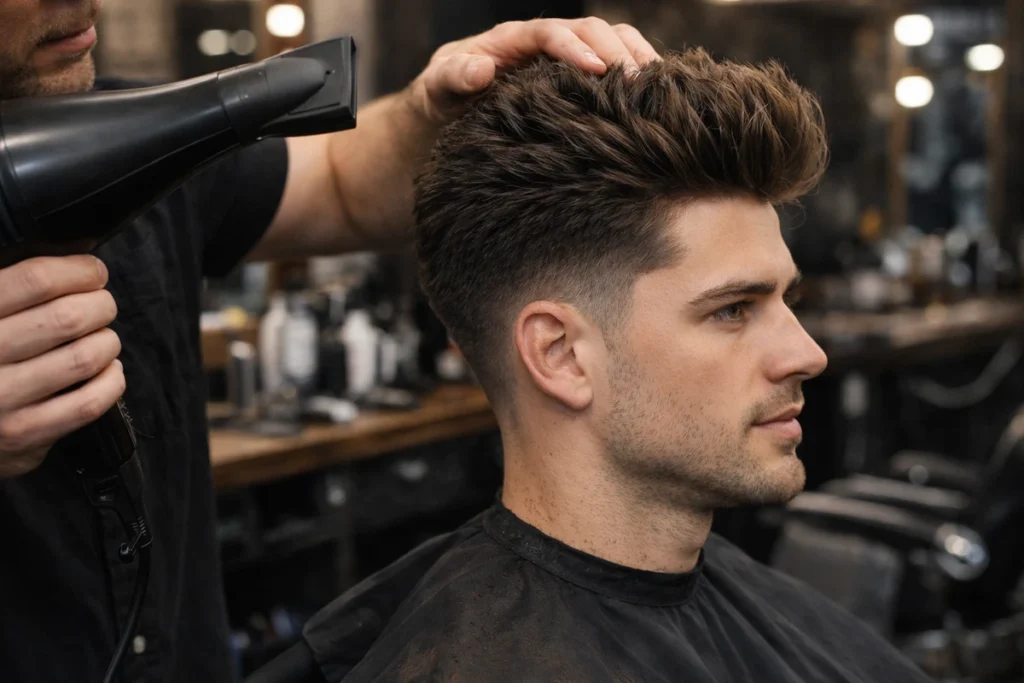
A Blowout Taper is a taper haircut that preserves neckline volume instead of fading it away. The result is a haircut with a defined outline, a rounded finish, and a noticeable sense of structure at the back and sides of the head.
This style is especially popular in modern barbering and urban haircut trends, where bold shape and presence are preferred over subtle blending.
Key Characteristics of a Blowout Taper
- Rounded or flared neckline
- Visible volume at the nape
- Structured silhouette
- Clean but non-skin finish
Unlike fades, the Blowout Taper does not expose the scalp at the bottom, which makes it ideal for clients who want a polished look without extreme contrast.
Popular Blowout Taper Variations
- Low Blowout Taper – Subtle taper with controlled volume
- Curly Hair Blowout Taper – Enhances natural curl density
- Blowout Taper with Line-Up – Combines structure with sharp edges
Each variation adjusts the taper height and neckline width while preserving the core blowout effect.
Who Should Choose a Blowout Taper
A Blowout Taper works best for individuals who want:
- Fuller-looking haircuts
- Longer growth cycles
- Defined shape without skin exposure
- Curly, coily, or thick hair textures
It is also a strong option for anyone prioritizing shape retention over ultra-clean fades.
What Is a Taper Fade?
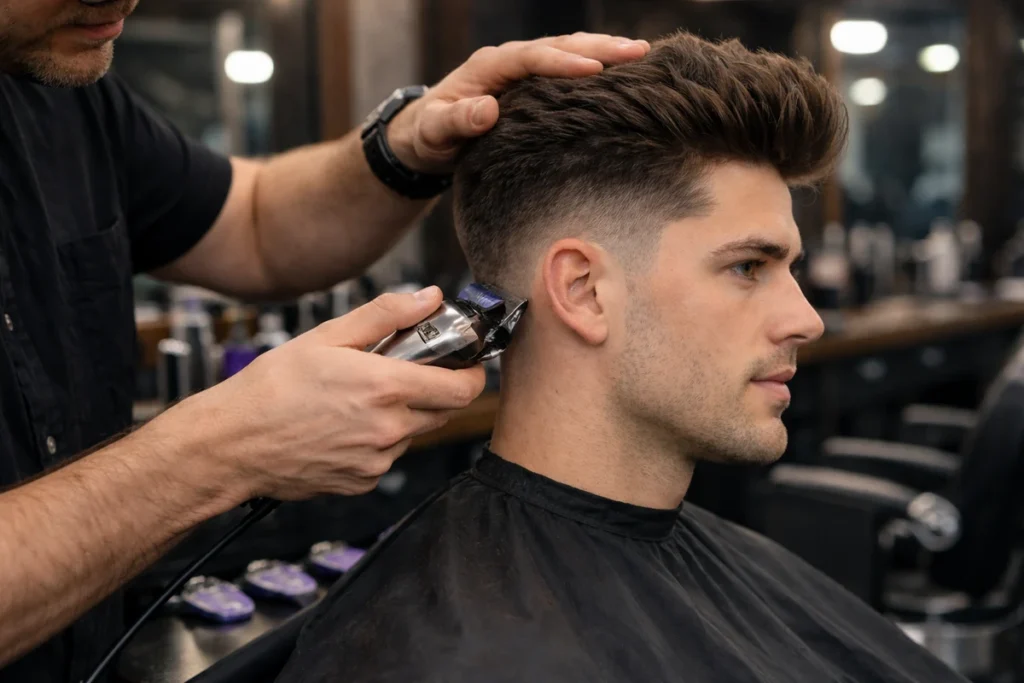
A Taper Fade is a haircut where the hair gradually transitions from longer lengths into short or skin-level hair around the neckline and sides. The defining feature of this style is its seamless blending, which removes visible bulk and creates a clean, refined finish.
Unlike a Blowout Taper, the Taper Fade minimizes shape at the neckline, making it ideal for those who prefer a low-profile, polished appearance. This style is commonly associated with professional grooming standards and modern minimalist aesthetics.
Key Characteristics of a Taper Fade
- Skin or near-skin finish at the base
- Smooth gradient blending
- Minimal visual weight
- High contrast between lengths
The Taper Fade excels at highlighting sharp edges, line-ups, and top styling, especially when paired with textured or longer hair above.
Types of Taper Fades
- Low Taper Fade – Conservative fade starting near the neckline
- Mid Taper Fade – Balanced blend with moderate visibility
- High Taper Fade – Aggressive fade with strong contrast
- Temple Taper (Brooklyn Fade) – Focused fade at the temples and sideburns
Each variation changes the fade height, which directly affects how bold or subtle the haircut appears.
Who Should Choose a Taper Fade
A Taper Fade is best suited for individuals who want:
- Ultra-clean finishes
- Sharp, modern aesthetics
- Defined edges and contours
- Frequent grooming routines
It is especially popular among those who prioritize precision over volume.
Blowout Taper vs Taper Fade — What’s the Difference?
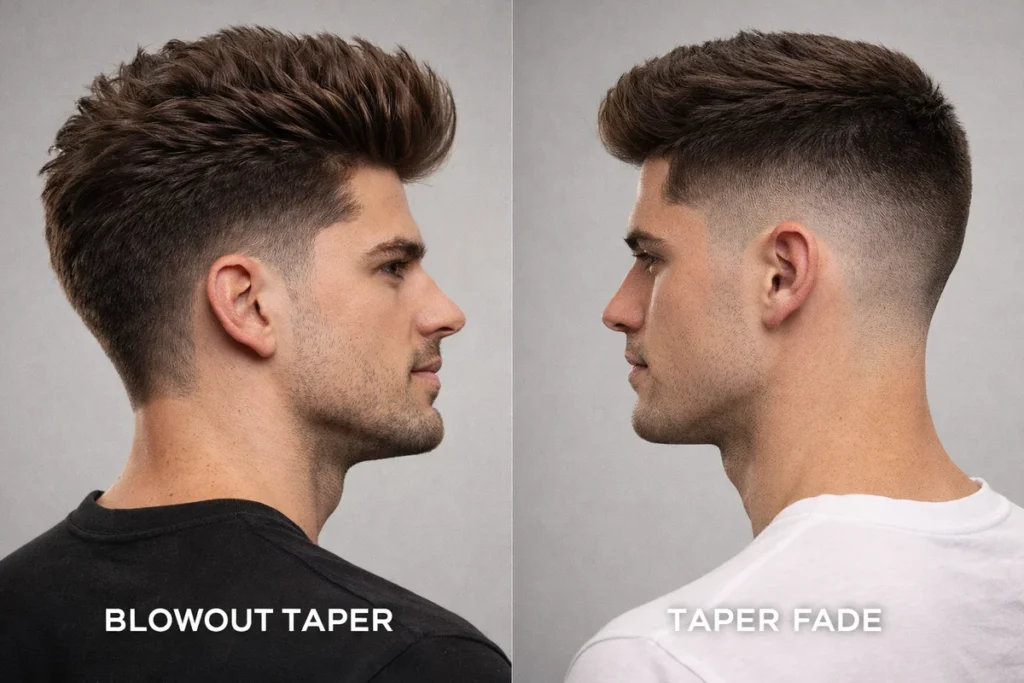
A Blowout Taper gradually shortens the hair toward the neckline while intentionally leaving fullness and shape at the nape. In contrast, a Taper Fade blends the hair down into the skin, creating a clean, seamless transition with minimal visible bulk.
From an execution standpoint, the Blowout Taper emphasizes structure and volume, while the Taper Fade prioritizes smooth blending and sharp contrast. This distinction affects not only how the haircut looks on day one, but also how it grows out over time.
Key Differences at a Glance
- Neckline Shape: Rounded or flared vs skin-faded
- Visual Weight: Fuller silhouette vs minimal bulk
- Blending Style: Graduated taper vs skin-level fade
- Maintenance Cycle: Longer-lasting shape vs frequent touch-ups
Blowout Taper vs Taper Fade Comparison
Need to know the differences between a Blowout Taper and a Taper Fade becomes clearer when comparing their shape, technique, and maintenance requirements side by side. The table below breaks down how each haircut performs across the most important visual and practical factors.
| Comparison Factor | Blowout Taper | Taper Fade |
| Visual Shape & Neckline Design | Features a rounded neckline design that flares outward, creating a bold, structured silhouette with visible fullness at the back and sides. | Fades the hair down to bare skin or near-skin length, resulting in a sharp, understated appearance with minimal bulk. |
| Blending & Fade Technique | Uses graduation techniques, clipper-over-comb, and shear work to preserve length while softly tapering toward the neck. | Relies on progressive guard lengths and often a skin fade to achieve a seamless gradient blend. |
| Maintenance & Longevity | Grows out naturally due to retained neckline hair, allowing the haircut to maintain shape longer between barber visits. | Loses sharpness faster as skin areas fill in, requiring more frequent touch-ups to stay crisp. |
Choosing Based on Hair Type
Curly & Coily Hair
For curly hair and coily hair, a Blowout Taper enhances natural volume and maintains density at the neckline. This creates a balanced shape that complements texture.
A Taper Fade offers higher contrast but may require more frequent maintenance to prevent the fade from disrupting curl patterns as it grows out.
Straight & Wavy Hair
On straight hair and wavy hair, a Taper Fade creates a sharp, clean outline that emphasizes precision. The fade enhances visibility of length differences, making the haircut appear more structured.
A Blowout Taper on straighter textures provides a softer, more classic finish with less emphasis on contrast.
Thick vs Fine Hair
Thick hair benefits from a Blowout Taper because the preserved bulk supports shape and balance. The neckline volume prevents the haircut from appearing too narrow.
Fine hair often looks cleaner with a Taper Fade, as the gradual blend reduces weight and creates the illusion of density on top.
Which Haircut Fits Your Lifestyle?
Low-Maintenance vs High-Definition Styles
A Blowout Taper is considered more low-maintenance, as its shape remains intact longer and does not rely on exposed skin. This makes it ideal for longer gaps between barber visits.
A Taper Fade is a high-definition haircut that requires frequent touch-ups to maintain its clean, skin-level finish.
Professional vs Trend-Driven Looks
In professional or conservative environments, a Taper Fade offers a discreet, well-groomed appearance that aligns with formal standards.
A Blowout Taper leans more toward trend-driven styling, often associated with bold silhouettes and expressive grooming choices.
Take an Expert Fade Haircut Service in Elk Grove
Choosing between a Blowout Taper and a Taper Fade requires skillful execution and careful blending. Each style demands precise guard control, neckline shaping, and balanced transitions. A professional fade haircut service ensures the cut matches your hair texture, face shape, and maintenance routine. If you want detailed craftsmanship and consistent results, trust a fade haircut specialist in Elk Grove CA who understands both structured tapers and skin-level fades. This level of expertise helps maintain clean lines and smooth gradients. As a result, your haircut keeps its shape and looks sharp as it grows out.
How to Ask Your Barber for the Right Cut
Clear communication is essential when choosing between a Blowout Taper and a Taper Fade. Using precise terminology helps your barber execute the exact neckline design, fade height, and blending style you want.
What to Say for a Blowout Taper
When requesting a Blowout Taper, specify that you want:
- Volume left at the neckline
- A rounded or flared taper, not a skin fade
- Graduated blending, not exposed scalp
- Optional line-up for edge definition
Mentioning that you want the taper to “blow out” at the back helps reinforce the desired shape and avoids confusion with fade-based cuts.
What to Say for a Taper Fade
For a Taper Fade, communicate:
- The preferred fade height (low, mid, or high)
- Whether you want a skin fade or shadow fade
- Clean blending into the sideburns and neckline
- Sharp edge-up or natural finish
Being specific about skin exposure ensures the fade matches your comfort level and maintenance expectations.
Final Verdict — Blowout Taper or Taper Fade?
The choice between a Blowout Taper and a Taper Fade depends on your priorities in style, maintenance, and visual impact.
- Choose a Blowout Taper if you want volume, structure, and longer-lasting shape.
- Choose a Taper Fade if you prefer clean blending, sharp contrast, and a modern finish.
- Both styles work best when aligned with your hair texture, lifestyle, and grooming routine.
Need to know these differences ensures you get a haircut that not only looks good on day one, but continues to fit your personal style as it grows out.
Blowout Taper vs Taper Fade FAQs
Yes, a Blowout Taper can make the head appear wider or more balanced due to added neckline volume, while a Taper Fade can create a slimmer head profile by removing bulk and emphasizing vertical lines.
A Taper Fade pairs more seamlessly with longer hairstyles on top because the contrast enhances length separation, whereas a Blowout Taper creates a more uniform, blended silhouette.
A Blowout Taper sits between classic barbering techniques and modern styling trends, combining traditional tapering with contemporary volume-focused aesthetics.
Yes, a Taper Fade relies heavily on precision clipper work, guard progression, and detail trimmers, whereas a Blowout Taper uses more clipper-over-comb and shear blending techniques.
Yes, a Taper Fade often blends more cleanly into beard fades, while a Blowout Taper creates a stronger contrast between the haircut and facial hair.
A Taper Fade typically photographs better due to its high contrast and sharp transitions, while a Blowout Taper stands out in profile shots because of its defined shape and volume.