Choosing between a burst fade and a drop fade comes down to how each fade haircut style shapes the head, manages contrast, and supports different styling goals. While both are popular forms of modern fade haircuts, they differ significantly in fade direction, visual balance, and overall silhouette impact. Comprehending these differences helps you select the right fade based on your hair type, face shape, and lifestyle preferences.
What Is a Burst Fade?
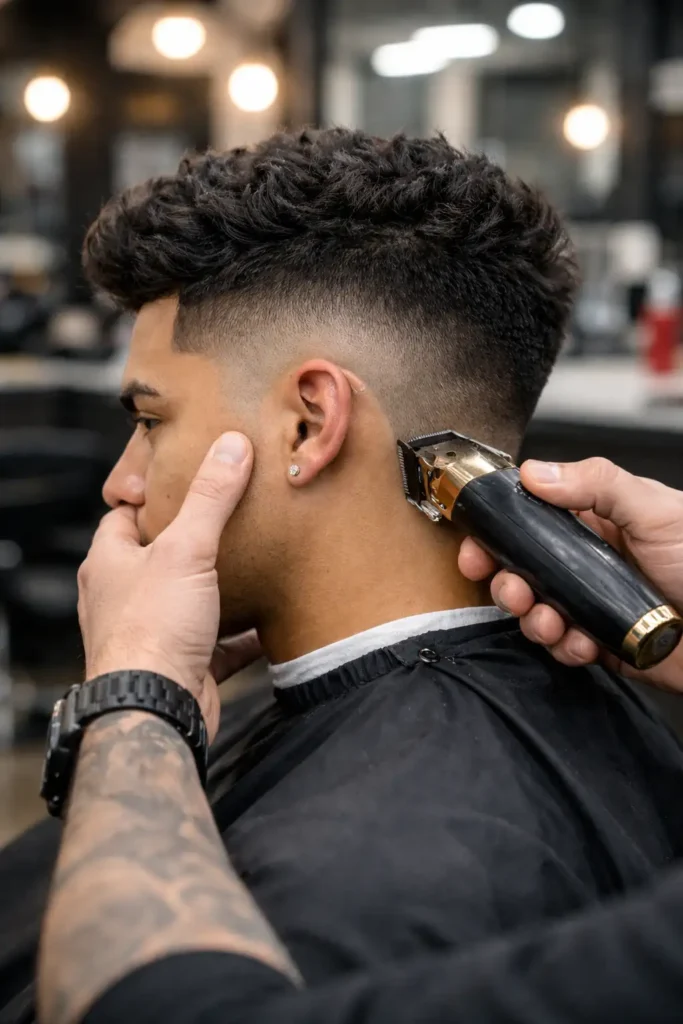
A burst fade is a fade haircut technique where the fade curves around the ear in a semicircular pattern, creating a “burst” effect while leaving more hair length at the back of the head. Unlike traditional straight fades, the burst fade shape emphasizes the ear arc and directs visual attention toward the sides rather than the neckline.
This fade style is commonly used to highlight bold silhouettes and works especially well with statement hairstyles that require contrast and definition.
Key Characteristics of a Burst Fade
- Curved fade pattern that wraps around the ear
- Length retention at the back of the head
- Strong contrast around the temples
- Emphasis on side profile aesthetics
- Frequent pairing with non-traditional hairstyles
Because of its structure, the burst fade haircut is often associated with expressive and trend-driven looks rather than conservative styling.
What Is a Drop Fade?
A drop fade is a fade haircut variation where the fade gradually drops lower behind the ear, following the natural curve of the head toward the neckline. Instead of maintaining a straight fade line, the drop fade design adapts to the natural head curvature, creating a smoother and more balanced transition.
This makes the drop fade haircut one of the most versatile fade styles, suitable for both modern and professional appearances.
Key Characteristics of a Drop Fade
- Fade that dips lower behind the ear
- Smooth blending along the crown area
- Cleaner and more natural back profile
- High adaptability across hairstyle categories
- Balanced contrast with subtle transitions
The drop fade style is often chosen for its ability to enhance shape without overpowering the overall haircut.
Burst Fade vs Drop Fade: Structural Comparison Overview
At a structural level, the burst fade vs drop fade difference is defined by how each fade haircut style interacts with the ear position, neckline, and overall head silhouette. Although both belong to the category of graduated fade haircuts, they distribute visual weight differently, which directly affects styling outcomes, balance, and long-term versatility.
The burst fade emphasizes outward contrast around the sides, while the drop fade follows a downward blending path toward the back of the head. These structural differences influence not only appearance but also hairstyle compatibility and grow-out behavior.
| Comparison Factor | Burst Fade | Drop Fade |
| Fade direction | Outward curved fade around the ear arc | Downward-sloping fade following natural head curvature |
| Fade placement | Concentrated on the side profile | Extended toward the back of the head |
| Back hair length | Preserved rear volume | Seamlessly blended into the neckline |
| Silhouette emphasis | Dramatic and expressive head shape contrast | Balanced and proportional overall silhouette |
| Visual weight distribution | Side-heavy emphasis | Even front-to-back distribution |
| Styling intent | Bold and statement-driven hairstyle support | Versatile and adaptable everyday styling |
| Grow-out appearance | More noticeable loss of fade definition | Smoother and more forgiving fade transition |
These structural differences become more pronounced when combined with specific hair textures, face shapes, and styling goals, which is why choosing between a burst fade haircut and a drop fade haircut should always consider personal grooming priorities.
Burst Fade vs Drop Fade: Side-by-Side Comparison
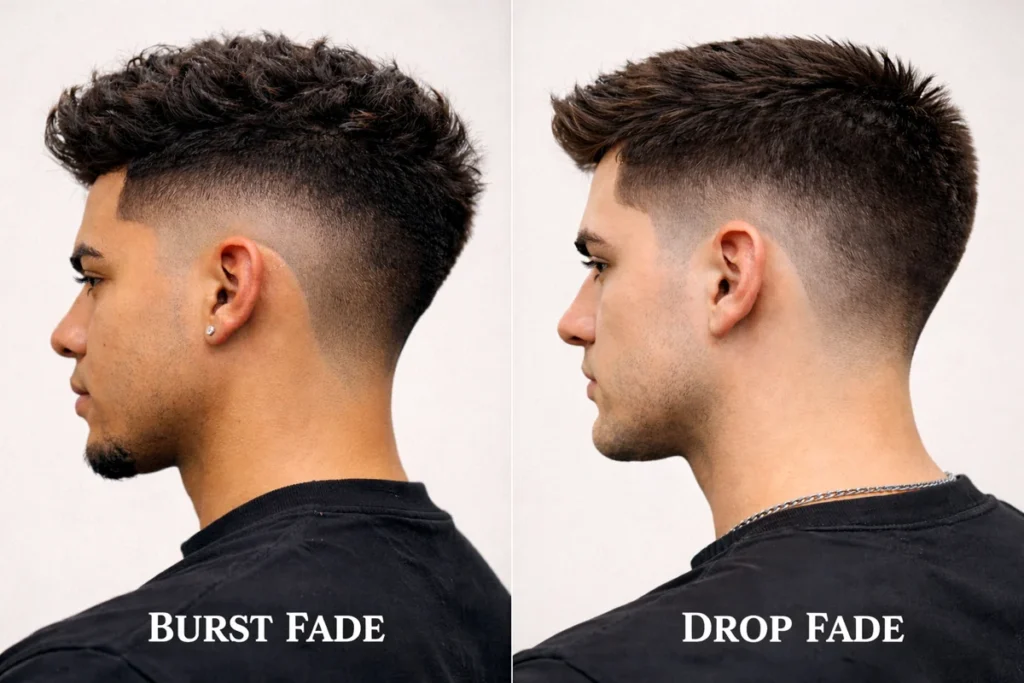
When comparing a burst fade and a drop fade, the most noticeable differences emerge in fade geometry, visual weight distribution, and styling flexibility. Although both rely on gradual blending techniques, their execution produces distinct outcomes depending on hair density, head shape, and intended styling purpose. This side-by-side comparison highlights how each fade haircut style functions in real-world grooming scenarios.
| Comparison Factor | Burst Fade | Drop Fade |
| Fade shape | Semicircular fade around the ear arc | Downward curve following natural head shape |
| Fade path | Radiates outward along the side profile | Drops lower behind the ear toward the neckline |
| Back hair length | Preserves rear volume and length | Creates a seamless back blend |
| Visual impact | Bold and high-contrast style definition | Clean and refined overall balance |
| Styling flexibility | Best for expressive and statement hairstyles | Suitable for versatile everyday hairstyles |
| Maintenance level | Moderate to high touch-up frequency | Low to moderate maintenance demand |
| Design priority | Emphasis on fade definition and shape | Emphasis on continuity and flow |
From a structural standpoint, the burst fade haircut prioritizes sharp definition and side emphasis, while the drop fade haircut focuses on smooth transitions and proportional blending. This distinction makes each fade suitable for different personal style goals and grooming routines.
Burst Fade vs Drop Fade by Hair Type
Different hair textures respond uniquely to each fade haircut style, making hair type a critical decision factor.
Curly and Wavy Hair
For curly hair and wavy hair, a burst fade enhances natural volume by keeping length at the back and sides. This helps maintain curl definition while creating strong contrast around the ear.
A drop fade, on the other hand, offers better volume control for dense curls by distributing weight more evenly along the crown area.
Best choice:
- Burst fade for maximum shape and definition
- Drop fade for balanced control and symmetry
Straight Hair
With straight hair, blending precision becomes more visible, making fade placement especially important. A drop fade creates a clean, natural gradient that complements structured hairstyles such as a pompadour or slick back.
A burst fade can still work with straight hair, but it tends to look more dramatic and is better suited for creative hairstyles rather than minimalist cuts.
Best choice:
- Drop fade for clean and professional styling
- Burst fade for high-contrast, modern looks
Thick Hair vs Fine Hair
For thick hair, both fades are effective, but for different reasons. A burst fade helps manage bulk by removing weight around the ear while preserving back volume. A drop fade improves flow and reduces heaviness near the neckline.
With fine hair, a drop fade haircut is usually preferred because it avoids harsh contrast and maintains the illusion of density.
Want to take a Professional Fade Haircut Service for Precision Blending
Choosing between a burst fade and a drop fade requires technical accuracy and proper fade placement. Both styles depend on clean gradients, balanced weight distribution, and detailed finishing around the ear and neckline. A professional fade haircut service ensures the curve, contrast, and blend are executed correctly for your hair type and face shape. If you are searching for the service of good fade haircut places, select a barber who understands fade geometry and long-term grow-out behavior. Skilled hands create smoother transitions and sharper outlines. As a result, your fade maintains structure and looks refined even weeks after the cut.
Burst Fade vs Drop Fade by Face Shape
Matching a fade to the correct face shape improves proportion and overall appearance.
Round Face Shape
A round face benefits from styles that create length and vertical emphasis. The drop fade elongates the back profile and reduces width at the sides, producing a slimming effect.
The burst fade can exaggerate roundness if the side volume is too prominent.
Oval Face Shape
An oval face shape is the most versatile and works well with both fade types. A burst fade highlights structure, while a drop fade enhances balance without distortion.
This flexibility allows greater freedom in hairstyle experimentation.
Square Face Shape
For a square face shape, the goal is to soften sharp angles without losing definition. A drop fade complements the jawline by following the natural head curve.
A burst fade can be effective when paired with longer tops, but excessive contrast may overemphasize angular features.
Popular Hairstyles That Use Burst Fades and Drop Fades
The choice between a burst fade and a drop fade often depends on the hairstyle structure you want to support. Each fade integrates differently with top length, texture, and overall silhouette.
Hairstyles Commonly Paired With a Burst Fade
A burst fade haircut is frequently used to enhance unconventional and high-impact styles.
- Mohawk fade, emphasizing height and contrast
- Faux hawk, blending aggression with control
- Mullet fade, preserving length and shape at the back
- Textured spiky top, creating dynamic movement
These styles benefit from the side-focused fade geometry that defines the burst fade.
Hairstyles Commonly Paired With a Drop Fade
A drop fade haircut supports classic and modern looks that require smooth transitions.
- Pompadour fade, maintaining clean structure
- Textured crop, offering controlled volume
- Slick back fade, enhancing polish and symmetry
- Side-part hairstyle, reinforcing natural balance
The downward fade path allows these styles to grow out more naturally over time.
Maintenance and Barber Considerations
Need to know fade maintenance helps prevent uneven growth and loss of shape.
Which Fade Requires More Maintenance?
A burst fade typically requires more frequent touch-ups because the curved fade line around the ear loses definition faster as hair grows. This makes it less forgiving during the grow-out phase.
A drop fade grows out more evenly due to its natural blending pattern, making it a lower-maintenance option for busy lifestyles.
What to Ask Your Barber
Clear communication ensures the desired result from your barber appointment.
- Desired fade height and contrast level
- Preference for ear exposure or back blending
- Daily styling routine and product use
- Maintenance expectations and touch-up frequency
Using precise fade terminology reduces misunderstandings and improves consistency.
Which Is Better: Burst Fade or Drop Fade?
There is no universal winner in the burst fade vs drop fade debate. The better choice depends on your hair type, face shape, style preference, and lifestyle needs.
Choose a burst fade if you want a bold, expressive haircut that highlights the sides and supports creative styles. Choose a drop fade if you prefer a balanced, versatile look that works across professional and casual settings.
Final Takeaway
The difference between a burst fade and a drop fade lies in fade direction, visual balance, and styling purpose. A burst fade delivers impact and individuality, while a drop fade offers versatility and refinement. Choosing the right fade means aligning structure with function, ensuring your haircut complements both your appearance and your lifestyle.
Frequently Asked Questions
A burst fade can make the head appear wider because it concentrates contrast around the sides near the ear. A drop fade often creates a more proportional look by extending the fade downward, which can visually reduce bulk in the upper head area.
A drop fade blends more seamlessly into a beard fade because both follow a downward gradient along the jaw and neckline. A burst fade can still work, but it requires precise fade alignment to avoid visual disconnect between the sideburn and beard.
A drop fade is generally more practical for hat wearers and helmet use because it avoids sharp contrast around pressure points. A burst fade may lose definition faster when frequently covered.
A burst fade tends to stand out more in side-profile photography due to its curved outline. A drop fade performs better in rear-angle and front-facing photos because of its smoother overall blend.
A drop fade provides greater styling flexibility because it integrates easily with multiple haircut transitions. A burst fade often commits the wearer to specific high-contrast hairstyles unless fully grown out.
A drop fade is generally easier for beginner barbers because it follows the natural head shape and forgiving blend lines. A burst fade requires advanced control of curved fade geometry and precise symmetry.