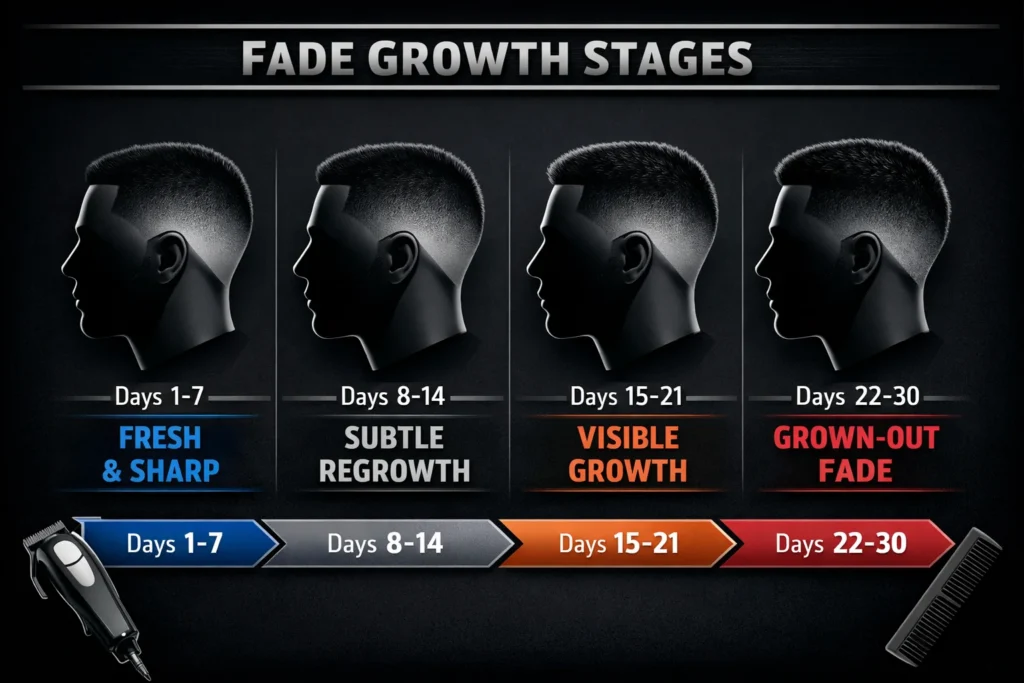
A fade haircut is known for its clean, sharp appearance, but many people wonder how long that look actually lasts. In most cases, a fade haircut stays fresh for 1 to 3 weeks, depending on the fade style, hair growth rate, and maintenance habits. High-contrast styles tend to show regrowth sooner, while softer blends hold their shape longer.
Knowing what affects fade haircut longevity helps you choose the right style, plan barber visits, and maintain a polished look that fits your lifestyle.
What Is a Fade Haircut?
A fade haircut is a men’s grooming style where the hair gradually transitions from very short or shaved hair near the neckline to longer hair higher up on the head. The defining feature is a seamless blend, creating a clean and structured look. Fades are commonly paired with other styles, such as crew cuts, pompadours, or textured tops.
Common Types of Fade Haircuts
| Fade Haircut Type | Fade Starting Point | Visual Contrast Level | Impact on Longevity |
| Low fade | Near the ears and lower sides | Low contrast | Grows out subtly and lasts longer |
| Mid fade | Midway up the sides | Medium contrast | Balanced longevity and sharpness |
| High fade | Near the temples | High contrast | Regrowth becomes noticeable faster |
| Skin fade | Down to bare skin at the base | Very high contrast | Shortest lifespan due to visible regrowth |
| Taper fade | Neckline and sideburns only | Very low contrast | Longest-lasting fade variation |
Each fade variation has a different longevity due to contrast and exposed scalp.
How Long Do Different Fade Haircuts Last?
Fade Haircut Duration by Type
The lifespan of a fade haircut varies significantly by style because of how quickly hair regrowth disrupts the blend.
- Skin fade: Lasts 5–10 days before regrowth becomes visible
- High fade: Stays sharp for about 1–2 weeks
- Mid fade: Maintains structure for 2–3 weeks
- Low fade: Can look presentable for 3–4 weeks
- Taper fade: Often lasts 4 weeks or more due to softer blending
Higher contrast between shaved and longer hair leads to faster visual degradation.
Factors That Affect How Long a Fade Haircut Lasts
Hair Growth Rate
The average hair growth rate is about 0.3–0.5 millimeters per day, or roughly ½ inch per month. Individuals with faster-growing hair will notice fade regrowth sooner, especially with styles that expose the scalp. Genetics play a major role in determining how quickly a fade loses definition.
Hair Type and Hair Texture
Different hair types affect how a fade grows out. Straight hair shows regrowth more clearly, while curly hair can mask early growth. Coarse hair tends to disrupt fade blending faster than fine hair, which can extend the perceived lifespan of the haircut.
Fade Height and Skin Exposure
The more scalp that is exposed, the faster a fade appears to grow out. A skin fade reveals regrowth almost immediately, while a low fade hides early hair growth due to gradual blending. Fade height is one of the strongest predictors of longevity.
Lifestyle and Daily Habits
An active lifestyle shortens the life of a fade. Frequent workouts, sweating, and daily hair washing accelerate the breakdown of clean lines. Regular use of shampoo, styling products, and exposure to friction from hats can all reduce how long a fade stays fresh.
How Often Should You Get a Fade Haircut?
Recommended Barber Visit Schedule
Most men should get a fade haircut every 2 to 3 weeks to maintain a sharp appearance. The ideal schedule depends on the fade style and personal grooming standards.
- Weekly visits: Recommended for skin fades and high fades
- Every 2 weeks: Ideal for mid fades
- Every 3–4 weeks: Suitable for low fades and taper fades
Regular barber visits help preserve clean transitions and prevent uneven grow-out.
Signs It’s Time for a Fade Touch-Up
You’ll know a fade haircut needs maintenance when the following changes appear:
- Blurred fade lines around the sides and back
- Neckline hair growth extending below the collar
- Loss of contrast between lengths
- Reduced sharpness around the temples and ears
These visual cues signal that the fade structure is breaking down.
Which Fade Haircut Lasts the Longest?
Longest-Lasting Fade Haircut Styles
Fade styles with gradual transitions and minimal scalp exposure maintain their look longer.
- Low fade – Grows out subtly and hides regrowth
- Taper fade – Focuses on edges rather than full sides
These styles are ideal for individuals seeking low-maintenance haircuts with fewer barber visits.
Fade Haircuts That Require Frequent Maintenance
High-contrast fades require more upkeep due to visible regrowth.
- Skin fade – Exposed scalp shows regrowth within days
- High fade – Sharp contrast makes growth noticeable quickly
These styles prioritize a fresh appearance over longevity.
How to Make a Fade Haircut Last Longer
Barber Techniques That Extend Fade Life
Professional technique plays a major role in how long a fade haircut lasts.
- Seamless blending reduces harsh regrowth lines
- Proper clipper guard selection softens transitions
- Strategic fade placement lowers visible contrast
A skilled professional barber can design a fade that grows out evenly.
At-Home Fade Maintenance Tips
Simple grooming habits help extend the life of a fade haircut between appointments.
- Perform light edge-ups around the neckline
- Clean up sideburns and ear edges
- Avoid over-washing the scalp
Using hair clippers or trimmers carefully can delay the need for a full haircut.
Grooming Products That Help Maintain a Fade
Certain tools and products support fade longevity.
- Electric trimmers for neckline cleanup
- Light-hold styling products to reduce hair separation
- Moisturizing shampoo to prevent scalp irritation
These tools maintain a clean look without disrupting the fade blend.
Take an Experienced Fade Haircut Service for Long-Lasting Results
The lifespan of a fade depends heavily on technique, blend quality, and fade placement. Sharp transitions and exposed scalp require more precision, especially if you want the haircut to grow out evenly. A professional fade haircut service focuses on seamless gradients, strategic contrast control, and balanced proportions. To maintain a clean look and extend the life of your cut, choose the best barber for fade who understands guard progression and long-term grow-out behavior. Skilled barbers design fades that soften naturally over time. As a result, your haircut stays structured, polished, and visually sharp between visits.
Fade Haircut vs Taper: Longevity Comparison
| Comparison Factor | Fade Haircut | Taper Haircut / Taper Fade |
| Growth appearance | Grows out unevenly due to sharp length contrast | Grows out gradually with smoother transitions |
| Visual contrast over time | Contrast fades quickly as hair regrows | Maintains shape and balance longer |
| Regrowth visibility | Regrowth becomes noticeable sooner | Regrowth is less noticeable |
| Maintenance frequency | Requires frequent barber visits | Requires fewer barber visits |
| Overall longevity | Shorter-lasting appearance | Longer-lasting appearance |
| Best for low maintenance | Less suitable | More suitable |
Final Takeaway: How Long Does a Fade Haircut Last?
A fade haircut usually lasts between 1 and 3 weeks, depending on the fade style, hair growth rate, and maintenance routine. High-contrast styles like a skin fade require frequent touch-ups, while low fades and taper fades offer longer-lasting results. Choosing the right fade and maintaining it properly helps balance appearance, cost, and convenience.
FAQs About Fade Haircut Duration
Yes, hair color and hair dye can influence how a fade haircut appears as it ages. Darker hair colors increase contrast visibility, making regrowth more noticeable, while lighter or blended colors can soften transitions and help the fade look cleaner for longer.
A fade haircut behaves differently depending on hair density. Thick hair tends to lose blend definition faster as bulk builds up, while thin hair often maintains a smoother transition, allowing the fade to appear more consistent as it grows out.
Yes, weather conditions such as humidity, heat, and cold temperatures can impact a fade haircut’s appearance. Humidity can cause hair expansion and frizz, while dry climates may emphasize scalp visibility, both of which affect how long the fade looks sharp.
Frequent use of hats, helmets, or headgear can flatten hair and accelerate wear on the fade transition areas. Repeated friction along the sides and neckline can distort blending and reduce the visual crispness of a fade.
Yes, a fade haircut can be appropriate in professional settings depending on the fade height and overall styling. Low fades and taper fades are generally considered more conservative, while higher fades may appear more casual or trendy.
A fade haircut on children or teenagers often appears to grow out faster due to higher metabolic activity and more active lifestyles. Increased movement and faster hair turnover can reduce how long the fade maintains its clean structure.