The choice between a low fade and a mid fade can significantly influence the overall look and feel of a haircut. While both styles are popular forms of fade haircuts, the key difference lies in fade height, which affects everything from visual balance to styling flexibility. Selecting the right fade is less about trends and more about how the haircut complements your face shape, hair type, and daily routine.
What Is a Fade Haircut?
A fade haircut is a men’s haircut technique where the hair gradually transitions from longer lengths at the top to very short or skin-level hair near the sides and neckline. The defining feature of a fade is the smooth blend between different hair lengths, creating a clean and polished appearance.
Fade haircuts are categorized based on fade height, which refers to where the shortest section begins on the head. Common types include low fades, mid fades, and high fades, each producing a different level of contrast and visual impact. Unlike a taper, which leaves more hair at the bottom, a fade often blends down to the skin for a sharper finish.
What Is a Low Fade?
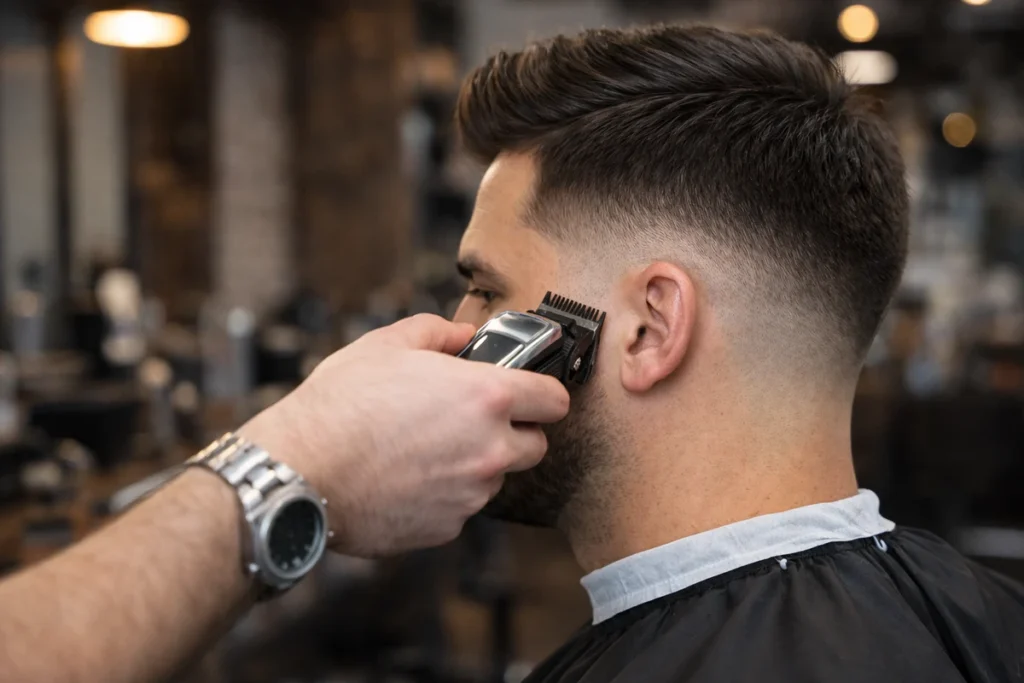
A low fade is a fade haircut that starts just above the ears and follows the natural neckline. This placement keeps more hair on the sides of the head, resulting in a subtle and conservative look. Because the transition happens lower on the head, the overall appearance remains clean without appearing overly dramatic.
Low fades are commonly associated with professional hairstyles and classic men’s haircuts. They work well for individuals who want a polished look that blends seamlessly into formal or workplace environments.
Low Fade Key Characteristics
The most notable feature of a low fade is its low starting point, which preserves side volume while maintaining a neat silhouette. The contrast level is minimal compared to higher fades, making the transition appear softer and more gradual. This results in a balanced and understated aesthetic.
Another defining trait of the low fade is its natural grow-out phase. Because the fade begins closer to the neckline, it grows out evenly and requires less frequent touch-ups than higher fades.
Popular Low Fade Variations
A low skin fade takes the fade all the way down to bare skin at the neckline while maintaining a low starting point. This variation adds sharpness without sacrificing subtlety.
The low taper fade blends elements of a traditional taper with a fade, leaving slightly more hair at the bottom for a softer finish. A low fade with beard connects the fade seamlessly into facial hair, enhancing structure and symmetry.
What Is a Mid Fade?
A mid fade starts higher on the head, typically between the temples and the ears. This placement creates a more noticeable transition between the top hair and the sides, resulting in a stronger and more modern appearance. The mid fade strikes a balance between subtle and bold.
Because of its higher starting point, the mid fade emphasizes the hairstyle on top and draws more attention to hair texture, volume, and styling detail. It is commonly chosen for contemporary and trend-driven looks.
Mid Fade Key Characteristics
The defining characteristic of a mid fade is its balanced fade height, which creates moderate to high contrast. This contrast makes the haircut appear sharper and more defined than a low fade.
Mid fades highlight head shape and facial structure, often making them ideal for individuals seeking a cleaner, more fashion-forward look. However, the increased contrast also means more visible regrowth over time.
Popular Mid Fade Variations
A mid skin fade blends down to bare skin, delivering a bold and crisp finish. This variation is popular in modern barbershop styles and social media haircut trends.
The mid taper fade offers a slightly softer version of the mid fade while maintaining height and definition. A mid fade with beard creates a strong visual connection between the haircut and facial hair, enhancing overall contrast.
Low Fade vs Mid Fade: Side-by-Side Comparison
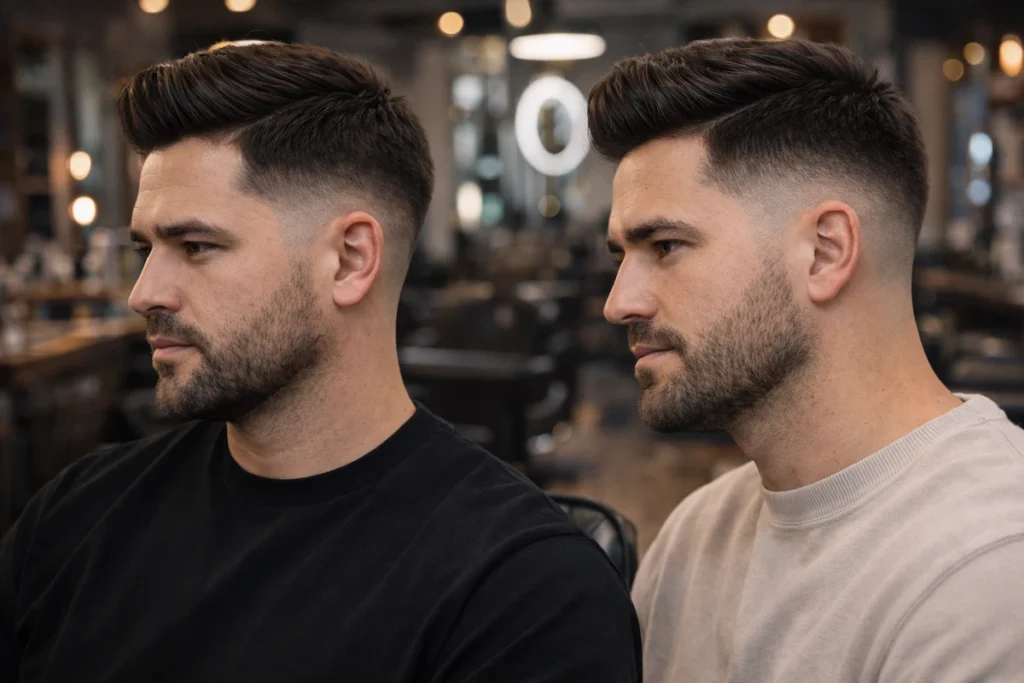
Knowing the difference between a low fade and a mid fade becomes much clearer when the two are compared directly. While both styles fall under fade haircuts, they differ in fade height, visual contrast, and maintenance demands, which significantly impacts overall appearance and practicality. This comparison helps determine which fade better suits your style preferences, professional environment, and grooming routine.
| Comparison Factor | Low Fade | Mid Fade |
| Fade Starting Point | Begins near the neckline and just above the ears | Starts around the temple area, midway up the sides |
| Fade Height | Low placement with minimal side exposure | Medium placement with more side exposure |
| Visual Contrast | Subtle and soft contrast level | Moderate to high contrast level |
| Overall Appearance | Classic, clean, and conservative aesthetic style | Modern, sharp, and bold aesthetic style |
| Professional Suitability | Highly compatible with workplace grooming standards | Suitable for casual to modern professional settings |
| Maintenance Frequency | Lower maintenance requirement with longer intervals between cuts | Higher maintenance requirement due to visible regrowth |
| Grow-Out Behavior | Natural and forgiving grow-out phase | Faster, more noticeable regrowth visibility |
Which Fade Is Better for Your Face Shape?
Choosing between a low fade and a mid fade becomes easier when factoring in face shape compatibility. Fade height directly affects how facial proportions are perceived.
For a round face shape, a mid fade can add structure by creating vertical contrast, making the face appear longer. A low fade, while still clean, may not provide as much definition for rounder features.
For an oval face shape, both low and mid fades work well due to balanced proportions. The decision often comes down to personal style and desired contrast rather than facial limitations.
For a square face shape, a mid fade enhances sharp angles and jawline definition. A low fade softens the look slightly, making it suitable for those who want to avoid excessive sharpness.
For a long face shape, a low fade is usually more flattering because it avoids adding extra height to the head. Mid fades can exaggerate length if paired with high-volume hairstyles.
Want to take a Premium Fade Haircut Service for Low and Mid Fades
Choosing between a low fade and a mid fade requires careful blending and accurate fade placement. Both styles depend on smooth transitions, clean edges, and balanced proportions. A professional fade haircut service ensures the fade height matches your face shape, hair texture, and daily routine. For refined detailing and elevated grooming standards, consider luxury fade barber services that focus on precision, comfort, and long-lasting results. Skilled barbers control contrast and symmetry with care. As a result, your fade looks sharp, polished, and consistently well-maintained.
Low Fade vs Mid Fade by Hairstyle
Different hairstyles interact uniquely with fade height. Understanding how top hairstyles pair with fades helps achieve visual balance.
A pompadour paired with a low fade creates a classic and refined look, while a pompadour with a mid fade results in a bold, high-contrast style. The mid fade draws more attention to volume and height.
A textured crop works seamlessly with both fade types. Low fades keep the haircut understated, whereas mid fades enhance the texture by framing it more aggressively.
A comb over combined with a low fade is often chosen for professional environments. When paired with a mid fade, the comb over appears more modern and fashion-forward.
For curly hair, a mid fade helps control bulk and define curl structure. A low fade maintains fullness and creates a more natural outline.
For straight hair, low fades deliver a smooth, clean finish, while mid fades introduce dimension and contrast that prevent the haircut from looking flat.
Maintenance and Grow-Out Differences
Maintenance is a critical consideration when choosing between a low fade and a mid fade. Fade height directly influences how often the haircut needs attention.
A low fade typically requires trims every three to four weeks due to its subtle transition and forgiving grow-out. Regrowth blends naturally, making the style appear neat for longer periods.
A mid fade usually requires maintenance every two to three weeks. Because the fade starts higher, new hair growth becomes noticeable faster, especially around the temple area and side panels.
Those seeking a low-maintenance haircut often prefer low fades, while individuals who prioritize sharpness and definition lean toward mid fades.
Low Fade vs Mid Fade: Which One Should You Choose?
Choosing between a low fade and a mid fade depends on a combination of personal style, lifestyle demands, and appearance goals. Neither option is objectively better; the right choice is the one that aligns with how you want your haircut to function in daily life.
A low fade is ideal for individuals who prefer a professional haircut with minimal upkeep and a subtle profile. A mid fade is better suited for those who want a modern haircut with stronger definition and are comfortable with more frequent maintenance.
How to Ask Your Barber for a Low or Mid Fade
Clear communication with your barber is essential for achieving the desired fade. Using correct barbering terminology reduces misunderstandings and ensures accurate results.
When requesting a low fade, specify that you want the fade to start just above the ears and stay low around the neckline. Mention whether you prefer a skin finish or a softer blend using longer guard sizes.
For a mid fade, ask for the fade to begin around the temples and emphasize the level of contrast you want between the sides and the top. Bringing reference photos helps align expectations regarding fade height and blending style.
Common Fade Mistakes to Avoid
One common mistake is confusing a taper with a fade haircut. While both involve gradual length changes, a fade typically blends much shorter and often reaches the skin.
Another issue is choosing a fade height that conflicts with head shape or face shape. A mid fade on a long face or a low fade on a very round face may not deliver optimal balance.
Ignoring maintenance requirements is also problematic. Mid fades demand more frequent touch-ups, while low fades offer a longer-lasting clean appearance.
Poor blend quality is another critical mistake. Even the correct fade height will look unrefined if transitions between lengths are not smooth.
Final Takeaway
The difference between Low Fade vs Mid Fade ultimately comes down to fade height, contrast level, and maintenance commitment. Low fades deliver subtlety and longevity, while mid fades provide structure and modern appeal.
Understanding these distinctions allows you to choose a fade that complements your face shape, matches your lifestyle, and aligns with your personal grooming standards.
Frequently Asked Questions About Low Fade vs Mid Fade
Yes, hair density plays a major role in fade selection. A low fade works better for thinner hair because it preserves side volume, while a mid fade can expose sparse areas by removing too much weight. Individuals with thick hair can wear either fade without revealing density issues.
A low fade is generally more forgiving for a receding hairline because it keeps attention lower on the head. A mid fade can draw the eye upward, potentially emphasizing hairline recession. Strategic fade placement helps balance the overall silhouette.
In photos, a mid fade appears sharper due to higher edge contrast, making it popular for social media and professional shoots. A low fade photographs more naturally and evenly, especially under soft lighting. Lighting conditions significantly influence fade visibility.
A mid fade pairs well with matte pomades and texture creams because it emphasizes top styling. A low fade works best with lighter styling products that maintain flow without excessive separation. Product choice affects overall balance more with mid fades.
Current barbershop trends show strong demand for mid fades, especially among younger clients. However, low fades remain consistently popular for clients seeking timeless and versatile styles. Popularity often varies by region and client age group.
Yes, fade height can influence perceived oil buildup. A mid fade exposes more scalp area, making oil and sweat more noticeable, which may increase shampoo frequency. A low fade hides scalp exposure, allowing for more flexible washing routines.