Choosing between a low fade haircut and a taper haircut is not just a matter of preference—it directly affects your overall appearance, maintenance routine, and how your hairstyle fits into your daily lifestyle. Both haircuts are popular, widely accepted, and commonly requested at modern barbershops, yet they serve very different aesthetic and practical purposes. While each style cleans up the sides and back, the difference lies in how the hair transitions, where the blend begins, and how noticeable the contrast appears.
What Is a Taper Haircut?
A taper haircut is a style where hair length gradually decreases as it moves from the top of the head down to the neckline and sideburns. Unlike fades, a taper does not blend hair down to very short lengths or skin. Instead, it preserves a smooth, natural transition that follows the head’s shape.
The defining characteristic of a taper is its low visual contrast. Because the shortest hair is still relatively long, the cut grows out evenly and maintains its shape over time.
How a Taper Works
A taper relies on the scissor-over-comb technique or longer clipper guards to control gradual length changes. The taper typically affects only the neck area, sideburn area, and sometimes the temples, leaving the rest of the hair largely intact.
This technique results in a natural neckline finish, making it ideal for individuals who prefer subtle grooming rather than sharp visual lines.
Types of Tapers
- Classic taper: evenly reduced length at the sides and back
- Low taper: minimal tapering near the ears and neckline
- Temple taper: focused tapering around the temples
- Neck taper: tapered neckline instead of blocked or rounded finishes
Each taper variation offers a slightly different balance between neatness and natural hair flow.
Who a Taper Is Best For
A taper haircut is well-suited for professional environments, corporate workplaces, and formal dress codes. It is also ideal for individuals who want a low-maintenance hairstyle that grows out cleanly without frequent barber visits.
Men with thin hair, receding hairlines, or conservative style preferences often favor tapers for their forgiving and timeless appearance.
What Is a Low Fade Haircut?
A low fade haircut is a style where the fade begins just above the ears and blends the hair down to much shorter lengths, sometimes to skin. While subtle compared to mid or high fades, the low fade still creates a visible contrast between the top hair and the sides.
The defining feature of a low fade is its precise blending zone, which sits lower on the head but remains visually sharp.
How a Low Fade Works
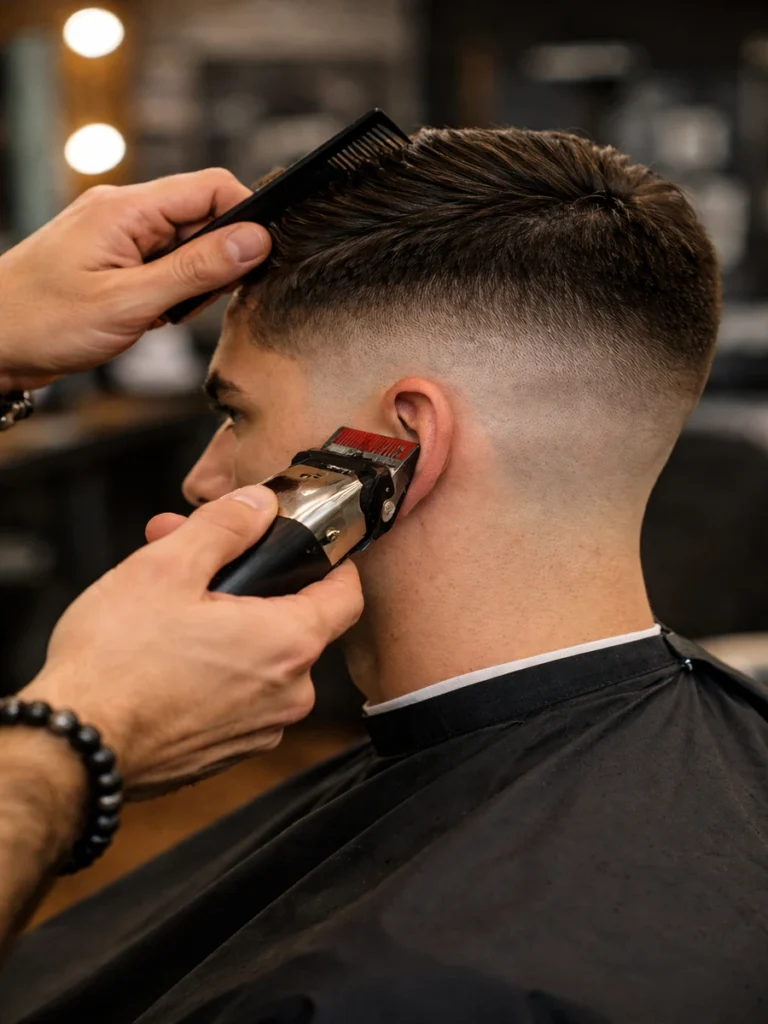
A low fade uses progressively shorter clipper guard numbers as the barber moves downward toward the neckline. In some cases, the fade transitions into a skin fade, where hair blends down to bare skin at the base.
This controlled fade zone creates a clean fade look without the dramatic exposure seen in higher fades.
Types of Low Fades
- Low skin fade: fades down to skin at the bottom
- Low taper fade: combines tapering with a low fade blend
- Low drop fade: fade curves downward behind the ears
These low fade variations allow customization based on head shape and personal style.
Who a Low Fade Is Best For
A low fade haircut is ideal for individuals who prefer a modern hairstyle with a clean finish. It works well for people comfortable with more frequent grooming and those who want sharper definition around the sides and back.
Low fades are especially popular in trend-driven styles, urban barbering, and contemporary grooming aesthetics.
Taper vs Low Fade: Side-by-Side Comparison
The most effective way to understand the difference between a taper haircut and a low fade haircut is through direct feature comparison. While both styles shorten hair toward the sides and back, they differ in starting point, contrast level, and overall maintenance demands.
| Feature | Taper | Low Fade |
| Fade starting point | Natural neckline | Just above the ears |
| Contrast level | Low contrast | Medium contrast |
| Blend visibility | Soft and subtle | Clean and defined |
| Grow-out pattern | Even and natural | Noticeable quickly |
| Maintenance frequency | Low | Medium to high |
| Professional appearance | Very high | Moderate to high |
This comparison highlights why tapers are often labeled as classic haircuts, while low fades are categorized as modern barber styles.
Taper vs Low Fade: Visual and Style Differences
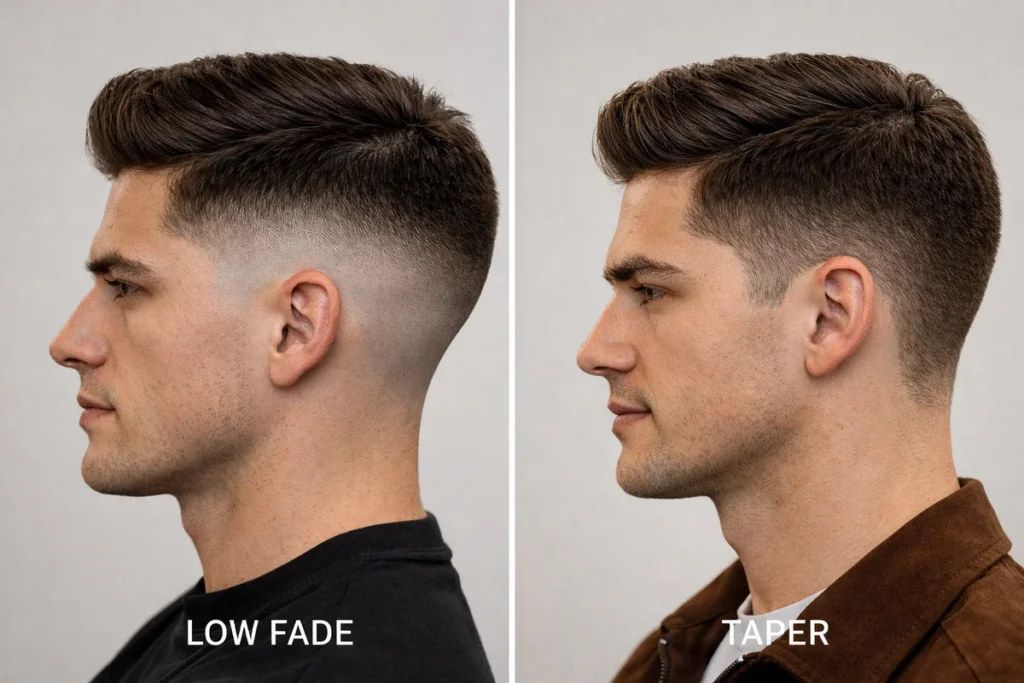
Although the two styles may appear similar at a glance, the visual effect they create is noticeably different when viewed from the side or back.
Contrast and Blending
A taper relies on soft blending, meaning the transition between hair lengths is smooth and gradual. This produces a more natural hairline appearance with minimal visual interruption.
A low fade, by contrast, introduces a more obvious fade transition zone. Even though the fade starts low, the shorter lengths create a clean contrast that draws attention to the sides of the head.
Hairline and Finish
The neckline finish is a defining factor. A tapered neckline follows the natural hair growth pattern and avoids sharp edges. A low fade neckline often incorporates a tighter blend or even skin exposure, resulting in a crisper outline.
When paired with a line-up or shape-up, low fades appear more structured, while tapers retain a softer finish.
Which Lasts Longer: Taper or Low Fade?
A taper haircut generally lasts longer than a low fade haircut. Because the length difference is minimal, a taper grows out evenly and maintains its shape for several weeks.
A low fade loses its sharpness faster due to its shorter blending zone. As the hair grows, the fade contrast becomes less defined, often requiring touch-ups every two to three weeks to maintain a clean look.
Summary: tapers offer longer-lasting results; low fades require more frequent maintenance.
Taper vs Low Fade by Hair Type
Hair texture and density play a significant role in determining which style looks best and lasts longer.
Thick Hair
With thick hair, both styles work well. However, a low fade enhances structure and reduces bulk around the sides, while a taper preserves volume for a fuller appearance.
Thin Hair
A taper haircut is often preferred for thin hair because it avoids harsh contrast that can expose scalp visibility. Low fades may exaggerate thinning areas if blended too short.
Curly or Wavy Hair
For curly hair and wavy hair, a low fade creates definition and contrast against textured tops. A taper offers a more balanced look that blends naturally with curl patterns.
Straight Hair
With straight hair, both styles are versatile. A low fade produces a sharp, polished appearance, while a taper delivers a clean but understated aesthetic.
Taper vs Low Fade for Work and Lifestyle
Lifestyle and environment strongly influence which haircut is more appropriate.
Office and Corporate Jobs
A taper haircut is widely accepted in professional workplaces due to its conservative silhouette and natural finish. It aligns well with formal dress codes and traditional grooming standards.
Creative or Trend-Driven Roles
A low fade haircut suits creative industries, fashion-forward roles, and individuals who prefer contemporary styling. The sharper contrast supports expressive personal branding.
Athletic and Active Lifestyles
For active lifestyles, a low fade offers a cooler feel and cleaner edges, while a taper minimizes the need for frequent barber visits.
Can You Combine a Taper and a Low Fade?
Yes, a taper and a low fade can be combined into a hybrid style known as a low taper fade. This haircut blends the natural tapering technique at the neckline and sideburns with the subtle contrast of a low fade around the ears.
The low taper fade is ideal for individuals who want a clean, modern look without committing to a fully faded finish. It balances professional appearance with contemporary edge.
Low Taper Fade Describes
A low taper fade keeps the fade height minimal while preserving a soft transition at the base. Barbers often recommend this style for clients transitioning from a classic taper to a modern fade.
This hybrid approach reduces harsh contrast and extends the grow-out period, making it easier to maintain than a standard low fade.
How to Ask Your Barber: Taper vs Low Fade
Clear communication is essential when choosing between a taper haircut and a low fade haircut. Using the right terminology ensures the final result matches your expectations.
Barber Terminology to Use
- Tapered neckline instead of blocked or rounded
- Low fade starting point above the ears
- Guard numbers for fade length control
- Natural blend versus skin fade
Specifying these barber terms helps eliminate ambiguity.
What to Avoid Saying
Avoid vague phrases like “just clean it up” or “do whatever looks good.” These statements leave too much room for interpretation and may result in a fade style when you intended a taper cut, or vice versa.
Try an Advanced Fade Haircut Service for Clean and Contemporary Styles
Choosing between a low fade and a taper requires precision and controlled blending. Both styles focus on clean sides and a polished neckline, but the contrast level and fade placement differ. A reliable fade haircut service ensures smooth transitions, accurate guard work, and symmetry that fits your head shape and hair texture. For clients who want sharp detail and updated grooming standards, consider a modern fade haircut service that blends technique with current style trends. Skilled barbers refine the fade zone carefully and maintain balanced proportions. As a result, your haircut looks fresh, defined, and easy to maintain.
Final Verdict: Taper or Low Fade?
Choose a taper haircut if you want a classic style, low maintenance, and a professional appearance that grows out naturally. Choose a low fade haircut if you prefer a modern aesthetic, clean contrast, and are comfortable with more frequent grooming.
Both styles are versatile, widely accepted, and customizable. The right choice ultimately depends on your hair type, lifestyle, and personal style preference.
FAQs About Taper vs Low Fade
Both styles pair well with beard fades, but a low fade haircut creates a stronger transition into a beard blend, while a taper haircut maintains a softer connection between the sideburn area and facial hair.
Yes, both styles are common youth haircuts. A taper is often chosen for school grooming policies, while a low fade is popular among teenagers seeking a more trend-forward look.
A low fade haircut feels cooler in warm climates because more hair is removed around the ears and neckline. A taper haircut retains more coverage and warmth.
Yes, both styles can support long top hairstyles. A taper preserves balance and flow, while a low fade creates contrast between long hair and closely cut sides.
A taper haircut is better for masking head shape irregularities due to its gradual blending. A low fade may highlight uneven areas if the fade line sits too low.
A taper haircut is often recommended for first-time barber clients because it carries less risk and grows out predictably. A low fade haircut requires clearer communication and styling confidence.