Choosing between a shadow fade and a skin fade often comes down to whether you prefer a professional hairstyle or a bold fade style. While both are popular fade haircuts, they differ in contrast level, scalp exposure, and overall visual impact. Knowing how each fade aligns with workplace expectations, personal style, and maintenance commitment makes it easier to select the right option.
What Is a Shadow Fade?
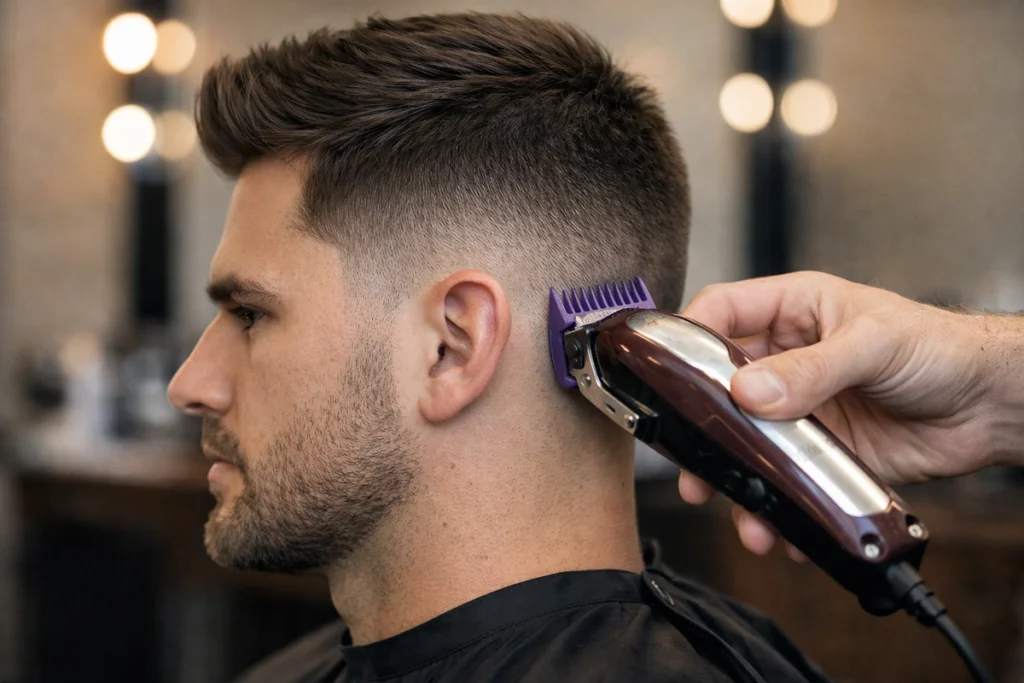
A shadow fade is a type of fade haircut that transitions smoothly from longer hair into shorter hair without reaching bare skin. The fade ends at a very short length, creating a shadowed effect rather than a bald finish. This style is known for its subtle gradient and professional appearance.
Key Characteristics of a Shadow Fade
- Low-contrast fade that avoids harsh lines
- Blurred transition zone between lengths
- No exposed scalp visibility
- Achieved using clipper guards rather than razors
- Suitable for professional hairstyles and conservative environments
Types of Shadow Fades
- Low shadow fade – subtle fade starting near the neckline
- Mid shadow fade – balanced fade with moderate visibility
- High shadow fade – more dramatic blend without skin exposure
- Shadow taper fade – focused on the temples and neckline
What Is a Skin Fade?
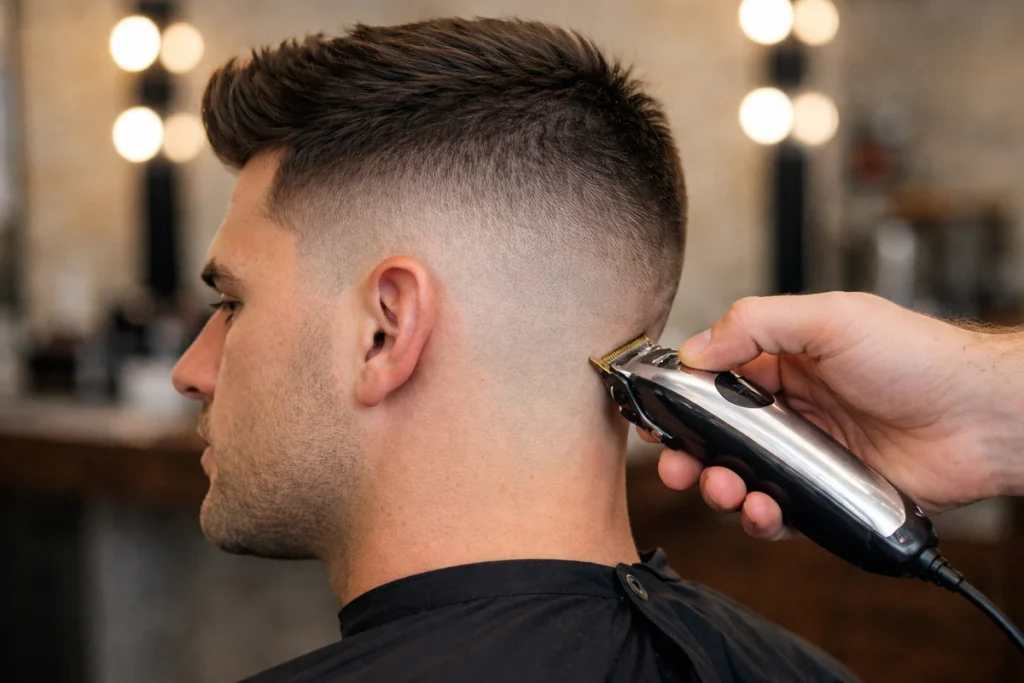
A skin fade, also known as a bald fade or zero fade, is a haircut where the hair tapers all the way down to bare skin. This style creates a high-definition fade with a strong visual contrast between hair lengths. Skin fades are commonly associated with modern barber aesthetics and clean-cut styles.
Key Characteristics of a Skin Fade
- High-contrast fade with visible scalp exposure
- Zero-length base using clippers, trimmers, or razors
- Crisp, clean fade finish
- Emphasizes hairline shape and head structure
- Requires frequent barber maintenance
Types of Skin Fades
- Low skin fade – subtle bald area near the neckline
- Mid skin fade – balanced contrast and visibility
- High skin fade – bold, aggressive fade with maximum exposure
- Drop skin fade – curved fade following the head shape
- Burst skin fade – circular fade around the ear area
Shadow Fade vs Skin Fade: Side-by-Side Comparison
A structured comparison between a shadow fade and a skin fade helps clarify how each style differs in visual contrast, scalp exposure, and maintenance demands. Tables like this are frequently extracted by Google for featured snippets because they present decision-ready information in a scannable format.
| Comparison Factor | Shadow Fade | Skin Fade |
| Contrast level | Low contrast with smooth blending | High contrast with sharp transitions |
| Scalp visibility | No exposed scalp | Fully exposed scalp at the base |
| Overall appearance | Natural, subtle, and understated | Bold, clean, and modern |
| Maintenance frequency | Low to moderate upkeep | High upkeep with frequent touch-ups |
| Regrowth visibility | Less noticeable regrowth | Regrowth becomes visible quickly |
| Best setting | Professional and conservative environments | Casual, fashion-forward, and trend-driven settings |
Which Fade Is Better for You?
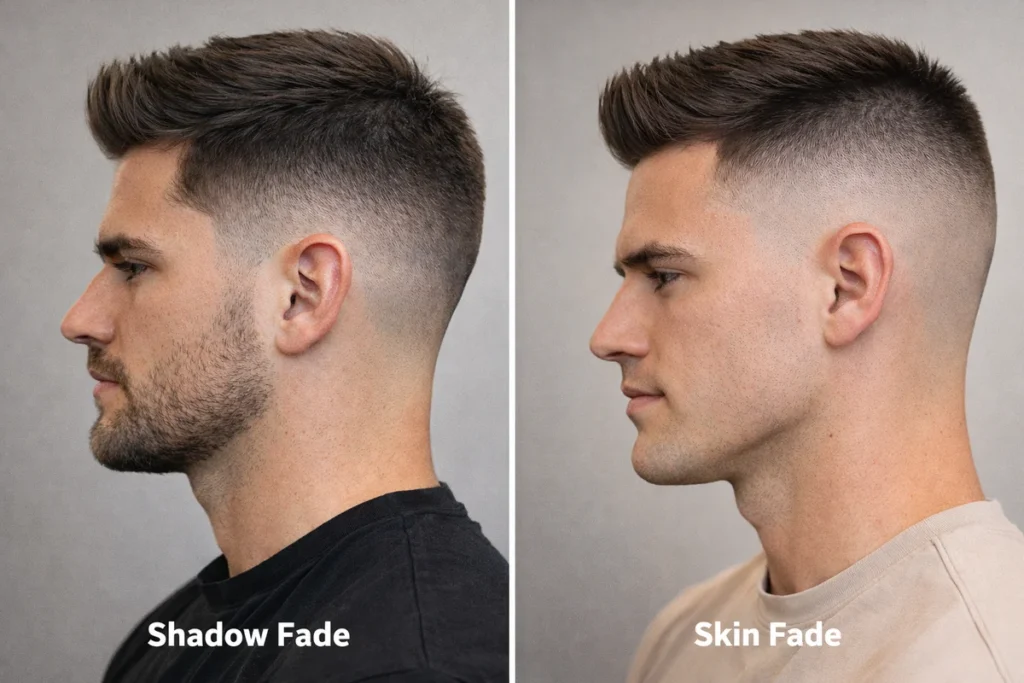
Choosing between a shadow fade and a skin fade depends on your lifestyle, personal style, and maintenance tolerance. Both fades serve different grooming goals.
Choose a Shadow Fade If…
- You prefer a natural haircut with minimal contrast
- You work in a corporate or professional setting
- You want a low-maintenance fade
- You have thinning hair or uneven density
- You want smoother hair regrowth transitions
Choose a Skin Fade If…
- You want a bold, high-impact hairstyle
- You like sharp lines and crisp finishes
- You don’t mind frequent barber visits
- You want a modern barber fade
- You want to highlight head shape and hairline definition
Shadow Fade vs Skin Fade by Hair Type
Hair texture and density play a major role in determining which fade delivers the best result. Certain hair types benefit more from softer fades, while others enhance contrast-heavy styles.
Best Fade for Thick Hair
Thick hair works well with both styles, but a skin fade enhances contrast and sharpness. A shadow fade offers a cleaner blend when volume control is a priority.
Best Fade for Fine or Thinning Hair
A shadow fade is generally better for fine or thinning hair because it avoids scalp exposure. The soft gradient helps create the illusion of fuller hair.
Best Fade for Curly Hair
Curly hair pairs well with a shadow fade for a natural blend, though a skin fade can create a striking contrast when paired with longer curls on top.
Best Fade for Straight Hair
Straight hair emphasizes clean lines, making a skin fade visually impactful. A shadow fade offers a more classic, restrained appearance.
Maintenance and Upkeep Differences
The long-term appearance of a fade depends heavily on maintenance level and hair regrowth patterns. The difference between a shadow fade and a skin fade becomes most noticeable after the first week.
How Often Does a Shadow Fade Need Maintenance?
A shadow fade typically requires maintenance every 3 to 5 weeks. Because there is no bare scalp exposure, regrowth blends naturally into the existing fade. This makes the shadow fade a preferred option for individuals seeking a low-maintenance haircut.
How Often Does a Skin Fade Need Maintenance?
A skin fade usually needs touch-ups every 1 to 2 weeks. As hair grows back over the bald base, contrast is lost quickly, making regrowth highly visible. Frequent visits are necessary to preserve the clean fade finish.
Barber Techniques and Tools Used for Each Fade
Professional results depend on the barbering techniques and tools used to execute each fade style correctly.
Tools Used for a Shadow Fade
A shadow fade is primarily achieved using hair clippers with multiple guard lengths. Barbers rely on clipper-over-clipper techniques and clipper-over-comb blending to create a smooth fade gradient. Minimal detailing is required compared to a skin fade.
Tools Used for a Skin Fade
A skin fade requires a wider range of precision tools, including trimmers, detailers, and foil shavers. Some barbers also use a straight razor to achieve a flawless bald finish. Precision and clean transition zones are essential for high-definition results.
Final Verdict: Shadow Fade or Skin Fade?
The choice between a shadow fade and a skin fade comes down to contrast preference, maintenance commitment, and personal style goals. A shadow fade offers a natural, professional, and low-maintenance option, while a skin fade delivers a bold, modern, and high-impact look. Both are versatile fade styles when matched correctly with hair type, face shape, and lifestyle needs.
Start with a Professional Fade Haircut Service Options for better look
A fade haircut service should match your personal style and daily routine. It should also consider your hair texture, scalp sensitivity, and maintenance preference. Choosing the right barber makes a difference because blending technique and detail work define the final look. If you want precision, balance, and expert grooming in one appointment, consider our full service fade haircut for a complete and customized experience. This service focuses on smooth transitions, clean lines, and proper shaping. As a result, your fade looks sharp immediately and grows out evenly over time.
Common Questions About Shadow Fades and Skin Fades
Both a shadow fade and a skin fade can be blended seamlessly into various beard styles. A shadow fade pairs well with fuller beards by maintaining a soft transition, while a skin fade creates a sharp contrast when blended into a defined beard fade.
Yes, both fades influence face shape perception. A skin fade can accentuate jawline definition and elongate the head shape, while a shadow fade creates a more balanced and proportional appearance.
A shadow fade is generally better for a sensitive scalp because it avoids razor contact and extreme short lengths. A skin fade may cause irritation if performed frequently or with aggressive shaving tools.
Both styles can incorporate hard parts, razor lines, or hair designs. A skin fade highlights design elements more clearly due to higher contrast, while a shadow fade offers a subtler, more blended effect.
A shadow fade grows out more evenly, maintaining a cohesive shape over time. A skin fade develops visible demarcation lines as the bald area fills in, often requiring earlier reshaping.
A shadow fade is often preferred for older men because it provides a refined, age-appropriate appearance. A skin fade can still work well but tends to project a more youthful and edgy style.