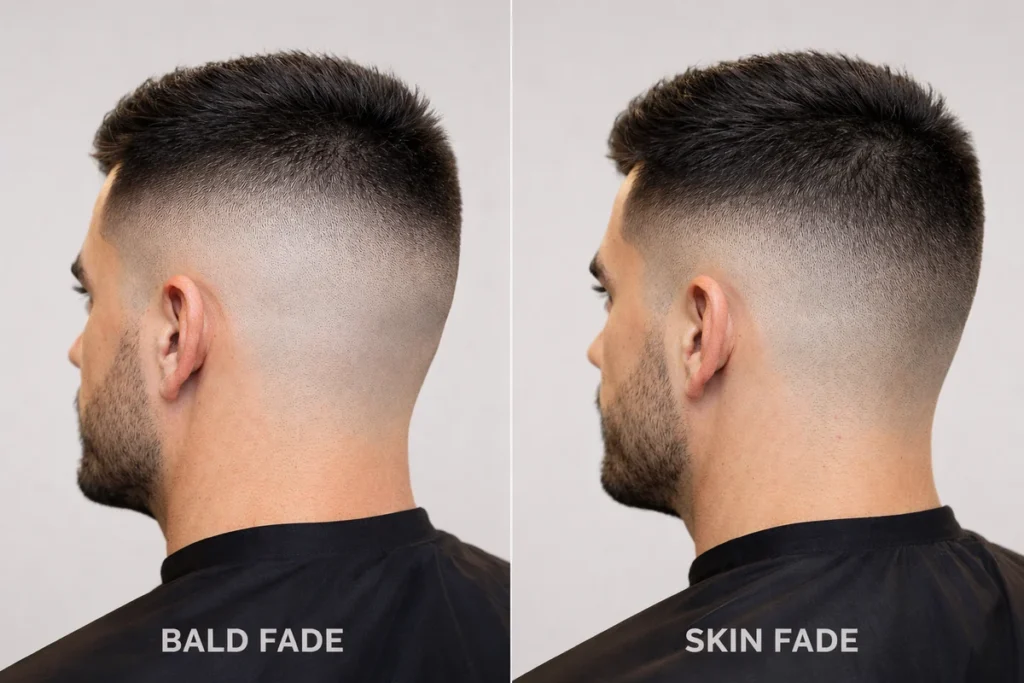
A skin fade tapers hair down to near skin using clippers, while a bald fade shaves hair completely to bare skin with a razor or foil shaver. The main difference is the level of scalp exposure, visual contrast, and maintenance required.
Both styles are popular fade haircuts, but choosing the right one depends on how sharp you want the finish to look and how often you’re willing to maintain it.
What Is a Skin Fade?
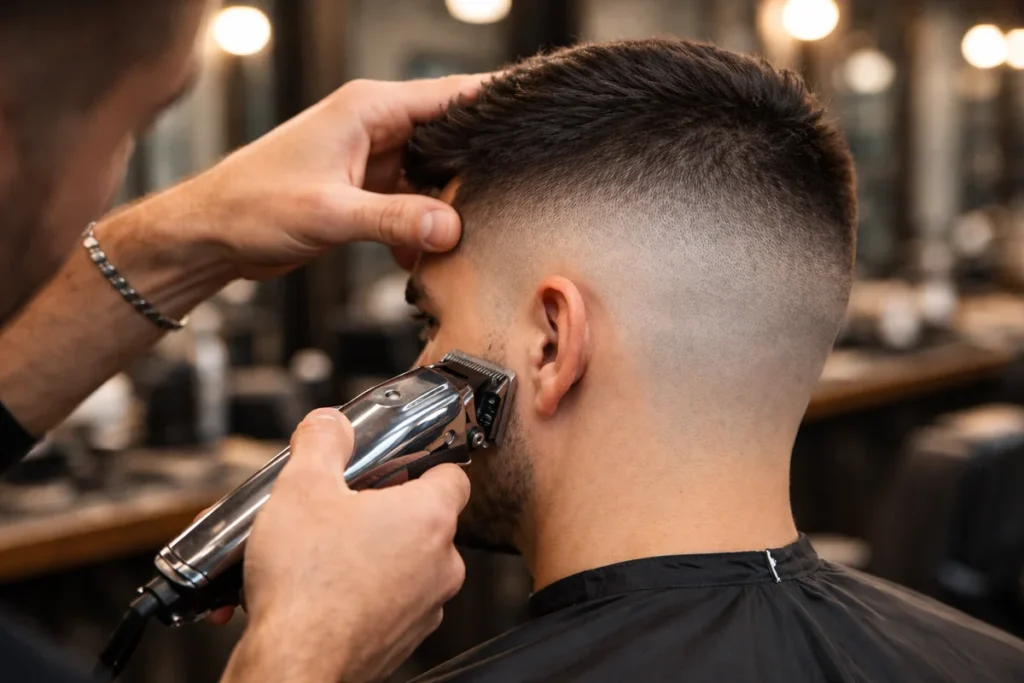
A skin fade is a type of fade haircut where the hair gradually tapers down to near skin level at the sides and back, typically using electric clippers with no guard or a very short guard. The transition is smooth and blended, leaving minimal visible scalp while maintaining a natural gradient from short to longer hair.
This style is popular for its clean appearance without fully shaving the head.
Key Characteristics of a Skin Fade
- The hair fades down to near skin level, not completely shaved
- Executed primarily with clippers rather than razors
- Features a soft blend and gradual transition
- Offers a polished yet natural look
- Less aggressive than a bald fade in terms of scalp exposure
A skin fade works well for individuals who want a modern, sharp haircut without the intensity of a fully shaved base.
What Is a Bald Fade?
A bald fade is a more extreme version of a fade haircut where the hair is taken completely down to bare skin at the lowest point. This is achieved using a foil shaver or straight razor, creating a high-contrast transition from shaved skin to longer hair above.
Key Characteristics of a Bald Fade
- The base is fully shaved to bare skin
- Often finished with a razor or foil shaver
- Creates a high-contrast fade
- Produces a very sharp and clean finish
- Requires more frequent maintenance than a skin fade
A bald fade is commonly chosen for bold styles and is frequently paired with short haircuts like a buzz cut or crew cut.
Skin Fade vs Bald Fade: Key Differences
The table below provides a side-by-side comparison of a skin fade and a bald fade, highlighting how they differ in terms of hair length, tools used, visual contrast, and maintenance requirements. This format is designed for quick decision-making and clear understanding of both fade styles.
| Comparison Aspect | Skin Fade | Bald Fade |
| Definition | A fade haircut that tapers hair down to near skin level without fully shaving the scalp | A fade haircut where hair is taken down to bare skin at the base |
| Lowest hair length | Near skin, not completely shaved | Fully shaved to the scalp |
| Fade technique | Gradual fade technique with a softer transition | Gradual fade technique with a sharper transition |
| Tools used | Electric clippers with low or no guard | Razor or foil shaver for a smooth finish |
| Visual contrast | Moderate contrast between lengths | High contrast between shaved skin and longer hair |
| Scalp visibility | Minimal scalp exposure | Maximum scalp exposure |
| Overall appearance | Clean, natural, and blended look | Sharp, bold, and highly defined look |
| Maintenance requirements | Medium maintenance due to slower visible regrowth | High maintenance due to fast visible regrowth |
Which Fade Looks Better?
A skin fade delivers a more natural gradient, making it ideal for individuals who prefer a clean yet subtle look. The softer transition helps the haircut blend seamlessly into longer styles on top, such as a pompadour or textured crop.
A bald fade, by contrast, produces a sharper finish with a more noticeable transition. The complete removal of hair at the base creates a striking, high-impact look often associated with modern barbering and street-style aesthetics.
Best Fade by Face Shape
- Round face shape: A bald fade can add definition and create sharper angles
- Square face shape: Both skin fades and bald fades work well, depending on contrast preference
- Oval face shape: Highly versatile; either fade style complements balanced proportions
- Receding hairline: A skin fade offers a softer transition that draws less attention to the hairline
Choosing the right fade involves balancing facial structure, personal style, and comfort level with scalp exposure.
Take the Precision Fade Haircut Services for Skin and Bald Fades
Choosing between a skin fade and a bald fade requires precision, proper tool selection, and careful blending. Both styles depend on clean transitions, controlled clipper work, and balanced fade height placement. A professional fade haircut service ensures the level of scalp exposure and contrast fits your face shape, hair type, and maintenance routine. For expert blending and consistent results, book a Camarillo salon fade haircut service designed to deliver sharp gradients and polished finishes. Skilled barbers refine the fade line with accuracy and attention to detail. As a result, your haircut looks crisp, modern, and professionally structured.
Maintenance and Upkeep Comparison
Skin Fade Maintenance
A skin fade typically requires touch-ups every two to three weeks to maintain a clean blend. Because the hair is not fully shaved, regrowth appears less abrupt, and there is a lower risk of skin irritation or razor bumps.
This makes the skin fade a practical option for those seeking a low-to-moderate maintenance haircut.
Bald Fade Maintenance
A bald fade demands more frequent upkeep, often every one to two weeks, to preserve the shaved base. The use of razors or foil shavers increases the likelihood of skin sensitivity, requiring proper aftershave products and moisturizers.
This style is best suited for individuals comfortable with a high-maintenance grooming routine.
Pros and Cons of Skin Fade vs Bald Fade (Table Format)
| Fade Type | Pros | Cons |
| Skin Fade | – Provides a clean appearance without full scalp exposure– Requires less frequent maintenance than a bald fade– Reduces risk of razor bumps and skin irritation– Blends well with longer hairstyles like a comb over or quiff | – Less dramatic than a bald fade– May lose sharpness faster as hair regrowth occurs– Lower contrast for bold style preferences |
| Bald Fade | – Creates a sharp finish with maximum contrast– Delivers a highly defined fade transition– Pairs well with short cuts like a buzz cut or crew cut– Ideal for modern and high-impact hairstyles | – Requires frequent barber visits or self-maintenance– Higher risk of shaving irritation– More demanding grooming routine |
Popular Hairstyles That Pair With Each Fade
Hairstyles With a Skin Fade
A skin fade complements hairstyles that benefit from smooth transitions and balanced proportions.
- Pompadour
- Quiff
- Comb over
- Textured crop
- Caesar cut
These combinations maintain a polished appearance while keeping the fade subtle.
Hairstyles With a Bald Fade
A bald fade works best with haircuts that emphasize contrast and structure.
- Buzz cut
- Crew cut
- Undercut
- High-and-tight
- Short curly top
These styles maximize the visual impact of a fully shaved base.
How to Ask Your Barber for the Right Fade
Clear communication ensures you get the fade you want. When speaking to your barber, reference both tools and finish level.
- Ask for a skin fade if you want the sides taken down to near skin with clippers only
- Ask for a bald fade if you want the base shaved with a razor or foil shaver
- Specify the fade height: low, mid, or high
- Mention your preferred hairstyle on top
- Bring a reference photo to avoid ambiguity
Using precise terminology reduces the risk of misinterpretation.
Conclusion: Choosing Between a Skin Fade and a Bald Fade
The decision between a skin fade and a bald fade depends on your tolerance for maintenance, preference for contrast, and comfort with scalp exposure. A skin fade offers a balanced, low-maintenance option with a natural finish, while a bald fade delivers a bold, sharply defined look that demands regular upkeep.
Both fades are modern, versatile, and effective when matched with the right hairstyle, face shape, and grooming routine.
Frequently Asked Questions
Both skin fades and bald fades can be appropriate in professional environments when styled conservatively. Choosing a low fade height and pairing it with a structured top, such as a side part or short comb over, helps maintain a polished appearance suitable for corporate settings.
Neither a skin fade nor a bald fade affects hair growth rate or hair thickness. These styles only alter hair length at the surface and do not impact hair follicles or long-term hair health.
Yes, both fade types work well with curly hair and textured hair. A skin fade offers a smoother blend for dense curls, while a bald fade creates stronger contrast that highlights curl definition on top.
The ideal fade height depends on personal style and head shape. A low fade offers subtlety, a mid fade provides balance, and a high fade creates a bold, modern silhouette for both skin fades and bald fades.
Yes, both styles pair well with a beard fade, creating a seamless transition from the haircut to facial hair. A skin fade with beard blend appears more natural, while a bald fade with beard fade produces a sharper, more defined contrast.
Neither style is strictly seasonal, but bald fades are more popular in warmer months due to their cooling effect and minimal hair length. Skin fades remain a year-round option because they balance comfort with versatility.