Choosing between a skin fade and a taper fade is one of the most common decisions men face when getting a fade haircut, yet the difference between the two is often misunderstood. While both styles involve gradual hair length transitions, they serve very different purposes in terms of appearance, maintenance, and professional suitability. The right choice depends on your personal style, work environment, and how much effort you want to invest in upkeep.
What Is a Skin Fade?
A skin fade is a type of fade haircut where the hair transitions from longer lengths at the top to completely shaved or near-shaved skin level at the bottom. This style is known for its clean finish, sharp contrast, and highly defined appearance.
Skin Fade Definition
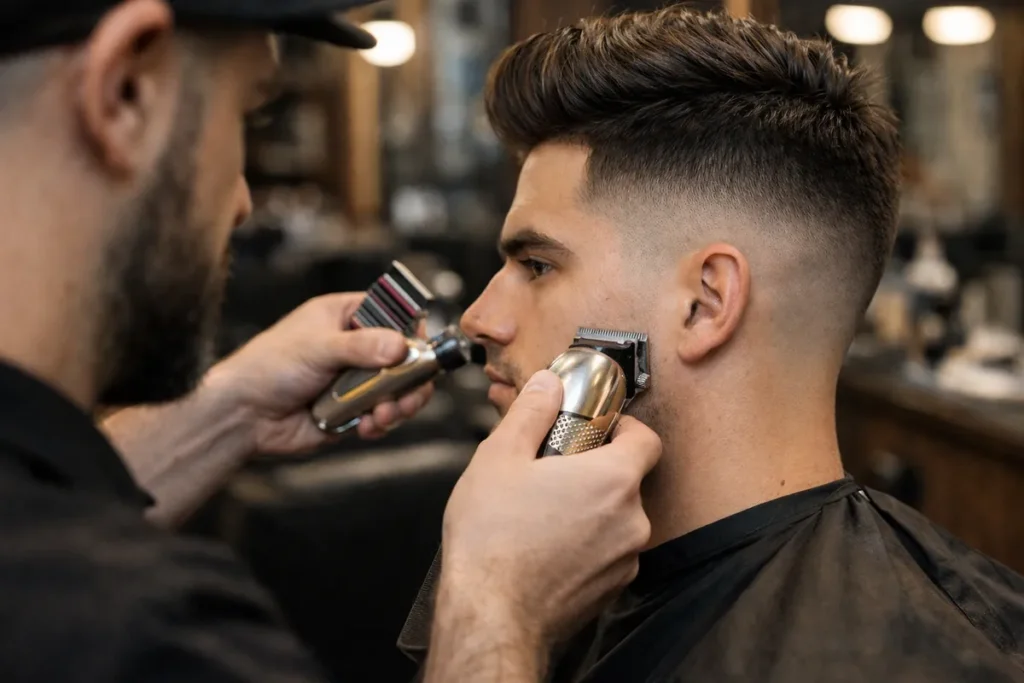
A skin fade, also called a bald fade or zero fade, is a haircut where the shortest portion of the fade is cut down to the scalp, using clippers, trimmers, or a straight razor for a seamless blend.
How a Skin Fade Is Cut
The process of creating a skin fade haircut requires precision and advanced blending techniques.
- The barber establishes a fade guideline at the lowest point of the haircut.
- Hair is shaved down to skin level using a trimmer or foil shaver.
- Gradual blending is achieved using multiple guard sizes on hair clippers.
- The transition is refined using clipper-over-comb or scissor-over-comb techniques.
- Final detailing creates a sharp hairline and clean finish.
This method produces a high-contrast fade transition that stands out visually.
Types of Skin Fades
There are several variations of the skin fade, each defined by where the fade begins on the head.
- Low Skin Fade – The fade starts just above the ears and neckline, offering a subtle yet clean look.
- Mid Skin Fade – The fade begins at the temple area, balancing boldness and versatility.
- High Skin Fade – The fade starts high on the head, creating maximum contrast and a dramatic style.
- Drop Skin Fade – The fade curves downward behind the ears, following the natural head shape.
- Burst Skin Fade – The fade radiates around the ear, commonly paired with modern hairstyles like mohawks.
Each variation affects the visual sharpness, face shape balance, and style intensity of the haircut.
Characteristics of a Skin Fade
A skin fade haircut is typically associated with the following traits:
- High-contrast appearance
- Exposed scalp at the base
- Sharp and defined edges
- Modern or edgy aesthetic
- Higher maintenance requirements
Because the hair is shaved down to skin, regrowth becomes noticeable quickly, making frequent barber visits essential to maintain the look.
What Is a Taper Fade?
A taper fade is a more subtle version of a fade haircut where the hair gradually shortens near the temples, sideburns, and neckline without reaching bare skin. This style emphasizes a natural hairline, smooth blending, and a conservative finish that works across a wide range of environments.
Taper Fade Definition
A taper fade is a haircut where the hair length gradually decreases toward the edges of the head while maintaining visible hair throughout the fade, avoiding full scalp exposure.
Unlike a skin fade, a taper fade haircut prioritizes soft transitions and a low-contrast appearance.
How a Taper Fade Is Cut
The cutting process for a taper fade focuses on refinement rather than dramatic contrast.
- The barber maintains length on the sides and back using longer guard sizes.
- Gradual tapering is applied around the neckline and temples.
- Blending is achieved using clipper-over-comb and scissor-over-comb techniques.
- The natural hairline is cleaned up without fully shaving the skin.
This technique creates a professional haircut with a smooth and understated finish.
Types of Taper Fades
Several variations of the taper fade exist, each offering a different level of subtlety.
- Low Taper Fade – Minimal tapering near the ears and neckline for a clean, conservative look.
- Temple Taper – Focuses tapering around the temples while keeping the rest fuller.
- Neck Taper – Concentrates the fade at the back for a polished rear profile.
- Classic Taper – A timeless style with even, gradual shortening on all sides.
These variations make the taper fade haircut highly adaptable to both casual and formal settings.
Characteristics of a Taper Fade
A taper fade is commonly associated with:
- Natural-looking transitions
- Minimal skin exposure
- Lower maintenance requirements
- Professional and conservative appearance
- Longer grow-out period
Because the fade blends into existing hair, regrowth is less noticeable over time.
Skin Fade vs Taper Fade: Side-by-Side Comparison
The most effective way to understand the difference between a skin fade and a taper fade is through direct comparison.
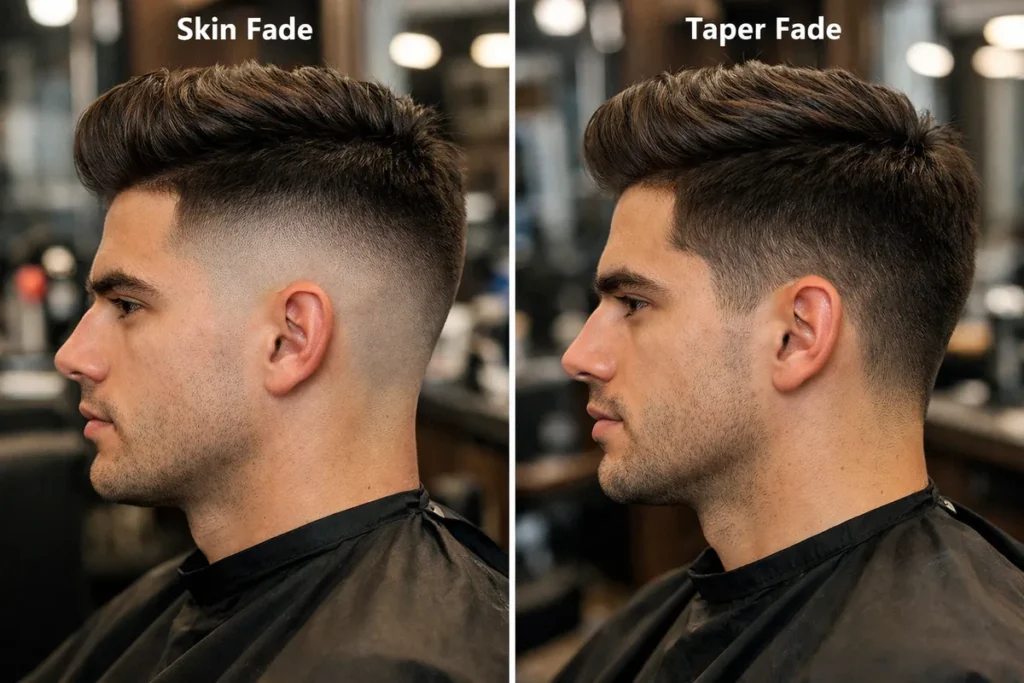
| Feature | Skin Fade | Taper Fade |
| Hair Length at Base | Shaved to skin | Shortened but visible |
| Skin Exposure | Full scalp exposure | No scalp exposure |
| Visual Contrast | High contrast | Low contrast |
| Maintenance Frequency | High | Low |
| Professional Appearance | Situational | Widely accepted |
| Grow-Out Phase | Noticeable quickly | Blends naturally |
This comparison highlights why the two styles serve different style preferences and lifestyle needs.
Key Differences Between Skin Fade and Taper Fade
The primary distinctions between these two fade haircut styles can be summarized as follows:
- Contrast level: A skin fade creates a sharp contrast, while a taper fade remains subtle.
- Skin visibility: A skin fade haircut exposes the scalp; a taper fade does not.
- Maintenance cycle: Skin fades require more frequent barber visits.
- Professional suitability: Taper fades are more adaptable to corporate environments.
- Regrowth appearance: Taper fades maintain a cleaner look during the grow-out phase.
These differences explain why the choice often depends on personal style, workplace expectations, and time commitment.
Which Fade Is Better for You?
Choosing between a skin fade and a taper fade depends on your personal style, daily routine, and environmental expectations. Both options fall under modern fade haircuts, but they serve different purposes.
Choose a Skin Fade If:
- You prefer a bold and modern haircut
- You like a high-contrast fade transition
- You don’t mind frequent barber visits
- You want a sharp and edgy appearance
- You regularly style your hair for casual or trend-focused settings
A skin fade haircut is ideal for individuals who prioritize visual impact over low maintenance.
Choose a Taper Fade If:
- You want a clean but conservative haircut
- You work in a professional or corporate environment
- You prefer low-maintenance hairstyles
- You value a natural grow-out phase
- You need a style that works for both formal and casual settings
A taper fade offers flexibility and longevity without sacrificing polish.
Contemporary Fade Haircut Services for Sharp and Clean Results
Choosing between a skin fade and a taper fade requires careful blending and technical control. Both styles rely on precise clipper work, smooth transitions, and accurate fade height placement. A professional fade haircut service ensures the level of contrast suits your head shape, hair density, and lifestyle needs. For a bold yet refined look, try a trendy fade haircut for men tailored to modern style preferences. Experienced barbers focus on symmetry and flawless gradients. As a result, your haircut appears fresh, defined, and confidently styled.
Skin Fade vs Taper Fade for Work and Professional Settings
In professional environments, appearance standards often favor subtle grooming choices.
A taper fade is widely accepted across office settings, corporate workplaces, and formal industries due to its natural hairline and understated finish.
A skin fade, while stylish, may appear too bold in more conservative roles, especially when paired with high skin exposure and sharp edges.
For workplaces with relaxed dress codes, both fade haircut styles are acceptable when properly maintained.
Maintenance and Grow-Out Comparison
Maintenance is one of the most important factors when deciding between a skin fade and a taper fade.
How Often Does a Skin Fade Need Maintenance?
A skin fade haircut typically requires maintenance every 1 to 2 weeks.
Because the hair is cut down to bare skin, regrowth becomes noticeable quickly, reducing the clean finish over time.
How Often Does a Taper Fade Need Maintenance?
A taper fade generally lasts 3 to 5 weeks before needing a touch-up.
The gradual blending allows the haircut to age naturally without visible contrast lines.
Popular Hairstyles That Use Skin Fades or Taper Fades
Both fade styles are commonly paired with various men’s hairstyles.
- Pompadour with Skin Fade
- Buzz Cut with Skin Fade
- Comb Over with Taper Fade
- Quiff with Taper Fade
- Textured Crop with Fade
The choice of fade affects the overall balance, face shape enhancement, and style intensity of these hairstyles.
Common Barber Terms You Should Know
Knowing these barbering terms helps you communicate clearly during a haircut.
- Zero fade – A fade taken down to skin level
- Guard size – The attachment length used on hair clippers
- Blending – Smoothing transitions between lengths
- Graduation – The change in hair length across the fade
- Natural neckline – A softly tapered neckline without sharp edges
Final Verdict: Skin Fade or Taper Fade?
The difference between a skin fade and a taper fade comes down to contrast, maintenance, and setting.
Choose a skin fade for a sharp, modern look that demands attention, or a taper fade for a versatile, professional haircut that grows out gracefully.
Both styles remain staples in modern barbering, and the best choice is the one that fits your lifestyle and expectations.
Frequently Asked Questions
Yes, hair texture plays a major role. Curly hair, coarse hair, and wavy hair often benefit from a taper fade because it preserves volume and reduces visible scalp exposure, while straight hair tends to showcase the sharp transitions of a skin fade more clearly.
A skin fade is often preferred in hot climates because it removes more hair at the base, improving airflow and reducing heat retention. A taper fade retains more hair and may feel warmer in high-temperature environments.
Yes, both styles can integrate seamlessly with a beard fade. A skin fade creates a dramatic transition into facial hair, while a taper fade provides a softer blend that maintains a balanced facial profile.
A taper fade typically pairs better with long hairstyles because it supports smoother transitions and avoids excessive contrast. A skin fade can still be used, but it creates a more dramatic separation between long hair and the sides.
A taper fade is usually recommended for first-time fade haircuts due to its forgiving grow-out and conservative appearance. A skin fade may feel too drastic for someone unfamiliar with high-contrast haircuts.
When speaking to a barber, specify the fade type, fade height, and desired finish. Mention whether you want skin exposure, a natural hairline, or a soft blend, and reference guard sizes or photos to ensure accuracy.