Choosing between a taper fade and a fade haircut often comes down to how much contrast, maintenance, and versatility you want from your style. While both haircuts rely on gradual hair blending, they differ significantly in blend height, skin exposure, and overall appearance. A taper fade delivers a subtle, professional look that grows out naturally, whereas a fade creates a sharper, more modern aesthetic with higher visual impact. Knowing these differences helps you select a haircut that aligns with your lifestyle, work environment, and personal grooming preferences.
What Is a Taper Fade?
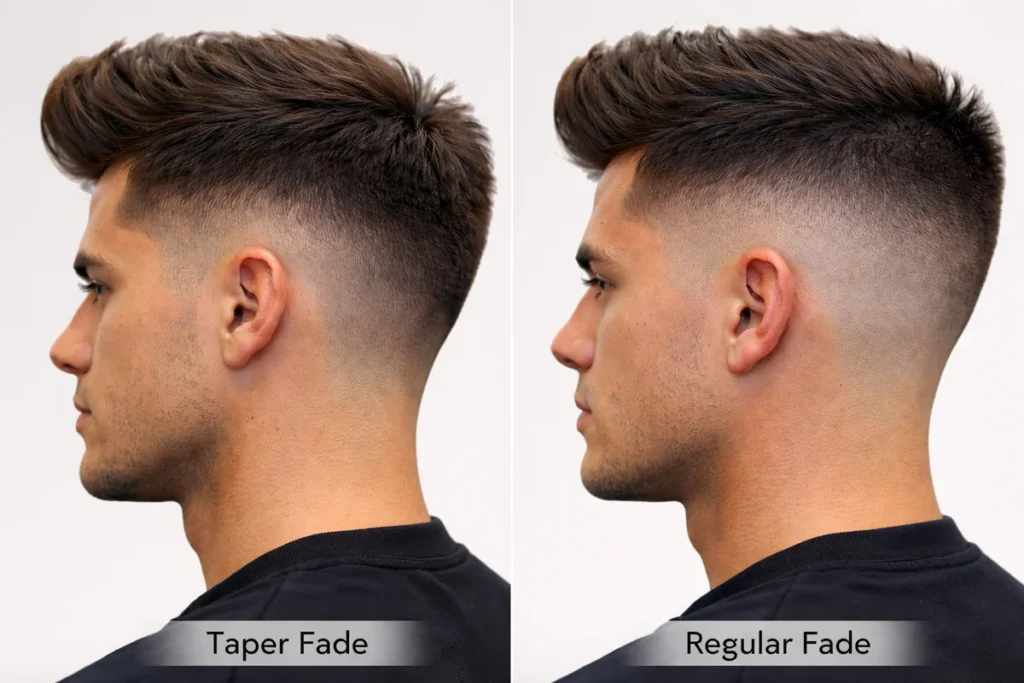
A taper fade is a haircut that gradually reduces hair length around the temples and nape, while keeping the majority of the hair longer. Unlike a full fade, a taper fade does not usually expose skin and maintains a natural hairline. The result is a clean, polished appearance without dramatic contrast.
This style is commonly associated with classic men’s haircuts and business-appropriate grooming.
Key Characteristics of a Taper Fade
A taper fade is defined by controlled transitions and minimal contrast.
Core characteristics include:
- Gradual hair length graduation
- Focus on neck taper and temple taper
- Minimal exposure of skin
- Smooth blended taper rather than sharp lines
Because the blend is subtle, taper fades are considered low-maintenance haircuts that grow out evenly.
Types of Taper Fades
Several variations fall under the taper fade category, depending on placement and intensity.
- Low taper fade – Subtle taper starting just above the ears
- Temple taper (temp fade) – Focused taper around the temples only
- Classic taper fade – Conservative, traditional shape
- Blended taper fade – Extra smooth transitions with no harsh edges
Each variation preserves the defining feature of a taper: controlled edge blending rather than full fading.
What Is a Fade?
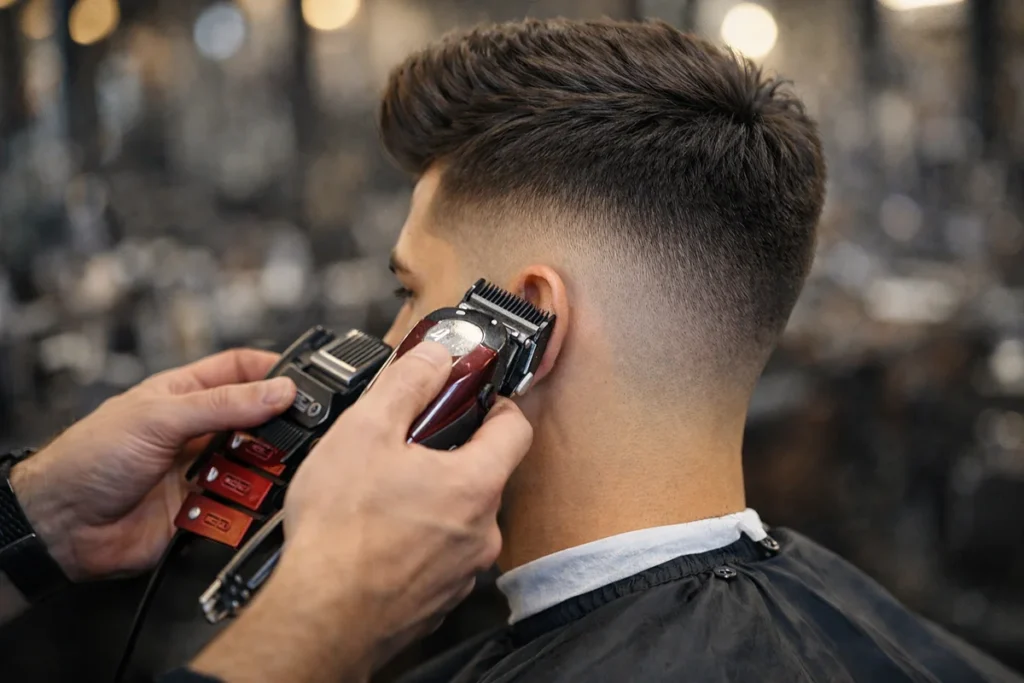
A fade haircut is a style where hair transitions from longer lengths to very short or skin-level hair as it moves down the head. Unlike a taper fade, a fade extends higher up the sides and back, creating noticeable contrast. The shortest section is often achieved using clippers with minimal or no guard.
Fades are a cornerstone of modern barbering and trend-driven styles.
Key Characteristics of a Fade
A fade haircut is defined by bold transitions and precision.
Key characteristics include:
- High contrast haircut appearance
- Hair faded to skin or near-skin levels
- Vertical blending up the head
- Frequent use of guard lengths and zero gap clippers
Because of the exposed skin and sharp transitions, fades deliver a cleaner but more aggressive aesthetic.
Types of Fades
Fade haircuts are classified by how high the fade begins.
- Low fade – Starts just above the ears
- Mid fade – Begins at the midpoint of the head
- High fade – Starts near the temples or crown
- Skin fade (bald fade) – Blends completely into skin
- Drop fade – Curves downward behind the ears
Each fade type changes the overall balance between subtlety and boldness.
Taper Fade vs Fade — Side-by-Side Comparison
The clearest way to understand the difference between a taper fade and a fade haircut is to compare them across key attributes such as appearance, maintenance, and suitability. The table below is structured for featured snippet extraction and quick visual comparison.
| Comparison Factor | Taper Fade | Fade Haircut |
| Blend Starting Point | Starts at the temples and neckline | Starts higher on the sides and back |
| Blend Height | Stays close to the natural hairline | Extends to mid-head or higher |
| Contrast Level | Low contrast with smooth gradual blending | High contrast with sharp transitions |
| Skin Exposure | Usually no skin-level hair | Often fades down to bare skin |
| Overall Appearance | Natural haircut finish | High-contrast haircut look |
| Grow-Out Pattern | Even and subtle hair growth | Loses sharpness quickly |
| Maintenance Frequency | Barber visit every 3–5 weeks | Touch-ups every 1–2 weeks |
| Professional Suitability | Considered a professional haircut | More casual or fashion-forward |
| Best Use Case | Low-maintenance grooming routines | Bold modern styles |
Which Is Better: Taper Fade or Fade?
The question of which style is better depends entirely on personal preference, lifestyle, and environment. Neither haircut is universally superior; each excels in different scenarios.
Best Choice for Professional Settings
For offices, corporate environments, or formal dress codes, the taper fade is usually the better option.
Reasons include:
- Preserved natural hairline
- Subtle length graduation
- Clean but understated appearance
This makes taper fades ideal for business haircuts and corporate grooming standards.
Best Choice for Bold or Modern Styles
If style impact is the priority, a fade haircut delivers stronger results.
Fades are best for:
- High-contrast visuals
- Trend-driven looks
- Expressive personal style
Options like the skin fade or high fade are especially popular in modern barber culture and street-style grooming.
Best Choice Based on Hair Type & Face Shape
Hair texture and head shape also influence results.
- Thick hair pairs well with both styles but highlights fades more dramatically
- Curly hair benefits from tapers that preserve volume
- Straight hair enhances the sharp transitions of fades
A balanced face shape can support either style, while longer or rounder faces often benefit from the vertical emphasis of a fade.
Get your Tailored Fade Haircut Solutions for Every Style
Choosing between a taper fade and a full fade requires careful blending and proper fade placement. Both styles rely on smooth transitions, controlled guard work, and clean finishing around the temples and neckline. A dependable fade haircut service ensures the contrast and height are adjusted to suit your head shape and daily routine. For personalized results and refined detailing, consider a custom fade haircut service designed around your specific style goals. Skilled barbers focus on symmetry and seamless gradients. As a result, your haircut appears sharp, modern, and easy to maintain.
Taper Fade vs Fade for Different Use Cases
Different lifestyles demand different grooming solutions. Understanding real-world use cases helps narrow the decision.
For Men Seeking Everyday Grooming
Men who want a reliable, adaptable haircut often prefer the taper fade. It transitions easily from casual to formal settings and requires minimal styling effort.
For Teens & Young Adults
Younger audiences frequently gravitate toward fade haircuts due to their association with current trends, athlete styles, and social media influence. The sharper contrast aligns with expressive fashion choices.
For Low-Maintenance Haircuts
Those who want fewer barber visits and easier upkeep should choose a taper fade. Its natural grow-out pattern reduces the need for frequent adjustments.
Barber Terminology You Should Know
Need to know basic barber terminology helps prevent miscommunication and ensures you get the haircut you expect.
- Taper – A gradual shortening of hair near the neckline and temples
- Fade – A blend that transitions hair down to skin-level length
- Skin fade – A fade that completely blends into exposed skin
- Blending – The smoothing of transitions between different hair lengths
- Guard lengths – Numbered clipper attachments that control hair length
- Line-up – A sharp, defined hairline shape
- Zero gap – A clipper adjustment for extremely close cutting
Knowing these terms allows you to communicate clearly with your professional barber.
How to Ask Your Barber for the Right Cut
Clear communication is essential when deciding between a taper fade and a fade haircut.
What to Say for a Taper Fade
Ask your barber for:
- A low taper fade at the temples and neckline
- Natural edge blending
- No skin exposure
Mention whether you want a classic taper or a blended taper fade for smoother transitions.
What to Say for a Fade
Ask your barber for:
- A low, mid, or high fade
- Whether you want a skin fade or a guarded fade
- A defined line-up or natural edges
Specifying fade height and contrast level ensures accurate results.
Final Verdict — Taper Fade vs Fade
The choice between taper fade vs fade comes down to contrast, maintenance, and personal style. A taper fade offers a subtle, professional, and low-maintenance haircut, while a fade haircut delivers bold visuals and modern appeal. Choosing the right option depends on your lifestyle, work environment, and grooming preferences.
Both styles are effective when matched correctly to the individual.
Common Questions About Taper Fade vs Fade
Yes, a taper fade works well with long hair on top because it keeps the sides clean without removing bulk. This makes it ideal for styles like pompadours, slick backs, and textured crops.
Yes, a fade haircut can emphasize thinning hair if the fade starts too high. In these cases, a low fade or taper fade helps maintain the appearance of density.
Yes, a taper fade is often recommended for receding hairlines because it preserves the front hairline shape and avoids drawing attention to the temples.
Yes, the grow-out pattern differs significantly. A taper fade maintains structure longer, while a fade haircut loses definition more quickly due to exposed skin areas.
A taper fade is usually better for wavy hair because it controls volume without disrupting natural texture. High fades can create uneven contrast with waves.
Yes, both styles can be adjusted based on head shape, crown position, and side profile. Skilled barbers tailor fade height and taper placement to balance proportions.