Choosing between a taper haircut and a high fade haircut can be confusing, especially since both styles involve gradual changes in hair length. While they may appear similar at first glance, the difference lies in fade height, contrast level, and overall visual impact. Comprehending the true distinction between taper vs high fade helps you select a haircut that aligns with your personal style, hair type, and daily routine.
What Is a Taper Haircut?
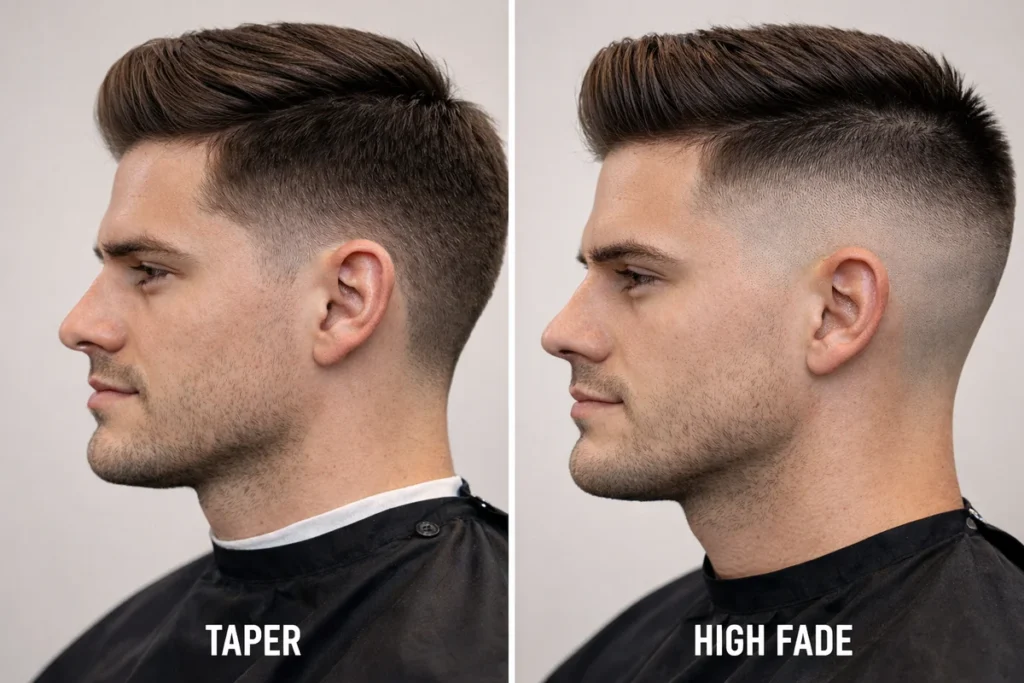
A taper haircut is defined by a gradual reduction in hair length as it moves from the top of the head down to the natural hairline. Unlike fades, tapers do not typically expose skin and instead preserve a clean, understated transition.
This style is commonly chosen for its timeless appearance and versatility across both formal and casual settings.
How a Taper Is Cut
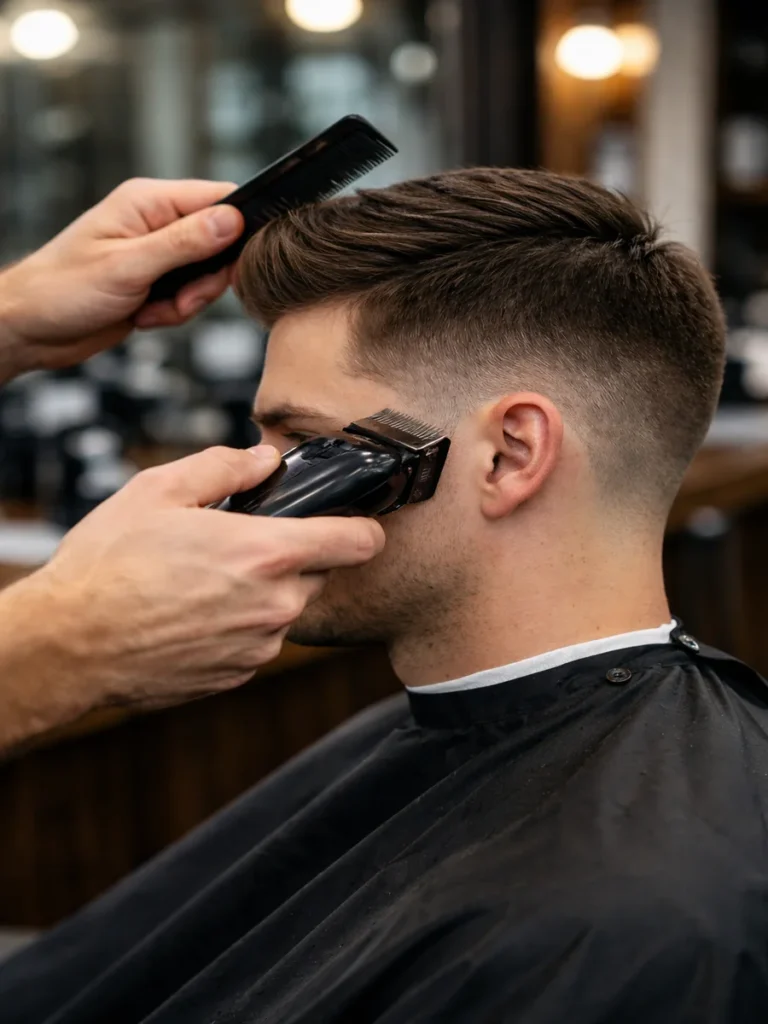
The defining feature of a taper is the smooth length graduation around the sides and back of the head. Barbers use longer clipper guard lengths and blending techniques to avoid harsh lines. The result is a soft finish that enhances the hair’s natural shape.
Most tapers focus on cleaning up the neckline, sideburns, and sometimes the temples, without drastically reducing side volume.
Types of Taper Haircuts
Several variations fall under the taper haircut category:
- Low taper focused near the ears and neckline
- Classic taper with balanced side reduction
- Temple taper (also called a Brooklyn fade) localized at the hairline
Each variation maintains the core principle of subtlety and controlled blending.
Who a Taper Haircut Is Best For
A taper haircut is ideal for individuals who prioritize:
- Professional appearance
- Low-maintenance grooming
- Conservative or timeless hairstyles
Because tapers grow out evenly, they are often recommended for office environments and long intervals between barber visits.
What Is a High Fade?
A high fade haircut is a more aggressive style where the fade begins high on the head, typically above the temple area. The hair quickly transitions from longer lengths on top to very short sides or exposed skin, creating a sharp visual contrast.
High fades are strongly associated with modern grooming trends and statement hairstyles.
How a High Fade Is Cut
In a high fade, barbers remove a significant amount of hair from the sides early in the cut. Short clipper guards or zero guards are used to create a visible fade that climbs high up the head. The blending area is compressed, making the transition more noticeable.
This technique emphasizes the shape of the head and highlights any hairstyle volume left on top.
Types of High Fades
Common high fade variations include:
- High skin fade blending directly to bare skin
- High drop fade following the head’s natural curve
- High burst fade radiating around the ear
Each version increases visual impact while retaining the core characteristics of a high fade.
Who a High Fade Is Best For
A high fade haircut works best for people who want:
- Bold, high-contrast hairstyles
- Modern or street-style aesthetics
- Sharp facial structure emphasis
Because high fades grow out quickly, they suit individuals comfortable with frequent barber visits.
Taper vs High Fade: Side-by-Side Comparison
When comparing a taper haircut and a high fade haircut, the most noticeable differences appear in fade height, contrast level, and grow-out behavior. This section is designed to satisfy comparison-based search intent and is ideal for table-style featured snippets.
| Feature | Taper Haircut | High Fade Haircut |
| Fade height | Low and subtle | High, above temples |
| Visual contrast | Minimal | Strong and dramatic |
| Skin exposure | Rare | Common |
| Maintenance frequency | Low | High |
| Grow-out appearance | Even and natural | Noticeable and uneven |
| Professional suitability | High | Context-dependent |
This comparison highlights why tapers are often chosen for longevity, while high fades are selected for impact.
Which Looks Better? Taper vs High Fade by Face Shape
The effectiveness of a haircut depends heavily on face shape compatibility. Both styles can look excellent when matched correctly, but they emphasize facial features in different ways.
Round Face Shape
A round face shape benefits from hairstyles that add height and reduce width.
- A high fade elongates the face by creating vertical contrast.
- A taper haircut offers balance but may appear too soft if not paired with volume on top.
Square Face Shape
A square face shape is defined by strong jawlines and angular features.
- A high fade haircut enhances structure and sharpness.
- A taper softens the overall look for a more conservative appearance.
Oval Face Shape
An oval face shape is the most versatile.
- Both a taper and a high fade work well.
- Choice depends more on personal style preference than facial proportions.
Take a Affordable Taper and High Fade Haircut Service
Choosing between a taper and a high fade requires proper blending and accurate fade placement. Both styles demand clean transitions, balanced proportions, and careful clipper control. A reliable fade haircut service ensures the haircut matches your face shape, hair density, and maintenance preference. If you want quality results without overspending, consider an affordable fade haircut service that delivers precision and consistency. Skilled barbers focus on smooth gradients and sharp detailing. As a result, your haircut looks clean, modern, and easy to manage between visits.
Taper vs High Fade by Hair Type
Different hair textures interact with fades and tapers in unique ways. Choosing the right style improves both appearance and manageability.
Straight Hair
With straight hair, fade lines are more visible.
- A high fade creates sharp, clean contrast.
- A taper haircut produces a polished but understated result.
Curly Hair
For curly hair, controlling bulk is key.
- A taper preserves curl volume while cleaning the edges.
- A high fade creates dramatic separation between curls and sides.
Afro-Textured Hair
Afro-textured hair pairs especially well with structured fades.
- Temple fades and low tapers are popular for natural shape.
- A high fade emphasizes hair density and head shape.
Maintenance & Barber Visit Frequency
Maintenance is one of the most practical differences in the taper vs high fade decision.
How Often a Taper Haircut Needs a Trim
A taper haircut typically requires a trim every 3 to 5 weeks. Because the transition is gradual, the grow-out phase looks natural and does not reveal harsh lines.
This makes tapers ideal for individuals seeking low-maintenance grooming.
How Often a High Fade Haircut Needs a Trim
A high fade haircut often needs attention every 1 to 3 weeks. As the hair grows, the fade line becomes more visible, especially with skin fades.
High fades are best for those who prioritize a sharp appearance and can commit to frequent touch-ups.
Taper vs High Fade for Work & Lifestyle
Your daily routine and environment play a major role in choosing between a taper haircut and a high fade haircut. Each style sends a different visual signal depending on context.
- Corporate and office environments typically favor a taper haircut due to its subtle transitions and professional appearance.
- Creative industries and casual workplaces allow more flexibility, making a high fade an acceptable and often stylish choice.
- Athletic and active lifestyles benefit from high fades because of reduced bulk and improved comfort, despite higher maintenance.
Need to know lifestyle compatibility helps avoid regret after the haircut grows in.
How to Ask Your Barber for a Taper or High Fade
Clear communication with your barber ensures the final result matches your expectations. Use specific barber terminology rather than generic descriptions.
Step-by-Step Barber Instructions
- Specify the fade height you want, especially when requesting a high fade.
- Mention preferred clipper guard lengths or show reference photos.
- Clarify whether you want a natural neckline or a sharp edge-up.
- Ask about beard fade blending if you have facial hair.
Using these steps reduces misunderstandings and aligns the haircut with your hair growth pattern.
Final Verdict: Should You Choose a Taper or a High Fade?
Choosing between a taper vs high fade depends on your priorities, not just trends.
Choose a taper haircut if you value:
- Professional appearance
- Low maintenance
- Natural grow-out
Choose a high fade haircut if you want:
- Bold visual contrast
- Modern style
- Sharp facial definition
Both haircuts are timeless in their own way. The right choice aligns your personal style, hair type, and lifestyle needs.
Common Questions About Taper vs High Fade
A taper haircut works very well with long hairstyles because it cleans up the neckline and side areas without removing length from the top. This makes it ideal for styles like long waves, slick backs, and man buns.
A high fade haircut can make thinning hair more noticeable if the top lacks density. However, when paired with textured styling or short crops, it can create the illusion of fuller hair.
A high fade haircut is better for hot weather because it removes more hair from the sides and improves airflow around the scalp. A taper haircut retains more coverage, making it slightly warmer but more versatile year-round.
Neither a taper haircut nor a high fade haircut affects hair growth rate. Hair growth is determined by genetics, health, and scalp condition, not haircut style.
A taper haircut is usually better for first-time fade clients because it offers a gradual transition and less dramatic change. This allows individuals to adjust before committing to a high fade.
A high fade haircut pairs well with hard parts and hair designs because of its clean contrast. A taper haircut can support subtle parts but is less suitable for intricate shaved designs.