The Burst Fade and the Regular Fade are two widely requested fade haircut styles, but they differ significantly in fade shape, visual impact, and maintenance requirements. A Burst Fade features a curved taper around the ear for a bold, modern look, while a Regular Fade follows a straight, even blend for a clean and timeless appearance.
What Is a Burst Fade?
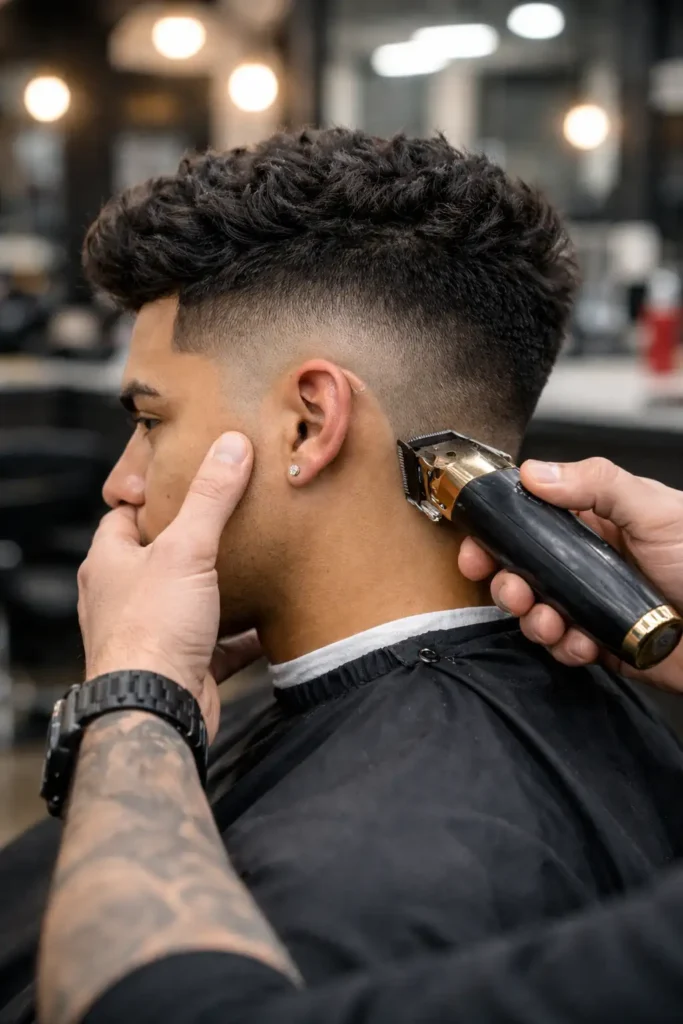
A Burst Fade is a fade haircut style where the hair tapers in a semicircular pattern around the ear, creating a “burst” effect while leaving more length at the back of the head. Unlike traditional fades, the fade does not run straight across the sides.
Key Characteristics of a Burst Fade
- Curved fade pattern focused around the ear
- Gradual taper that blends into the neckline
- Strong emphasis on the side profile
- Often paired with statement hairstyles like a mohawk, curly top, or mullet
These features make the Burst Fade haircut visually striking and more style-forward than conventional fades.
Who Is a Burst Fade Best For?
- People with curly hair, wavy hair, or textured tops
- Face shapes that benefit from rounded contours, such as oval or diamond face shapes
- Individuals seeking a modern haircut style with high visual impact
Because the Burst Fade draws attention to the ear and side of the head, it works best for those comfortable with a bold appearance.
What Is a Regular Fade?
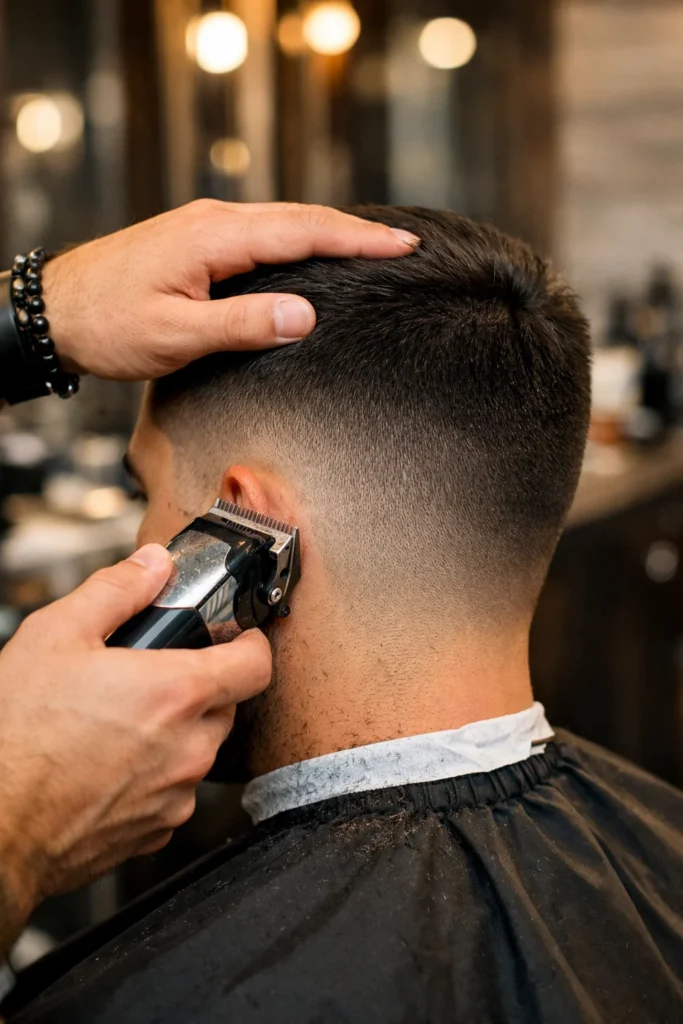
A Regular Fade is a classic fade haircut where the hair gradually transitions from short to long in a consistent, horizontal pattern across the sides and back of the head. It prioritizes balance, cleanliness, and versatility.
Types of Regular Fades
- Low Fade – subtle taper near the neckline
- Mid Fade – balanced fade starting at the temple
- High Fade – dramatic fade starting higher on the head
- Skin Fade – fade blended down to bare skin
Each Regular Fade variation follows the same foundational technique with different starting points.
Who Is a Regular Fade Best For?
- Professional or corporate environments
- Men who prefer low-maintenance haircuts
- Hair types ranging from straight hair to slightly wavy hair
The Regular Fade haircut is widely accepted, easy to maintain, and adaptable to many hairstyles.
Try a Complete Fade Haircut Service With Detailed Razor Work
A well-executed fade requires more than basic clipper work. It demands careful blending, accurate fade placement, and clean finishing around the hairline and neckline. A professional fade haircut service focuses on symmetry, smooth gradients, and long-lasting structure. For clients who want extra sharpness and premium detailing, a straight razor fade full service haircut delivers a polished and refined result. This option enhances edge definition and improves overall contrast. As a result, the haircut looks crisp, balanced, and camera-ready from every angle.
Burst Fade vs Regular Fade: Side-by-Side Comparison
The clearest way to understand the difference between a Burst Fade and a Regular Fade is by comparing their core features. Each haircut follows a distinct fade structure and produces a different visual outcome.
| Comparison Feature | Burst Fade | Regular Fade |
| Fade Shape | Curved around the ear | Straight or evenly blended |
| Visual Focus | Side profile emphasis | Overall head balance |
| Hairline Treatment | Rounded contour | Linear or tapered |
| Styling Complexity | High | Low to moderate |
| Maintenance Frequency | Moderate | Low |
| Common Pairings | Mohawk, curly top, mullet | Crew cut, comb over |
This fade comparison table is useful for quickly identifying which style aligns with your grooming goals.
Key Differences Between a Burst Fade and a Regular Fade
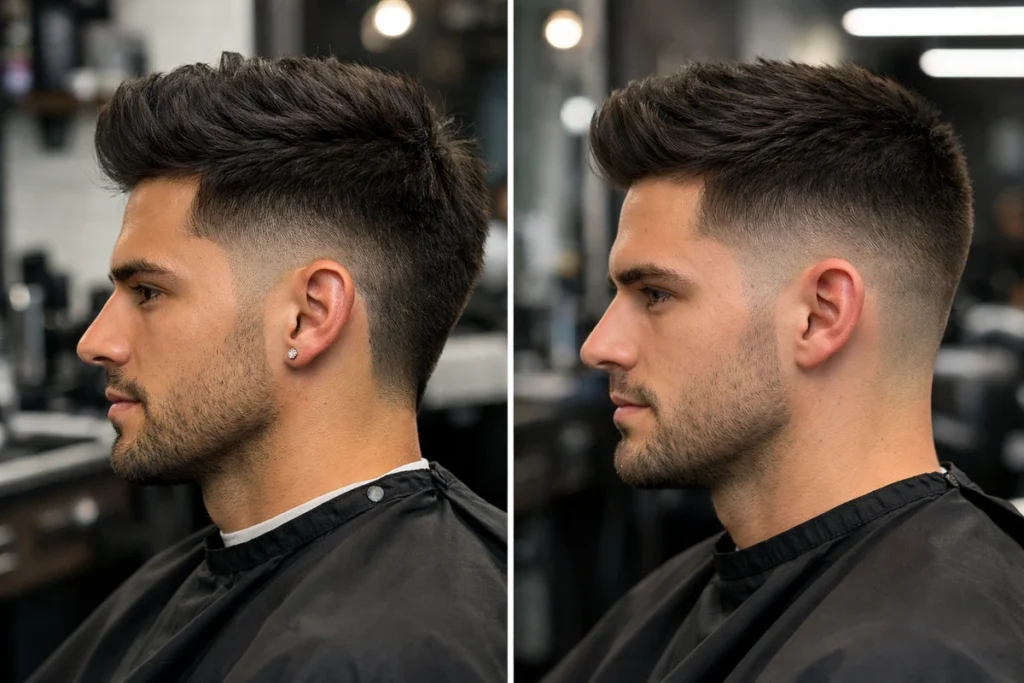
The distinction between these two styles goes beyond appearance and affects styling, upkeep, and barber technique.
- Fade Direction
A Burst Fade radiates outward in a circular motion, while a Regular Fade follows a straight, uniform path. - Side Profile Impact
The Burst Fade haircut highlights the ear and cheek area, whereas the Regular Fade haircut maintains symmetry from all angles. - Hairline Shape
Rounded edges define the Burst Fade, while clean, structured lines define the Regular Fade. - Styling Versatility
A Burst Fade supports expressive hairstyles, while a Regular Fade pairs well with traditional cuts. - Grow-Out Appearance
The Regular Fade grows out more evenly, while the Burst Fade requires more frequent shaping.
Which Fade Should You Choose?
Choosing between a Burst Fade and a Regular Fade depends on your personal style, maintenance tolerance, and environment.
Choose a Burst Fade If You Want:
- A bold haircut style with strong visual contrast
- Emphasis on curvature and shape
- A modern look paired with textured hairstyles
- A fade that stands out from traditional cuts
Choose a Regular Fade If You Want:
- A clean, timeless haircut
- Compatibility with professional settings
- Minimal daily styling
- A haircut that grows out naturally
This decision framework helps align your haircut choice with your lifestyle needs and styling preferences.
Maintenance and Upkeep Comparison
Proper maintenance determines how long a fade haircut looks sharp and intentional. The Burst Fade and the Regular Fade differ significantly in upkeep frequency, barber skill requirements, and grow-out behavior, making maintenance an important factor when choosing between them.
| Maintenance Factor | Burst Fade | Regular Fade |
| Trim Frequency | Every 2–3 weeks | Every 3–5 weeks |
| Barber Skill Requirement | High precision required | Standard barber technique |
| Fade Shape Durability | Curved lines lose definition faster | Linear fade holds shape longer |
| Grow-Out Appearance | Uneven without reshaping | Even and gradual |
| Styling Product Use | Often needed for top volume | Minimal or optional |
| Long-Term Convenience | Moderate maintenance commitment | Low maintenance commitment |
Due to its detailed fade curvature, the Burst Fade haircut benefits from frequent touch-ups, while the Regular Fade haircut offers greater flexibility and ease for long-term wear.
Barber Terminology You Should Know
Need to know common barber terminology helps ensure better communication during a haircut.
- Taper – A gradual reduction in hair length
- Blend – Smooth transition between lengths
- Drop Fade – Fade that dips behind the ear
- Skin Fade – Fade that blends down to bare skin
- Line-Up – Sharp edge along the hairline
These terms are often referenced when discussing fade haircut styles.
Final Thoughts: Burst Fade or Regular Fade?
The choice between a Burst Fade and a Regular Fade comes down to personal style, maintenance commitment, and visual preference. A Burst Fade offers a modern, expressive look with strong contouring, while a Regular Fade delivers a timeless, versatile haircut suitable for nearly any situation. Knowing how each fade behaves helps you make a confident, informed decision.
Common Questions About Burst Fade vs Regular Fade
Yes, hair density plays an important role in fade selection. A Burst Fade can make thicker hair appear more controlled around the ear, while a Regular Fade helps create structure for fine or thinning hair by maintaining even distribution.