Choosing between a drop fade and a regular fade comes down to how you want your haircut to shape your head profile, complement your hairstyle on top, and fit your lifestyle needs. While both are popular fade haircut styles, they differ in fade line direction, overall silhouette, and visual impact. Knowing these differences makes it easier to select a fade that suits your head shape, personal style, and maintenance expectations.
What Is a Regular Fade Haircut?
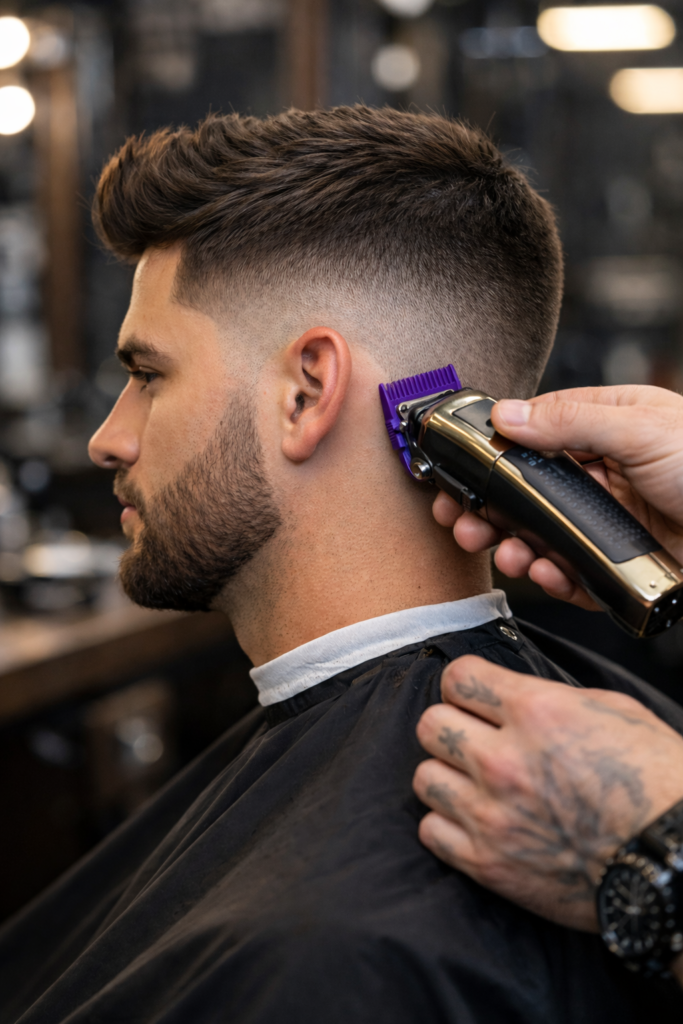
A regular fade haircut is a fade style where the fade transition remains consistent and level around the entire head. The hair gradually shortens from the top down to the sides and back without dipping or curving behind the ears. This results in a balanced and symmetrical appearance.
The regular fade is commonly referred to as a standard fade because it follows classic barbering principles and works across a wide range of hair types, face shapes, and professional environments.
Types of Regular Fades
Low Regular Fade
A low regular fade begins just above the ears and neckline, preserving more hair on the sides. This variation offers a conservative and polished look, making it ideal for formal settings and low-maintenance grooming routines.
Mid Regular Fade
A mid regular fade starts midway up the sides of the head, creating a balanced contrast between the top length and the side fade. It is one of the most versatile fade placements and suits both casual and structured hairstyles.
High Regular Fade
A high regular fade starts near the temple area and quickly transitions into longer hair on top. This style produces strong contrast and a sharper outline, often used to emphasize bold top hairstyles such as a pompadour or textured quiff.
Why Regular Fades Are Considered Classic
The regular fade is considered classic because of its uniform geometry and predictable growth pattern. As the hair grows out, the fade remains visually even, requiring fewer corrective touch-ups. This makes it a preferred option for individuals prioritizing clean aesthetics, workplace compatibility, and consistent maintenance cycles.
Regular fades also serve as the foundation for many advanced fade variations, making them a core concept in modern barber education.
What Is a Drop Fade Haircut?
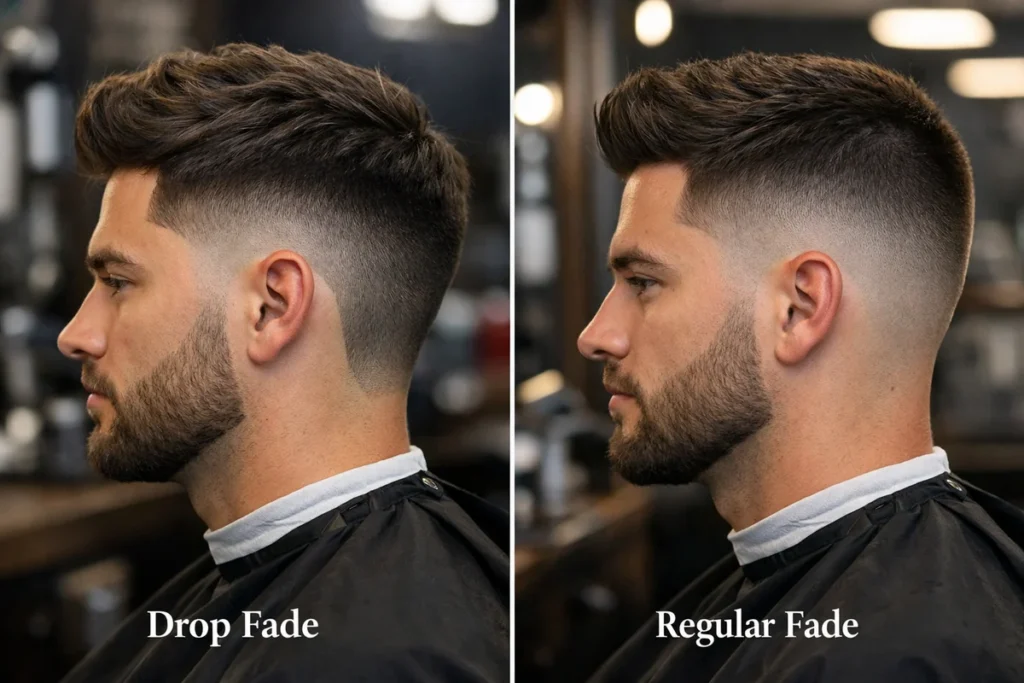
A drop fade haircut is a fade style where the fade line curves downward behind the ear area, following the natural shape of the occipital bone toward the nape. Unlike a regular fade, which remains level, the drop fade creates a rounded and sculpted appearance at the back of the head.
This curved structure adds depth and dimension, making the drop fade a popular choice for modern hairstyles that emphasize shape definition and visual flow.
Types of Drop Fades
Low Drop Fade
A low drop fade begins slightly above the ears and subtly curves downward toward the back. This variation offers a clean finish without excessive contrast, making it suitable for understated yet contemporary styles. It works well with short textured tops and natural hairlines.
Mid Drop Fade
A mid drop fade starts higher on the sides and features a more noticeable curve behind the ears. This style balances sharpness and creativity, adding structure without overwhelming the overall haircut. It is commonly paired with curly tops, layered cuts, and modern crops.
High Drop Fade
A high drop fade begins near the temples and dramatically descends toward the nape. This creates a bold visual effect and strong contrast between the side fade and the top length. High drop fades are often chosen for statement hairstyles and fashion-forward looks.
Drop Fade vs Regular Fade: Side-by-Side Comparison
| Feature | Drop Fade | Regular Fade |
| Fade line shape | Curved downward behind the ear | Straight and level |
| Head contouring | Follows natural head shape | Uniform around head |
| Back profile appearance | Rounded and sculpted | Clean and symmetrical |
| Style impression | Modern and dynamic | Classic and timeless |
| Barber skill requirement | Moderate to advanced | Beginner to intermediate |
| Best use cases | Trend-forward hairstyles | Professional and casual styles |
This comparison highlights why the drop fade haircut is often chosen for expressive styles, while the regular fade haircut remains a standard in traditional barbering.
How a Drop Fade Looks Different From a Regular Fade
The most visible difference between a drop fade and a regular fade appears at the back of the head. A regular fade maintains a straight fade line that mirrors the horizontal plane, while a drop fade creates a curved outline that follows head anatomy.
This curvature affects the overall haircut silhouette. Drop fades produce a rounded, athletic profile, whereas regular fades emphasize symmetry and uniformity. The visual result influences how the haircut complements different head shapes and neck proportions.
Drop Fade vs Regular Fade for Different Head Shapes
Round Head Shape
A drop fade is often preferred for a round head shape because the curved fade elongates the head visually. The downward motion adds structure and reduces the appearance of width.
Oval Head Shape
Both drop fades and regular fades work well with an oval head shape. The choice depends more on personal style than structural necessity, as oval shapes naturally support balanced proportions.
Square Head Shape
A regular fade complements a square head shape by reinforcing strong angles and symmetry. It maintains clean lines that align with the natural jaw and temple structure.
Long Head Shape
A low regular fade or low drop fade is ideal for a long head shape. Keeping the fade lower prevents excessive vertical emphasis and maintains proportional balance.
Why Drop Fades Feel More Modern
The drop fade is widely considered more modern due to its customized contouring and sculpted finish. It reflects current barbering trends that prioritize individual head anatomy over standardized shapes.
Because of the curved blend, drop fades require higher technical precision, which contributes to their association with advanced barber techniques and contemporary grooming culture.
Pros and Cons of Each Fade Style
Choosing between a drop fade and a regular fade involves evaluating visual impact, styling flexibility, and practical considerations. Each fade type offers distinct strengths and limitations based on fade structure, maintenance expectations, and overall aesthetic goals. The table below provides a clear comparison to help determine which style best fits your needs.
| Fade Style | Pros | Cons |
| Drop Fade | Enhanced head shape contouring that follows natural curves; creates a modern visual profile; pairs well with textured hairstyles and curly hair types; adds depth and movement to the haircut | Requires higher barber skill level; demands more precise blending techniques; may need more frequent touch-up schedules due to curved grow-out |
| Regular Fade | Clean symmetrical appearance; predictable hair growth patterns; widely accepted in professional environments; easier overall maintenance routine; works across most age groups | Offers less visual dynamism; the uniform fade line can appear plain when paired with highly modern or experimental top styles |
Which Fade Is Easier to Maintain?
A regular fade is generally easier to maintain due to its horizontal fade line and even grow-out pattern. As hair length increases, the structure remains balanced, reducing the need for corrective blending.
A drop fade requires more frequent upkeep because the curved transition can lose definition as it grows. Individuals who prefer sharp outlines and sculpted shapes may need more frequent barber visits.
Hairstyles That Work Best With Each Fade
Hairstyles That Pair Well With a Regular Fade
A crew cut pairs well with a regular fade due to its clean proportions and simplicity. A side part hairstyle benefits from the uniform fade line, reinforcing structure and professionalism. A pompadour hairstyle also works effectively, as the fade highlights the volume on top without competing visually.
Hairstyles That Pair Well With a Drop Fade
A textured crop complements the curved structure of a drop fade by adding movement and dimension. A curly top hairstyle benefits from the natural flow created by the downward fade. A faux hawk hairstyle gains emphasis from the dramatic contrast and sculpted back profile.
How to Ask Your Barber for a Drop Fade or Regular Fade
When requesting a regular fade, specify the fade height such as low, mid, or high, and mention that you want the fade to stay level around the head. Clarify your preferred guard length and whether you want a skin fade at the bottom.
When asking for a drop fade, explicitly mention that the fade should curve behind the ears and drop toward the nape. Describing the desired back shape helps the barber execute the correct contour and blending technique.
Find our Professional Fade Haircut Service for Modern and Classic Styles
Choosing between a drop fade and a regular fade requires proper technique and careful blending. Each style depends on clean fade lines, balanced proportions, and accurate guard progression. A professional fade haircut service ensures the fade height, curve, and contrast match your head shape and personal style. If you are searching for top rated best fade haircuts, select a barber who understands both modern contour fades and classic symmetrical blends. Skilled execution improves definition and long-term grow-out. As a result, your haircut stays sharp, structured, and easy to maintain.
Final Thoughts: Drop Fade or Regular Fade?
Choosing between a drop fade and a regular fade depends on your style preference, maintenance tolerance, and overall aesthetic goals. A regular fade offers consistency and ease, while a drop fade delivers modern shape and visual impact. Both styles remain foundational options within contemporary barbering when matched correctly to the individual.
Drop Fade vs Regular Fade FAQs
A drop fade works well with straight hair, especially when paired with layered tops or textured styling techniques. The curved fade helps prevent the sides from looking flat and adds visual depth to straight hair profiles.
A regular fade is often recommended for first-time fade haircuts because of its predictable structure and classic appearance. Its uniform transition makes it easier to adjust future fade heights without drastic visual changes.
A drop fade pairs effectively with hair design patterns such as lines or geometric shapes. The curved fade line creates a natural boundary that enhances clipper art visibility without overcrowding the haircut.
Both drop fades and regular fades work with beard fades, but a drop fade offers smoother integration into a rounded beard shape. A regular fade blends more cleanly into boxed or angular beards.
A drop fade can be suitable for formal occasions when executed at a low height with minimal contrast. Keeping the curve subtle ensures the haircut remains polished rather than overly expressive.
A regular fade works exceptionally well with longer hairstyles on top because the level fade line provides visual stability. This makes it ideal for styles that rely on length contrast without additional curvature.