A high taper and a high fade are two of the most requested modern men’s haircuts, yet they differ in more ways than just name. Although both styles begin high on the sides and back, the distinction lies in how the hair blends, whether skin is exposed, and how the haircut grows out over time.
What Is a High Taper Haircut?
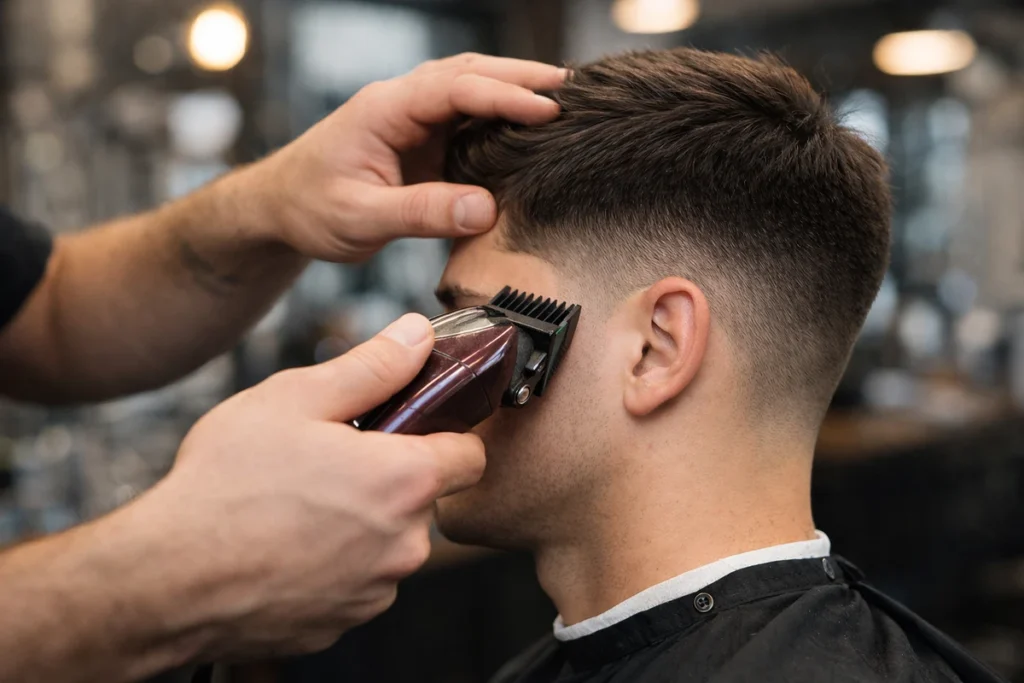
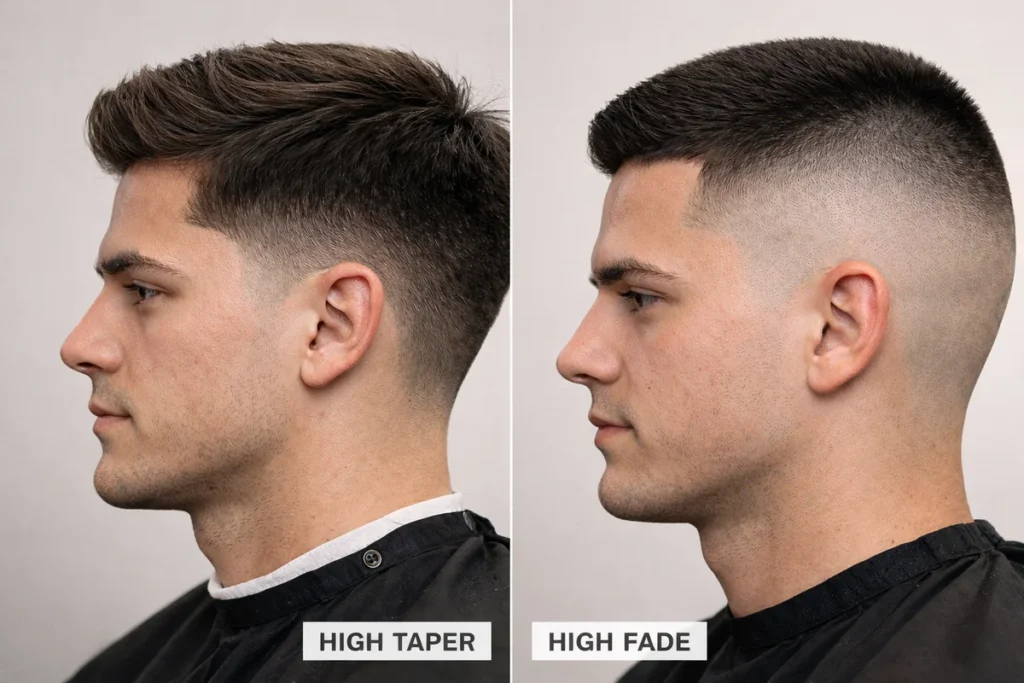
A high taper haircut is a style where the hair gradually decreases in length high on the sides and back while maintaining some hair at the neckline and sideburns. Unlike fades, the taper never fully exposes skin, creating a softer and more natural transition.
Key Characteristics of a High Taper
The high taper is defined by subtlety and balance rather than sharp contrast.
- Gradual length reduction that blends smoothly into longer hair
- No exposed skin at the bottom of the cut
- Natural neckline taper instead of a shaved finish
- Clean silhouette suitable for professional environments
Because of this structure, the high taper haircut grows out evenly and does not require frequent touch-ups.
Types of High Tapers
Several variations of the high taper are commonly referenced in grooming content and barbershop terminology.
- High taper with lineup – features a sharp hairline shape-up paired with a smooth taper
- High taper fade hybrid – blends tapering with light fading for added contrast
- High taper with beard fade – connects the side taper seamlessly into a beard taper
Each variation maintains the defining trait of a tapered haircut, which is controlled blending rather than dramatic skin exposure.
What Is a High Fade Haircut?
A high fade haircut is a style where the hair transitions rapidly from longer lengths to skin or near-skin high on the sides and back of the head. The fade begins much higher than a low or mid fade, creating a sharp contrast between the top and the sides.
Key Characteristics of a High Fade
The high fade is designed to be visually striking and sharply defined.
- Fade starts high on the head, often near the temples
- Visible skin exposure at the base of the cut
- High-contrast transition between lengths
- Modern and bold appearance
Because of its aggressive blending, the high fade haircut emphasizes structure and draws attention to the hairstyle on top.
Types of High Fades
Different variations of the high fade allow customization while maintaining its defining characteristics.
- High skin fade – fades completely down to exposed skin
- High drop fade – curves downward behind the ear for head-shape balance
- High burst fade – creates a circular fade around the ear
Each variation still qualifies as a high fade because the fade begins high and removes significant bulk from the sides.
High Taper vs High Fade: Comparison
| Feature | High Taper | High Fade |
| Fade starting point | High on sides and back | High on sides and back |
| Skin exposure | Minimal or none | Visible skin |
| Blending style | Gradual and natural | Sharp and aggressive |
| Overall appearance | Clean and professional | Bold and modern |
| Grow-out phase | Subtle and even | Noticeable and fast |
| Maintenance level | Low to moderate | High |
This comparison highlights why high tapers are often chosen for versatility, while high fades are favored for impact and contrast.
High Taper vs High Fade: Key Differences
Difference in Blending and Transition
The primary difference between a high taper and a high fade lies in the blending technique. A high taper relies on gradual length reduction, while a high fade removes hair quickly to create dramatic contrast. This difference affects how natural or bold the final haircut appears.
Difference in Skin Exposure
A high taper haircut leaves hair at the neckline and sideburns, avoiding skin exposure. In contrast, a high fade haircut blends directly into skin, making scalp visibility a defining feature. This distinction alone often determines which style suits personal or professional preferences.
Difference in Maintenance Requirements
Maintenance is another major separating factor.
- High taper – grows out smoothly and requires fewer barber visits
- High fade – loses definition quickly and needs frequent touch-ups
For individuals seeking longevity, the high taper is generally easier to manage.
Which One Looks More Professional?
In professional or conservative environments, the high taper haircut is widely considered more appropriate. Its natural blending, lack of exposed skin, and subtle finish align well with workplace grooming standards.
The high fade haircut, while stylish, is often viewed as more fashion-forward and casual. It fits creative fields, trend-driven aesthetics, and personal expression better than traditional professional settings.
Professional preference summary:
- Corporate or formal roles → High taper
- Creative or casual roles → High fade
Try an Experienced High Fade and High Taper Haircut Service
Choosing between a high taper and a high fade requires precision and proper blending technique. Both styles start high on the sides, but they differ in contrast, skin exposure, and maintenance needs. A professional fade haircut service ensures clean transitions, accurate fade height, and balanced proportions that match your head shape and lifestyle. If you want consistent results and expert detailing, visit a top fade barber shop that specializes in both tapered blends and high-contrast fades. Skilled barbers understand guard progression and contour shaping. As a result, your haircut looks sharp, structured, and easy to maintain between visits.
Which Haircut Is Easier to Maintain?
From a maintenance standpoint, the high taper is easier to sustain over time. Its gradual transitions disguise regrowth, allowing the haircut to maintain its shape longer.
The high fade, on the other hand, shows regrowth quickly because of the exposed skin at the base. This makes routine barber visits essential to preserve the sharp appearance of the fade.
Maintenance comparison:
- Longer-lasting shape → High taper
- Sharper but short-lived look → High fade
High Taper vs High Fade by Hair Type
Best for Straight Hair
For straight hair, both styles work well, but they produce different results. A high taper haircut creates a clean and controlled outline that complements natural hair flow, while a high fade haircut increases contrast and emphasizes structure. Straight hair highlights blending precision, making fade execution especially visible.
Best for Wavy or Curly Hair
With wavy hair or curly hair, a high taper helps maintain volume while keeping the sides neat. A high fade removes bulk aggressively, which can either enhance curl definition or expose uneven growth if not executed properly. For versatility and balance, tapers are often preferred.
Best for Thick vs Thin Hair
For thick hair, the high fade haircut reduces weight and creates a sharp profile. For thin hair, a high taper haircut is usually more flattering, as it avoids excessive scalp exposure and maintains visual density. Hair density plays a major role in determining the better option.
Best for Receding Hairlines
A high taper works better for a receding hairline because it avoids drawing attention to the temples. A high fade, especially when paired with a lineup, can exaggerate recession by increasing contrast around the hairline.
Popular Hairstyles That Pair with Each Cut
Hairstyles with a High Taper
The high taper complements classic and versatile styles.
- Crew cut
- Comb over
- Afro taper
- Side-part hairstyle
These combinations emphasize balance, structure, and long-term wearability.
Hairstyles with a High Fade
The high fade pairs best with bold and trend-forward hairstyles.
- Pompadour
- Textured crop
- Buzz cut fade
- Faux hawk
These styles rely on contrast and clean transitions to stand out.
How to Ask Your Barber for a High Taper or High Fade
To get the desired result, communication is critical.
When asking for a high taper:
- Specify a natural neckline taper
- Request gradual blending
- Mention no skin exposure
When asking for a high fade:
- State how high you want the fade starting point
- Choose between a skin fade or shadow fade
- Ask about beard fade integration
Bringing reference photos ensures clarity and reduces misinterpretation.
High Taper vs High Fade: Pros and Cons
Choosing between a high taper haircut and a high fade haircut involves balancing appearance, maintenance, and lifestyle preferences. While both styles are modern and popular, they differ significantly in terms of contrast, upkeep, and suitability for different environments. The table below outlines the main advantages and disadvantages of each option for quick comparison.
| Aspect | High Taper Haircut | High Fade Haircut |
| Overall style | Clean, subtle, and balanced | Bold, sharp, and high-contrast |
| Professional appearance | Highly workplace-friendly | Less suitable for conservative settings |
| Maintenance level | Low to moderate | High |
| Grow-out behavior | Smooth and gradual | Fast and noticeable |
| Visual impact | Natural and understated | Dramatic and eye-catching |
| Styling versatility | Works with classic hairstyles | Best for modern, trendy styles |
Conclusion
Choosing between a high taper and a high fade depends on lifestyle, hair type, and desired appearance. A high taper haircut offers versatility, professionalism, and low maintenance, while a high fade haircut delivers bold contrast and modern style. Understanding these differences helps ensure the right haircut choice for both personal and practical needs.
FAQs: High Taper vs High Fade
Yes, both a high taper haircut and a high fade haircut can affect face shape perception. A high fade creates stronger vertical contrast, which can make the face appear longer and slimmer. A high taper offers a softer slimming effect by keeping natural volume around the head.
A high fade haircut is better for hot weather because the exposed skin improves airflow and reduces heat retention. A high taper haircut still feels cooler than longer styles but retains more hair around the sides and back.
Yes, both styles work well with hair coloring and highlights, but they showcase color differently. A high fade emphasizes contrast between colored hair on top and natural sides, while a high taper blends color more smoothly for a cohesive look.
A high fade haircut reveals imperfections more clearly because of exposed skin and sharp transitions. Scalp blemishes, uneven growth, or asymmetry are less noticeable with a high taper haircut due to its gradual blending.
The high fade haircut is more popular on social media platforms due to its dramatic before-and-after transformations. A high taper haircut appears more frequently in professional grooming content rather than viral barber videos.
A high fade haircut may require more frequent washing because exposed skin can accumulate oil faster. A high taper haircut retains more hair coverage, helping distribute natural oils more evenly across the scalp.