The real difference between a low taper and a low fade lies in how the hair transitions at the sides and back, as well as the level of contrast each style creates. While both are popular men’s haircut styles, they serve different purposes in terms of professional appearance, maintenance, and overall aesthetic. A low taper focuses on subtle, natural blending around the temples and neckline, whereas a low fade delivers a sharper, more modern look with visible fading. Knowing these differences helps you decide the right haircut based on your lifestyle, hair type, and styling goals.
What Is a Low Taper?
A low taper is a haircut technique where the hair gradually shortens near the temples, sideburns, and neckline without exposing the skin. The transition is soft and natural, blending seamlessly into the longer hair above. This style emphasizes a clean finish while maintaining a professional appearance. It is commonly chosen for environments that require a conservative hairstyle.
Where a Low Taper Starts
A low taper begins only at specific areas of the head rather than wrapping fully around it. The tapering effect is limited and controlled, making the haircut appear understated.
- Temples
- Sideburns
- Neckline
The rest of the hair maintains its original length, creating a balanced and natural silhouette.
Key Characteristics of a Low Taper
A low taper is defined by subtlety and restraint rather than bold contrast.
- Gradual hair transition with no harsh lines
- No skin exposure at the base
- Soft blended finish
- Low-maintenance haircut as it grows out evenly
- Strong alignment with professional hairstyles
Because of these traits, the low taper haircut is often recommended for office settings, formal occasions, and long-term wear.
What Is a Low Fade?
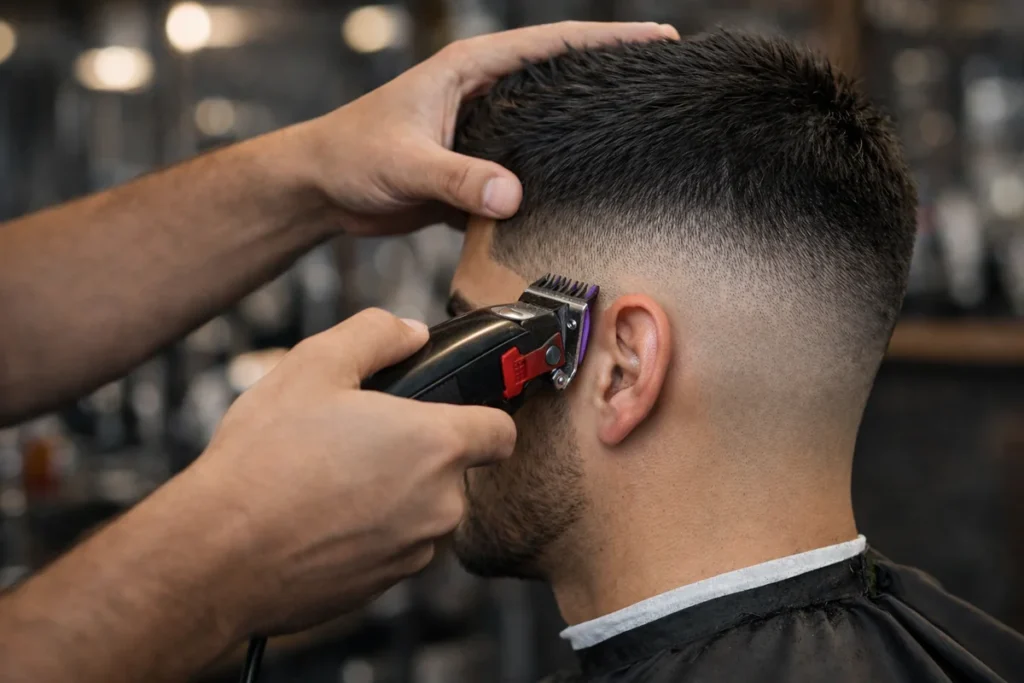
A low fade is a fade haircut style where the hair gradually blends down to very short lengths or skin, starting just above the ears and extending around the head. Unlike a taper, the fade creates noticeable contrast between hair lengths. This technique produces a modern hairstyle with a sharper visual impact. The result is a clean but more dramatic finish.
Where a Low Fade Starts
A low fade starts lower on the head but affects a wider area than a taper. The fade wraps around the sides and back, forming a continuous gradient.
- Just above the ears
- Around the sides of the head
- Toward the back and neckline
The fade point remains low, but the blending zone is broader and more visible.
Key Characteristics of a Low Fade
A low fade haircut is defined by contrast and precision.
- Visible fade gradient
- Optional skin fade or bald fade
- High-contrast finish
- Strong modern aesthetic
- Requires regular barber visits to maintain sharpness
Because of its bold appearance, the low fade is often chosen for trend-focused styles, creative professions, and contemporary grooming preferences.
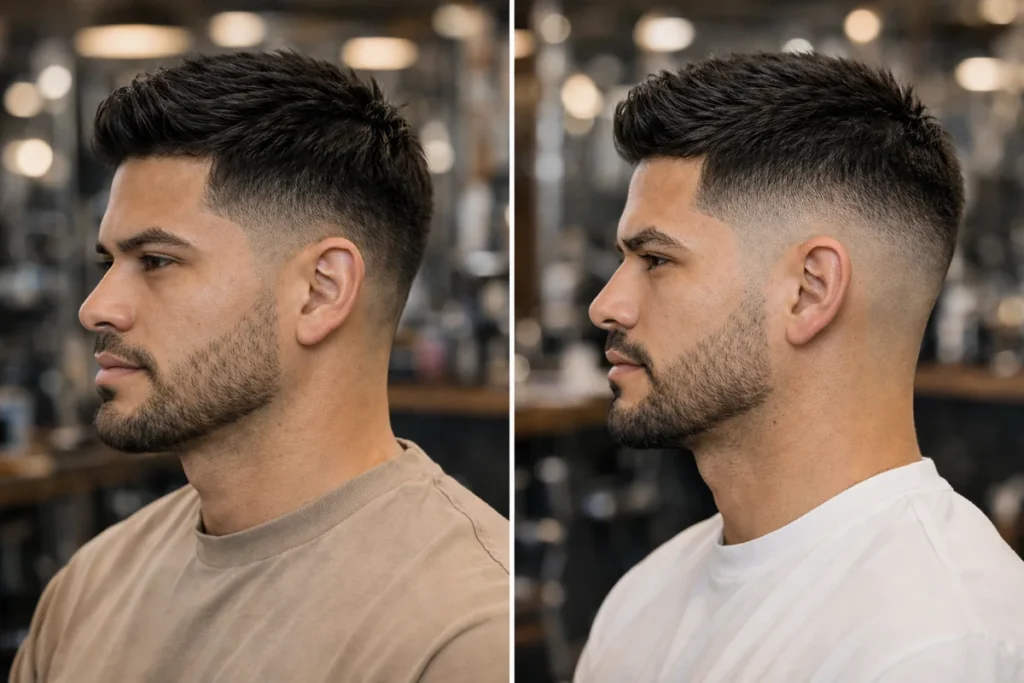
Low Taper vs Low Fade: Side-by-Side Comparison
The most effective way to understand the difference between a low taper and a low fade is to compare their technical and visual features. While both fall under men’s grooming styles, they serve different purposes in terms of contrast, upkeep, and formality.
| Feature | Low Taper | Low Fade |
| Starting Point | Temples and neckline | Around the sides of the head |
| Skin Exposure | None | Optional skin fade |
| Blend Style | Subtle blend | High-contrast fade |
| Overall Look | Natural haircut finish | Sharp modern finish |
| Maintenance Level | Low maintenance | Medium to high maintenance |
| Professional Friendly | Highly suitable | Context-dependent |
This comparison table clearly shows that the low taper prioritizes subtlety, while the low fade emphasizes visual impact.
Which One Looks More Professional?
Low Taper for Work and Formal Settings
A low taper haircut is widely considered more professional because it preserves a natural hairline and avoids drastic contrast. The soft blending makes it ideal for corporate workplaces, business environments, and formal events. Since the haircut grows out evenly, it maintains a polished appearance for longer periods. For individuals seeking a conservative hairstyle, the low taper is often the safest choice.
Low Fade for Modern and Creative Styles
A low fade haircut leans toward a more contemporary look, making it popular in creative industries and casual settings. The visible gradient and optional skin exposure create a sharp and trendy finish. While it can still look clean, it may not align with stricter dress codes. The low fade works best for individuals who prioritize style definition over long-term subtlet
Want to take Custom Low Fade and Low Taper Haircut Service
Choosing between a low taper and a low fade requires technical precision and proper blending. Both styles start low on the head, but they differ in contrast, skin exposure, and grow-out behavior. A quality fade haircut service ensures smooth transitions, clean edges, and balanced proportions that match your lifestyle. For sharp detailing and consistent results, book a professional fade haircut performed by an experienced barber. Skilled hands create controlled gradients and natural symmetry. As a result, your haircut looks polished, modern, and easy to maintain between visits.
Low Taper vs Low Fade by Hair Type
Choosing between a low taper and a low fade also depends heavily on hair texture, density, and growth pattern.
Straight Hair
For straight hair, both styles work well, but the effect differs. A low taper enhances a clean haircut structure without drawing attention to the sides. A low fade highlights precision and sharp lines, making it ideal for structured, modern looks.
Curly or Wavy Hair
With curly hair or wavy hair, a low taper helps control bulk while keeping the natural texture intact. A low fade creates a stronger contrast between the textured top and faded sides. This makes curls appear more defined but requires frequent maintenance.
Thick or Coarse Hair
For thick hair and coarse hair, a low fade reduces visual weight and creates a cleaner profile. A low taper maintains fullness while refining the edges. The choice depends on whether the goal is volume preservation or contrast reduction.
Afro-Textured Hair
In afro-textured hair, both styles are common. A low taper offers a clean outline around the hairline and neckline while maintaining natural density. A low fade provides a crisp finish with high definition and pairs well with beard blending and line-up techniques.
Maintenance and Grow-Out Comparison
Knowing haircut maintenance and grow-out behavior is essential when choosing between a low taper and a low fade. While both styles start clean and polished, they age very differently over time. The key differences lie in regrowth visibility, barber visit frequency, and how well the haircut maintains its original shape without constant touch-ups.
| Maintenance Factor | Low Taper | Low Fade |
| Grow-Out Appearance | Smooth and natural hair growth pattern | Noticeable fade line regrowth |
| Skin Exposure Impact | No skin exposure, blends easily | Skin fade shows regrowth quickly |
| Touch-Up Frequency | Minimal touch-ups needed | Frequent edge maintenance required |
| Barber Visit Schedule | Every 3–4 weeks | Every 1–2 weeks |
| Long-Term Look | Consistent polished appearance | Sharp look fades faster |
| Overall Maintenance Level | Low-maintenance haircut | High-maintenance haircut |
A low taper haircut is ideal for individuals who prefer a style that grows out evenly and remains presentable between barber visits. In contrast, a low fade haircut delivers a sharper initial look but demands more frequent upkeep to preserve its clean, defined appearance.
Can You Combine a Low Taper and a Low Fade?
Yes, a low taper and a low fade can be combined into a hybrid style commonly referred to as a taper fade. This approach blends the best elements of both techniques by maintaining softness in some areas and contrast in others.
Taper Fade Explained
A taper fade typically features:
- A temple fade on the sides
- A neck taper at the back
- Controlled fade gradient without full skin exposure
This hybrid haircut offers versatility, making it suitable for both professional environments and modern styling preferences.
How to Ask Your Barber for a Low Taper or Low Fade
Clear communication is essential when requesting a low taper or low fade. Using specific terminology ensures the final result matches expectations.
- State whether you want a low taper haircut or a low fade haircut
- Mention if you want skin exposure or a natural finish
- Specify preferences for the temples, sideburns, and neckline
- Show a reference photo for visual clarity
- Discuss maintenance frequency and lifestyle needs
Using correct barbering terminology reduces misinterpretation and improves consistency.
Low Taper vs Low Fade: Final Recommendation
Choosing between a low taper and a low fade depends on your priorities and lifestyle. A low taper haircut is ideal if you value subtlety, professionalism, and minimal upkeep. A low fade haircut is the better choice if you prefer a bold, modern look with high visual contrast.
In summary:
- Choose a low taper for a clean-cut, professional hairstyle
- Choose a low fade for a sharp, modern grooming style
Both options are timeless men’s haircut styles when executed correctly by a skilled barber.
FAQs About Low Taper and Low Fade
A low taper generally works better for a receding hairline because it preserves a natural hairline shape and avoids drawing attention to the temples. The gradual shortening helps create visual balance without emphasizing thinning areas. A low fade, especially with skin exposure, can make recession more noticeable.
Both styles pair well with long hair on top, but they create different effects. A low taper maintains a smooth transition that supports longer, flowing styles. A low fade creates a stronger contrast that makes the top length stand out more prominently.
A low taper haircut is often better for first-time style changes because it offers a subtle adjustment without drastic contrast. The conservative blend makes it easier to adapt if you are unsure about fades. A low fade is more noticeable and may feel too bold for some beginners.
A low fade can make the face appear longer and sharper due to its clean sides and high contrast. A low taper creates a softer outline that maintains natural proportions. The choice depends on whether you want a defined facial structure or a balanced appearance.
A low taper is more achievable for at-home maintenance because it relies on subtle blending rather than precise fade lines. A low fade is harder to execute without professional tools and experience, as even small mistakes can disrupt the fade gradient.
A low fade blends more seamlessly into a beard fade, creating a continuous gradient from hair to facial hair. A low taper keeps beard lines cleaner and more defined, making it ideal for structured beard styling rather than blended transitions.