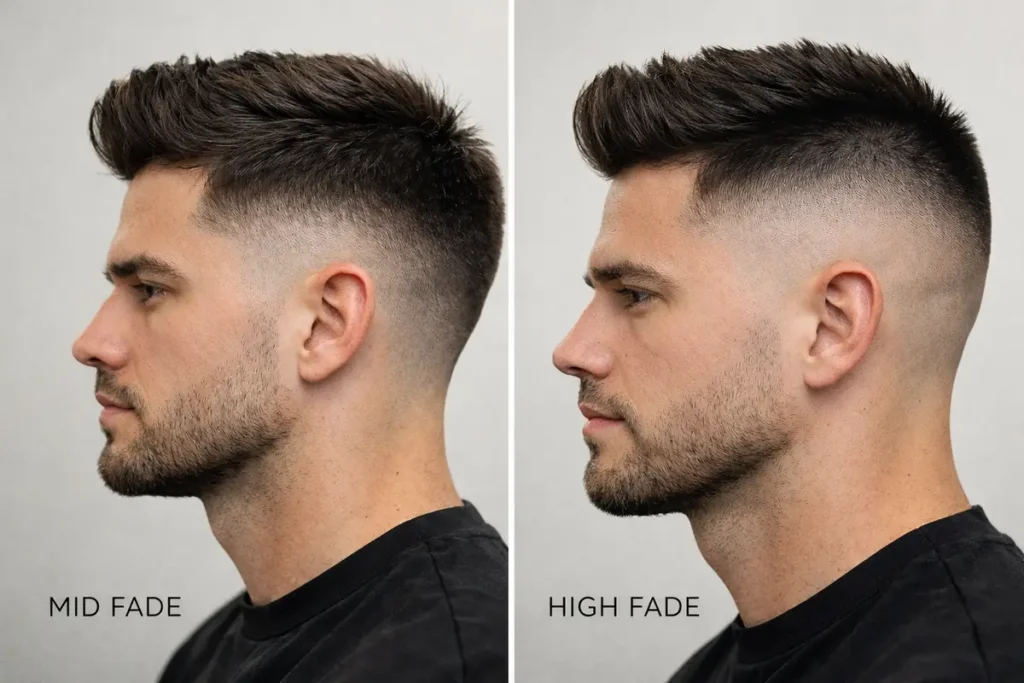
The difference between a mid fade and a high fade comes down to fade height, contrast level, and overall visual impact. A mid fade starts around the middle of the head, offering a balanced and versatile look, while a high fade begins much higher, creating a sharper and more dramatic appearance. Comprehending how each fade haircut affects face shape, hair type, and maintenance needs makes it easier to choose the style that fits your personal aesthetic and lifestyle.
What Is a Mid Fade?
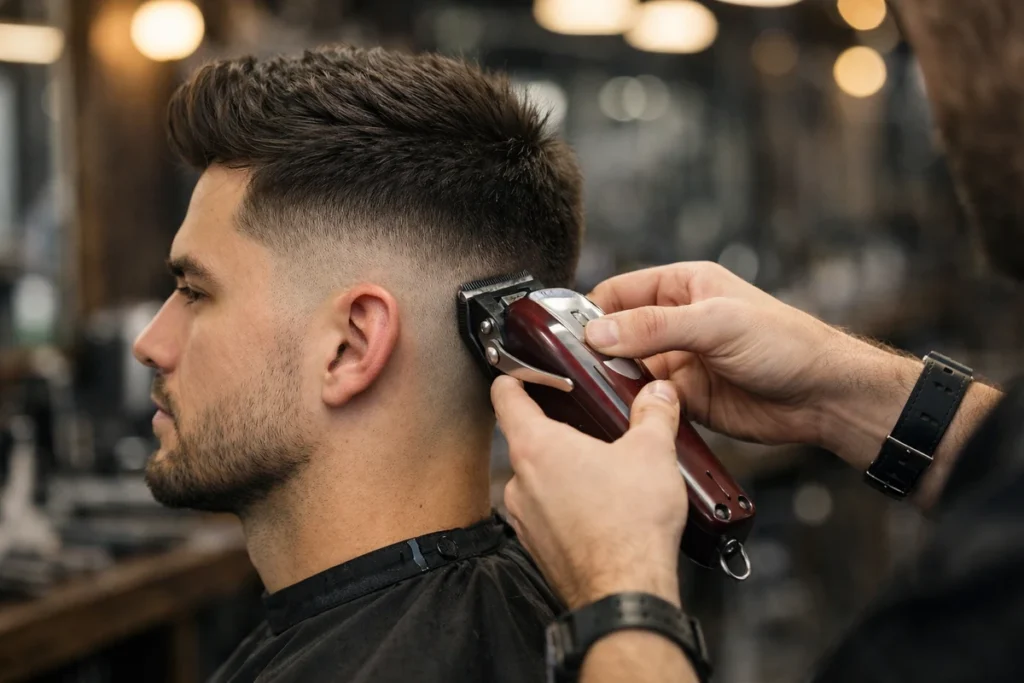
A mid fade is a type of fade haircut where the hair gradually tapers starting around the temple area or the midpoint of the sides and back of the head. It offers a smooth transition between short and longer hair without being overly aggressive. This style is widely decided for its balance between clean structure and subtlety.
Where a Mid Fade Starts on the Head
The mid fade typically begins:
- Around the temples
- Just below or at the midpoint between the hairline and the parietal ridge
- Evenly across the sides and back
These anatomical reference points allow the fade to frame the head naturally while maintaining proportion.
Key Characteristics of a Mid Fade
- Balanced visual weight across the head
- Moderate contrast between lengths
- Suitable for professional and casual settings
- Easier grow-out compared to higher fades
Because of these traits, the mid fade is often considered the most versatile option among fade types.
Popular Mid Fade Variations
Several mid fade variations allow customization based on preference:
- Mid skin fade – blends down to bare skin for a cleaner finish
- Mid drop fade – curves downward behind the ear following the head shape
- Mid taper fade – keeps more length near the neckline and sideburns
Each variation adjusts the fade gradient while maintaining a mid-level starting point.
What Is a High Fade?
A high fade is a fade haircut where the taper begins high on the sides and back of the head, often near or above the parietal ridge. This creates a strong contrast between the short sides and the longer hair on top. The result is a sharp, modern, and attention-grabbing style.
Where a High Fade Starts on the Head
The high fade usually starts:
- Above the temples
- Near the parietal ridge
- Close to the top corners of the head
This elevated starting point removes more bulk from the sides, emphasizing the top section of the hairstyle.
Key Characteristics of a High Fade
- High contrast between lengths
- Sharp and edgy appearance
- Strong emphasis on the top hairstyle
- Faster grow-out visibility
Due to its bold nature, the high fade is often associated with modern hairstyles, street style, and high-impact grooming trends.
Popular High Fade Variations
Common high fade variations include:
- High skin fade – exposes skin high on the head for maximum contrast
- High bald fade – blends completely to skin with a crisp finish
- High drop fade – adds curvature at the back for a sculpted shape
These options allow the high fade to be adapted to different head shapes and styling goals.
Mid Fade vs High Fade: Side-by-Side Comparison
A direct comparison between a mid fade and a high fade helps clarify which haircut best suits your appearance, hair type, and maintenance preferences. While both styles rely on the same fade technique, differences in fade height, contrast, and visual impact create distinctly different results. The table below highlights these differences clearly.
| Comparison Factor | Mid Fade | High Fade |
| Fade Height | Starts at the midpoint of the head, typically around the temples, creating a gradual transition. | Begins much higher, often near the parietal ridge, resulting in a sharper cutoff. |
| Overall Look and Contrast | Produces moderate contrast, offering a subtle and versatile appearance. | Creates high contrast, drawing strong attention to the top hairstyle. |
| Face Shape Impact | Maintains natural proportions and softens facial angles. | Elongates the face and highlights bone structure. |
| Hair Type Compatibility | Works well across most hair textures, including straight hair, wavy hair, curly hair, thick hair, and thin hair. | Performs best when there is enough top volume or hair texture to balance the short sides. |
| Maintenance Level | Grows out evenly and requires fewer barber touch-ups. | Shows regrowth quickly and needs more frequent maintenance visits. |
Which Fade Is Better for Your Face Shape?
Choosing between a mid fade and a high fade often depends on face shape analysis. The height of the fade can either balance or exaggerate facial proportions.
Best Fade for Round Faces
A high fade is often preferred for round face shapes because it creates vertical emphasis and reduces width. The contrast helps define the jawline and lengthen the appearance of the face.
Best Fade for Oval Faces
Both the mid fade and the high fade suit oval face shapes due to their natural balance. The choice depends more on desired contrast and personal style than facial structure.
Best Fade for Square Faces
A mid fade complements square face shapes by softening sharp angles while maintaining structure. A high fade can work but may exaggerate angular features if not blended carefully.
Best Fade for Long or Oblong Faces
A mid fade is typically better for long face shapes because it preserves width on the sides. A high fade can make the face appear longer if paired with excessive height on top.
Mid Fade vs High Fade for Different Hair Types
Hair texture and density play a major role in how a fade haircut appears and performs over time.
Straight Hair
With straight hair, a mid fade provides a clean and polished transition that looks natural as it grows out. A high fade creates a sharper, more modern aesthetic but requires precise blending to avoid harsh lines.
Wavy Hair
A mid fade pairs well with wavy hair by allowing movement and texture to remain visible on the sides. A high fade places more emphasis on the waves at the top, creating a strong contrast-driven style.
Curly Hair
For curly hair, a mid fade offers balance and helps manage volume without removing too much mass. A high fade highlights curl definition on top and is often used in curly fade hairstyles for bold results.
Thick vs Thin Hair
With thick hair, both fade types work well, though a high fade reduces bulk more aggressively.
With thin hair, a mid fade is usually more forgiving, as it maintains density on the sides and avoids exposing sparse areas.
Looking for a Precision Fade Haircut Services for Modern Men
Selecting between a mid fade and a high fade requires technical control and accurate blending. The transition must be smooth, and the fade height must suit your head shape and hair texture. A quality fade haircut service focuses on symmetry, contrast balance, and clean finishing around the temples and neckline. For reliable results and sharp definition, choose an expert fade haircut service that understands both subtle mid fades and bold high fades. Professional technique ensures consistent gradients and refined detailing. As a result, your haircut maintains its structure and grows out evenly.
Mid Fade vs High Fade with Popular Hairstyles
Pairing a fade with the right top style determines the overall success of the haircut. Both fade types integrate differently with common men’s hairstyles.
With Buzz Cut
A mid fade buzz cut creates a clean and uniform appearance suitable for low-maintenance grooming.
A high fade buzz cut produces a sharper, military-inspired look with maximum contrast.
With Pompadour
A mid fade pompadour maintains balance between volume and structure.
A high fade pompadour exaggerates height and creates a bold, modern silhouette.
With Comb Over
A mid fade comb over appears polished and professional with a smooth transition.
A high fade comb over delivers a dramatic side profile and strong separation.
With Textured Crop
A mid fade textured crop emphasizes natural texture while keeping the sides controlled.
A high fade textured crop pushes focus entirely to the top, enhancing definition and edge.
With Beard Fade
A mid fade beard blend looks seamless and natural along the sideburn area.
A high fade beard blend creates a sharper break between haircut and facial hair.
Maintenance & Barber Visit Frequency
Fade height directly affects how often a haircut needs upkeep.
How Often to Maintain a Mid Fade
A mid fade typically requires maintenance every 3 to 4 weeks. Its balanced structure allows for a smoother grow-out phase.
How Often to Maintain a High Fade
A high fade usually needs a touch-up every 1 to 2 weeks due to visible regrowth above the fade line.
Grow-Out Differences
A mid fade grow-out looks gradual and forgiving.
A high fade grow-out becomes noticeable quickly, especially around the temples and parietal ridge.
How to Ask Your Barber for a Mid Fade or High Fade
Clear communication ensures the final haircut matches expectations.
Barber Terminology to Use
Use specific terms like mid fade, high fade, skin fade, or taper fade to avoid confusion. Mention exact fade height rather than saying “short on the sides.”
Guard Lengths & Fade Preferences
Specify clipper guard numbers for the sides and top. Indicate whether you want a skin finish or a soft taper at the bottom.
Common Mistakes to Avoid
Avoid vague language such as “not too short.” Always reference photos, head shape, and hair texture when discussing your fade.
Mid Fade vs High Fade: Pros and Cons
Need to Know the advantages and drawbacks of a mid fade and a high fade helps set realistic expectations before choosing a haircut. While both styles fall under the category of fade haircuts, they differ in terms of visual impact, maintenance demands, and styling flexibility. The table below summarizes the key pros and cons of each option.
| Fade Type | Pros | Cons |
| Mid Fade | Versatile appearance that suits many styles and settingsProfessional-friendly look appropriate for work environmentsEasier maintenance with smoother grow-out | Less dramatic style compared to higher fadesLower visual impact for those seeking bold contrast |
| High Fade | Sharp and modern look with strong definitionHigh contrast effect that highlights the top hairstyleBold aesthetic appeal for trend-driven styles | Frequent maintenance due to visible regrowthLess forgiving grow-out as lines appear quickly |
Final Verdict: Mid Fade or High Fade?
Choose a mid fade if you want balance, versatility, and lower maintenance.
Choose a high fade if you prefer a bold, high-contrast look with strong visual impact.
The best fade haircut ultimately depends on your face shape, hair type, lifestyle, and how often you plan to visit the barber.
Frequently Asked Questions
A mid fade generally works better with cowlicks because it preserves more hair around the sides, allowing natural growth patterns to blend in. A high fade can expose cowlicks and make them harder to control without styling products.
A mid fade is usually better for a first-time fade haircut because it offers a safer, more forgiving transition. A high fade can feel too drastic for beginners due to its sharp contrast.
Yes, a high fade tends to show sharper regrowth lines after wearing hats or helmets, while a mid fade maintains a more uniform appearance once the hair settles back into place.
Both mid fades and high fades can be customized with asymmetrical fading, where one side is slightly higher or more defined. This approach is often used in fashion-forward hairstyles and creative barbering.
A mid fade allows more flexibility for natural parts and hard parts. A high fade limits parting options but makes any defined part more visually striking.
A mid fade is more commonly requested in professional barbershops due to its broad appeal and adaptability. A high fade is more frequently chosen in trend-driven or style-focused environments.